Matcha Lemonade Recipe: Layered, Iced or Sparkling
How to make matcha lemonade at home, with the right ratios, why the layers separate, and iced and sparkling variations.

In this guide · 10 sections
Matcha lemonade is exactly what it sounds like: lemonade with a matcha layer poured on top, so you get a green layer sitting over the yellow one before you stir it together. It's tart, a little grassy, and easy to make at home in about five minutes once you have matcha on hand.
Ingredients
- 1 teaspoon (about 2 g) matcha powder
- 2 tablespoons hot water (not boiling, around 175°F/80°C)
- 1 cup lemonade, store-bought or homemade
- Ice
- Optional: 1 tablespoon simple syrup or honey, if your lemonade isn't sweet enough
How to Make Matcha Lemonade
- Sift the matcha powder into a small bowl or cup to break up clumps. A fine mesh strainer works fine if you don't have a proper sifter.
- Add the hot water and whisk briskly in a zigzag motion (a bamboo whisk works best, but a small milk frother or even a fork works) until the matcha is fully dissolved and slightly foamy, with no dry clumps left.
- Fill a glass with ice.
- Pour in the lemonade, leaving room at the top.
- Slowly pour the matcha mixture over the back of a spoon so it layers on top instead of mixing in right away.
- Stir just before drinking to combine the layers.
Why Matcha Lemonade Separates
Matcha is a fine powder, not a dissolved liquid, so when it sits, the tiny particles slowly settle rather than staying suspended evenly through the drink. That's also part of why it layers so cleanly when you first pour it: the whisked matcha is denser than the lemonade underneath, so it holds its own layer for a minute or two before gravity and diffusion start blending them.
If you want the drink to stay mixed longer instead of layering, whisk the matcha with a small amount of the lemonade itself before combining with the rest. If you want the layered look for photos or serving, pour it right before you drink it and don't stir until you're ready.
Iced Matcha Lemonade
The base recipe above is already iced. For a stronger matcha flavor that holds up against the ice melting, use 1.5 teaspoons of matcha instead of 1, and make sure the water you whisk it with is hot enough to fully dissolve the powder, since cold water alone leaves gritty clumps.
Sparkling Matcha Lemonade
Swap regular lemonade for sparkling lemonade or plain sparkling water plus a squeeze of fresh lemon and a bit of simple syrup. Pour the sparkling base into the glass first, then add ice, then layer the whisked matcha on top the same way. The carbonation makes the layers separate more dramatically at first, which looks good in a clear glass.
Tips for the Best Matcha Lemonade
- Use culinary-grade matcha here rather than ceremonial-grade. Ceremonial matcha is meant to be tasted on its own; culinary grade is more affordable and holds up fine mixed with lemonade's acidity and sweetness.
- Always dissolve matcha in warm water first. Adding dry matcha powder straight into cold lemonade will leave clumps that never fully break up.
- If your matcha tastes bitter rather than grassy-sweet, it's often either low-quality powder or water that was too hot (above 175°F/80°C can scorch matcha and bring out bitterness).
- Fresh lemon juice makes a noticeably brighter drink than bottled lemonade concentrate, if you have the time to squeeze it.
Common Mistakes
- Adding matcha powder straight into cold lemonade. It will clump on the surface and never fully dissolve. Always bloom it in warm water first.
- Using boiling water to dissolve the matcha. Water above 175°F (80°C) can scorch matcha and pull out bitterness that wasn't there to begin with. Let boiled water sit for a minute or two before whisking.
- Skipping the sift. Matcha compacts in the tin, and a few seconds pushing it through a fine strainer before whisking saves you from chewy little clumps in the glass.
- Making it too far ahead. Matcha settles the longer it sits, so a pitcher made an hour before serving will need a good stir (or a re-whisk of the matcha layer) right before pouring.
Make-Ahead and Big Batches
If you're making a pitcher for a few people, whisk the matcha portion separately in its own bowl with warm water first, using the same 1 teaspoon matcha per cup of lemonade ratio scaled up. Stir the whisked matcha into the full pitcher right before serving rather than at the start, since matcha settles faster in a large volume of liquid than in a single glass. Keep it refrigerated and expect the brightest color and flavor within a few hours; matcha's color and taste both fade noticeably by the next day.
If you want matcha at breakfast instead, try matcha overnight oats.
FAQ
Can I make matcha lemonade without a whisk?
Yes. A small milk frother, a fork worked briskly, or even a tightly sealed jar you shake hard will dissolve matcha in warm water, though a bamboo whisk gives the smoothest result with the least clumping.
Does matcha lemonade have a lot of caffeine?
A teaspoon of matcha (about 2 g) has roughly 35–70 mg of caffeine, similar to a small cup of tea, so it's noticeably less than a coffee shop drink but not caffeine-free.
Why does my matcha lemonade taste bitter?
Usually the water was too hot, the matcha sat too long before drinking, or the powder is a lower-quality culinary grade. Try slightly cooler water and a fresh tin of matcha.
Can I make a big batch for a pitcher?
Yes, scale the ratio up (roughly 1 teaspoon matcha per cup of lemonade), whisk the matcha portion in a separate bowl with warm water first, then stir the whole batch together right before serving so it doesn't settle at the bottom of the pitcher.
The Bottom Line
Matcha lemonade comes down to one trick: always dissolve the matcha in warm water before it meets the lemonade, and pour it as a layer if you want the visual effect. From there it's just a matter of adjusting sweetness and how much matcha you use. If you want to use up extra matcha, try it in a coconut milk latte or blended into a matcha smoothie, and if you're still deciding what matcha actually is, start with our matcha guide.
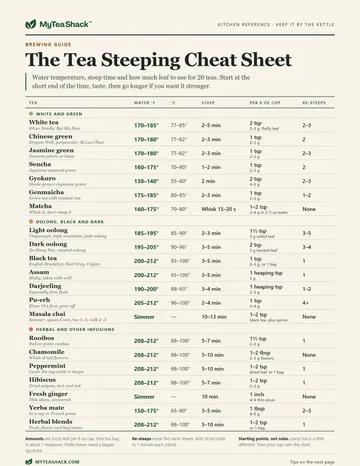
Free printable
The Tea Steeping Cheat Sheet
Water temperature, steep time and how much leaf to use for 20 teas, from sencha to rooibos, on one printable page. Plus five fixes for a bitter cup.