Best Yerba Mate: Argentine, Uruguayan and Brazilian Styles
How yerba mate styles differ by country, bags vs loose leaf, and how to pick a good beginner yerba mate before you buy.
In this guide · 10 sections
Yerba mate isn't one uniform product. The country it's from, how it's dried, and whether it includes stems and twigs (palo) all change how strong, smoky or smooth it tastes, and that matters more for finding a "best" one than any specific brand name.
Styles by Country
| Style | Typical taste | Notes |
|---|---|---|
| Argentine | Smooth, grassy, moderate strength | Usually aged (barrel-rested) for months to mellow the flavor before selling; the most common style found outside South America |
| Uruguayan | Earthier, sometimes toastier | Uruguay drinks more mate per capita than any other country; blends often include more stems for a milder cup |
| Brazilian (chimarrão style) | Finer cut, brewed similarly to Argentine mate but often greener and grassier | Less aged than Argentine styles, so it can taste sharper |
| Paraguayan | Bold, robust | Less common outside South America but well regarded where available |
Argentine mate is the easiest starting point for most beginners since it's widely available and the aging process takes some of the bitterness off compared to a fresh, unaged leaf.
Con Palo vs. Sin Palo (With or Without Stems)
Yerba mate blends are usually labeled "con palo" (with stems and twigs) or "sin palo" (leaf only, no stems). Stems are less bitter and less intensely caffeinated than the leaf, so a con palo blend gives a milder, smoother cup, while sin palo is stronger and more concentrated. If your first cup of mate tasted harsh or bitter, a con palo blend is usually the easier one to start with.
Bags vs. Loose Leaf (For the Gourd)
| Format | How it's used | Best for |
|---|---|---|
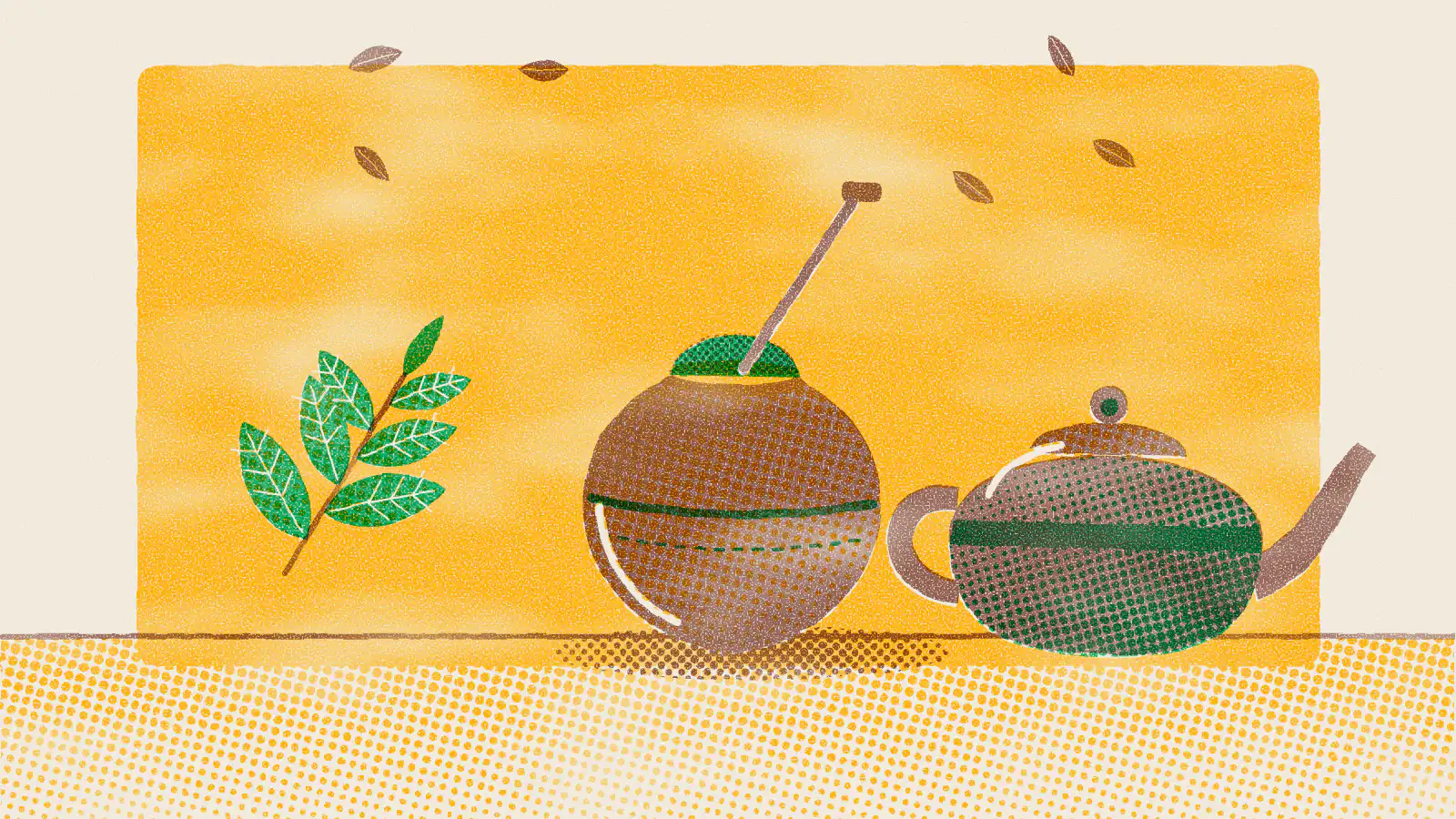
| Loose leaf, traditional gourd and bombilla | Packed into a gourd, hot water added and refilled repeatedly through a metal straw with a built-in filter | The traditional ritual, more flavor control, reusable for many refills from one packing |
| Tea bags | Steeped in a mug like regular tea | Convenience, travel, no gourd or bombilla needed |
Loose leaf brewed the traditional way gets more mileage out of the yerba, since a single packed gourd can be refilled with hot water many times over an hour or more, while a tea bag is essentially a single use. If you want to try the traditional method, see our step-by-step guide on how to prepare yerba mate for water temperature and technique.
Flavored vs. Traditional
Flavored yerba mate (citrus, mint, guava and similar blends) is common and a reasonable entry point if straight mate tastes too bitter or smoky at first. Traditional, unflavored mate is what most South American drinkers reach for daily, and it's worth trying plain at least once since the base flavor is different enough from flavored coffee or tea that it's easy to misjudge from a flavored blend alone.
What to Look For When Buying
- Origin and aging, if listed. Argentine brands often state how long the yerba was aged (barrel-rested); longer aging generally means a smoother, less bitter cup.
- Con palo or sin palo, based on whether you want a milder or stronger brew.
- Cut size. A finer, dustier cut brews faster and stronger but can clog a traditional bombilla's filter more easily; a coarser cut is gentler on equipment.
- Packaging. Yerba mate loses moisture and flavor if stored improperly; a resealable, foil-lined bag holds up better over time than a thin paper bag.
Beginner Picks
- First bag ever: an aged Argentine con palo blend. Milder, widely available, and the easiest to enjoy without special equipment beyond a mug and infuser if you're not ready for a full gourd setup.
- Want the traditional ritual right away: a gourd and bombilla starter set plus a sin palo Argentine or Uruguayan yerba, since traditional preparation is part of what makes mate distinct from just another caffeinated tea.
- Bitterness turns you off: a flavored blend (citrus or mint) or a con palo blend, both softer entry points than a strong sin palo mate.
Storing Yerba Mate
Yerba mate dries out and loses flavor faster than most people expect, especially loose leaf exposed to air. Keep it in a sealed, opaque container away from heat and direct light, and it holds its flavor for several months. Once a bag is opened, try to use it within two to three months for the best cup; mate that's gone stale tastes dusty and flat rather than grassy or earthy.
Seasoning a New Gourd
If you buy a natural gourd (calabaza) rather than a stainless steel or glass one, it needs to be seasoned before its first real use, or the gourd's own material can flavor your mate. Pack it with wet yerba mate or a scraped mixture of the gourd's own inner pulp, let it sit for a day, then scrape it out and rinse. This step is specific to natural gourds; metal, glass or ceramic mate cups don't need it and are a lower-maintenance starting point if you'd rather skip the extra step.
FAQ
What's the difference between Argentine and Brazilian yerba mate?
Argentine mate is typically aged for months before sale, giving a smoother, mellower cup. Brazilian mate (used for chimarrão) is often less aged and can taste greener and sharper as a result.
Is con palo or sin palo better for beginners?
Con palo (with stems) is generally easier for beginners since the stems are milder and less bitter than straight leaf, giving a smoother introduction to mate's flavor.
Do I need a gourd and bombilla to drink yerba mate?
No. Yerba mate can be steeped in a regular mug with an infuser or a tea bag, though the traditional gourd and bombilla method lets you refill the same packed leaves with hot water multiple times, which is more economical per session.
How does yerba mate compare to coffee for caffeine?
Mate generally has somewhat less caffeine per serving than coffee, though the actual amount varies by how it's packed and steeped. For a full side-by-side, see our yerba mate vs. coffee comparison.
The Bottom Line
The biggest choices in yerba mate aren't between brands, they're country of origin, con palo versus sin palo, and loose leaf versus bags. Start with an aged Argentine con palo blend if you want the gentlest introduction, or go straight for a gourd and bombilla if you want the full ritual from day one. For more on what yerba mate actually is and its reported effects, see our yerba mate benefits guide, and for the plant itself, what the yerba mate plant is.
Free printable
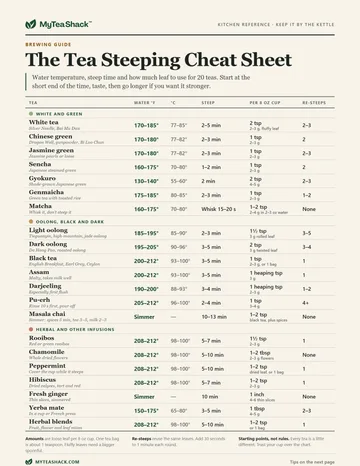
The Tea Steeping Cheat Sheet
Water temperature, steep time and how much leaf to use for 20 teas, from sencha to rooibos, on one printable page. Plus five fixes for a bitter cup.