Yerba Mate vs. Coffee: Caffeine, Taste and Cost Compared
Yerba mate vs. coffee compared on caffeine content, jitters, taste, cost per cup and ritual, plus who should consider switching.
In this guide · 10 sections
Yerba mate and coffee both deliver a real caffeine lift, but they get you there differently. Mate's caffeine comes packaged with plant compounds that many drinkers describe as a steadier, less jittery lift, while coffee tends to hit faster and drop off faster.
Caffeine, Side by Side
| Yerba mate (8 oz) | Coffee, drip (8 oz) | |
|---|---|---|
| Caffeine | 65–130 mg | 95–200 mg |
| Onset | Slightly slower, more gradual | Fast, often within 15–20 minutes |
| Reported crash | Milder for most drinkers | More noticeable for some, especially on an empty stomach |
| Other active compounds | Theobromine, theophylline, chlorogenic acid | Chlorogenic acid, minimal theobromine |
Mate contains caffeine alongside theobromine and theophylline, milder stimulant compounds also found in chocolate and traditionally linked to a smoother energy curve than caffeine alone. This isn't a guarantee for everyone, caffeine sensitivity varies a lot person to person, but it's the most commonly reported reason people switch.
Taste
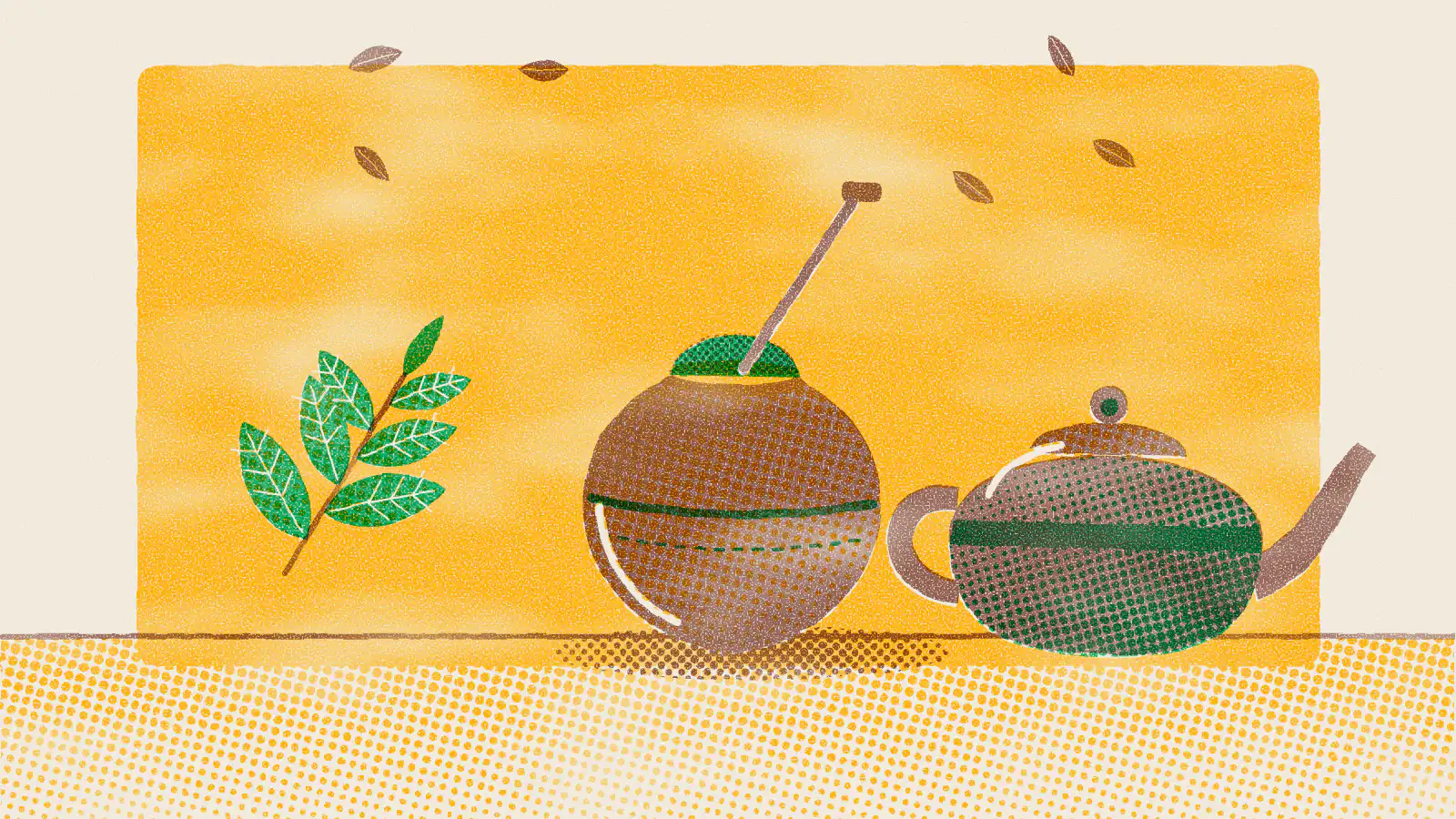
Mate has a grassy, slightly smoky, vegetal flavor, often described as somewhere between green tea and coffee, especially when it's toasted. It's bitter if oversteeped or brewed too hot, similar to over-extracted coffee. Traditional mate is unsweetened and drunk through a metal straw (bombilla) from a gourd, though tea-bag and loose-leaf versions brewed like regular tea are common outside South America.
Coffee's flavor range is wider, from bright and acidic (light roast) to bold and bitter (dark roast), and it's far more shaped by roast level, grind and brew method than mate is by preparation style.
Cost Per Cup
- Drip coffee at home: roughly $0.15–$0.40 per cup with pre-ground beans, more with specialty beans.
- Coffee shop drip or brewed coffee: $2.50–$4.50 per cup.
- Loose yerba mate at home: roughly $0.20–$0.50 per serving, and mate leaves can typically be refilled with hot water 2–4 times before losing flavor, which lowers the real cost per cup further.
- Bagged yerba mate: similar to bagged tea, around $0.15–$0.35 per bag.
Mate is generally cheaper per cup than coffee, especially loose leaf, largely because a single serving of leaves can be steeped multiple times.
The Ritual
Traditional mate is a social drink: one gourd, one bombilla, passed between people, refilled with hot water by whoever is serving. Coffee is more often a solo, on-the-go habit in the US, though pour-over and French press rituals scratch a similar "slow down and make it properly" itch for some coffee drinkers. If you like the meditative, hands-on side of coffee, mate's brewing ritual is likely to appeal to you too. See our how to prepare yerba mate the traditional way guide for the gourd-and-bombilla method.
Digestion and How They Sit on an Empty Stomach
Coffee's acidity is a common complaint for people who drink it on an empty stomach, sometimes triggering heartburn or stomach upset. Mate is less acidic and many drinkers report it sits more comfortably first thing in the morning, though it isn't acid-free and can still bother a sensitive stomach, especially brewed very strong or very hot. Traditional mate is also sipped slowly over an extended period rather than drunk quickly, which some people find easier on digestion regardless of the drink itself.
Mate Etiquette, Briefly
If you're ever served mate the traditional way, from a shared gourd with a bombilla, a few unwritten rules help: don't stir the bombilla or move it around in the gourd, drink your portion fully before handing it back to whoever is serving ("cebador"), and don't say "thank you" until you're done for good, since saying gracias is traditionally understood as "I'm finished." None of this is required if you're just brewing mate solo at home in a mug, but it's worth knowing if you're ever offered a round.
Who Should Consider Switching
- People who get jittery or anxious on coffee but still want a real caffeine lift, since mate's caffeine content is meaningful but generally lower than a full cup of drip coffee.
- People who want to space out their caffeine intake more evenly across the morning, since mate is often sipped slowly over 30–60 minutes rather than downed quickly.
- People who already like tea and want something stronger than green or black tea without going all the way to coffee.
Who Should Probably Stick With Coffee
- People who rely on a fast, strong hit first thing in the morning. Coffee, especially espresso, still delivers caffeine faster and in a more concentrated dose.
- People sensitive to caffeine in general. Mate can still contain as much caffeine as coffee at the high end of its range, so it isn't automatically the "gentler" choice; check the amount per serving rather than assuming.
FAQ
Does yerba mate have more caffeine than coffee?
Not usually. An 8 oz serving of yerba mate has roughly 65–130 mg of caffeine, compared to 95–200 mg for the same size cup of drip coffee, though a strongly steeped mate can approach the lower end of coffee's range.
Is yerba mate a healthier alternative to coffee?
Neither is inherently "healthier"; both are caffeinated plant infusions with antioxidants. Mate contains additional compounds like theobromine that some drinkers find give a steadier feel, but individual response varies, and heavy long-term mate drinking has its own precautions worth knowing about. See our yerba mate benefits and side effects guide for the full picture.
Can I mix yerba mate and coffee?
Some people do, brewing a mild mate-coffee blend for a smoother caffeine curve, though there's no set ratio. Start with a small amount of each if you're trying it, since the combined caffeine adds up.
Does mate taste like tea or coffee?
Closer to a smoky, grassy green tea than coffee, though the flavor is stronger and more vegetal than most steeped teas.
Is mate easier on the stomach than coffee?
Many drinkers find it is, since mate is generally less acidic than coffee, though it can still cause discomfort brewed very strong, very hot, or on an empty stomach for people prone to stomach issues.
Do I need special equipment to drink yerba mate?
No. A gourd and bombilla are traditional and give the most authentic experience, but a regular mug and a tea infuser or French press work fine for brewing loose mate at home.
The Bottom Line
Yerba mate and coffee both deliver real caffeine, but mate tends to be gentler on the crash, cheaper per cup when brewed loose, and built around a slower, more social ritual. If jitters are your main complaint about coffee, mate is worth trying; if you need a fast, strong hit, coffee still wins. For the traditional brewing method, see our yerba mate plant and preparation guide.
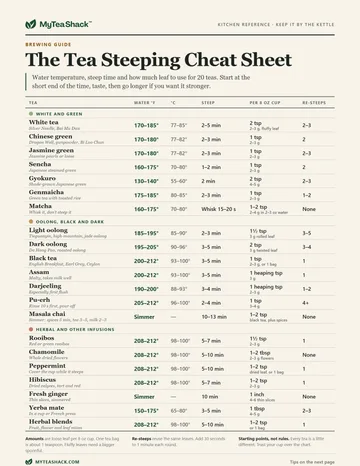
Free printable
The Tea Steeping Cheat Sheet
Water temperature, steep time and how much leaf to use for 20 teas, from sencha to rooibos, on one printable page. Plus five fixes for a bitter cup.