Green Tea With Lemon: Benefits, Downsides and How to Make It
The potential benefits of green tea with lemon, how the combination affects digestion and antioxidants, and simple tips to brew it well.

In this guide · 7 sections
Adding lemon to green tea does more than brighten the flavor — some research suggests it may also help your body absorb more of green tea's antioxidants. It's a simple, low-calorie way to add variety to your tea routine.
Potential Benefits of Green Tea With Lemon
- May improve antioxidant absorption: vitamin C in lemon juice may help stabilize and improve the absorption of catechins, the main antioxidants in green tea.
- May support digestion: the polyphenols in green tea can stimulate digestive enzymes, and a bit of citrus can make the tea more palatable after a meal.
- May help with alertness: green tea's natural caffeine, combined with L-theanine, is associated with calm, sustained focus rather than a jittery spike.
- May support skin health: both green tea's antioxidants and lemon's vitamin C are associated with reduced oxidative stress, a factor in skin aging, though drinking tea alone won't replace a skincare routine.
- Low in calories: unsweetened, it's a good swap for sugary drinks if you're managing your weight.
These are supportive, not curative, benefits — think of green tea with lemon as one healthy habit among many rather than a treatment for any condition.
Helps You Stay Hydrated and Alert
Because green tea has less caffeine than coffee, many people find it gives a gentler energy lift without the jittery crash. Adding lemon doesn't change the caffeine content, but the brighter flavor can make it easier to drink consistently throughout the day.
How to Make Green Tea With Lemon
- Heat water to about 175°F (just below boiling) to avoid a bitter, over-extracted cup.
- Steep green tea for 1–2 minutes.
- Squeeze in fresh lemon juice to taste, starting with a small wedge.
- Sweeten lightly with honey if you like, or drink it unsweetened.
Downsides to Know
Green tea is generally well tolerated, but drinking too much of it can cause side effects tied to caffeine and tannins, including an upset stomach, trouble sleeping, or a headache. Concentrated green tea extract supplements (not brewed tea) have been linked to rare but serious liver injury, enough that NIH's LiverTox database tracks it as a known cause of drug-induced liver injury — brewed green tea itself is not linked to this risk, so stick to the brewed leaf rather than high-dose extract supplements.
Side Effects and Precautions
- Caffeine sensitivity: limit intake if caffeine causes jitteriness, anxiety, or sleep trouble.
- Iron absorption: tannins in tea can reduce iron absorption from food, so avoid drinking it right alongside iron-rich meals if you're managing anemia.
- Pregnancy: caffeine intake should be limited during pregnancy — talk to your doctor about a safe daily amount.
- Medication interactions: check with your doctor if you take blood thinners or stimulant medications, since caffeine can interact with both. High intakes of green tea have also been shown to reduce blood levels of some heart and blood pressure medications (such as the beta-blocker nadolol), so space tea out from these medications if your doctor recommends it.
Prefer it sweeter? See the benefits of green tea with honey.
FAQ
Does lemon make green tea healthier?
Lemon's vitamin C may help your body absorb more of green tea's antioxidants, but green tea already offers benefits on its own — lemon is a flavorful bonus, not a requirement.
Can green tea with lemon help with weight loss?
It's a low-calorie replacement for sugary drinks, and green tea's caffeine and catechins are modestly linked to increased metabolism, but it's not a stand-alone weight-loss solution.
How many cups of green tea with lemon can I drink a day?
Most healthy adults can enjoy 2–3 cups a day without issue. Very high intakes can lead to caffeine-related side effects.
Is green tea with lemon good before bed?
Because green tea contains caffeine, it's better enjoyed earlier in the day unless you use a decaffeinated version.
The Bottom Line
Green tea with lemon is a simple, low-calorie way to enjoy green tea's antioxidants with a boost of vitamin C, best enjoyed in moderation as part of a balanced diet. To explore more ways to use citrus with tea, see black tea with lemon, or check out is green tea a fat burner for a closer look at the weight-loss claims.
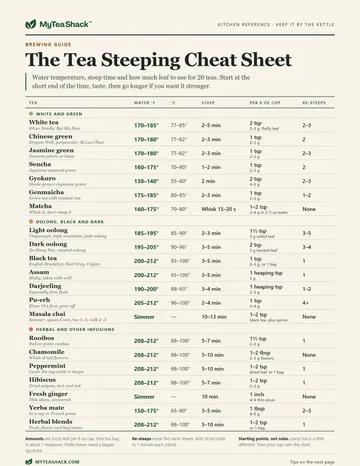
Free printable
The Tea Steeping Cheat Sheet
Water temperature, steep time and how much leaf to use for 20 teas, from sencha to rooibos, on one printable page. Plus five fixes for a bitter cup.