Chai Tea Latte Recipe: From Scratch or From Concentrate
How to make a chai tea latte at home from scratch with whole spices, or quickly from a concentrate, with ratios for both.

In this guide · 9 sections
A chai tea latte is black tea simmered with warming spices, then combined with steamed or frothed milk. Coffee shops usually make theirs from a sweetened concentrate, which is fast but often much sweeter than a homemade version. Here's how to make it both ways.
Chai Latte From Scratch
Ingredients (makes 2 cups)
- 2 cups water
- 2 black tea bags, or 2 teaspoons loose-leaf black tea
- 4 green cardamom pods, lightly crushed
- 1 cinnamon stick
- 4 whole cloves
- 1-inch piece fresh ginger, sliced
- 4 black peppercorns (optional, for extra warmth)
- 1 cup milk (dairy, oat or another milk of choice)
- 2–3 teaspoons sugar or honey, to taste
Instructions
- Combine the water, cardamom, cinnamon, cloves, ginger and peppercorns in a small saucepan.
- Bring to a boil, then reduce heat and simmer for 5–8 minutes so the spices infuse fully.
- Add the black tea and simmer for another 3–4 minutes. Don't let it boil hard, it can turn bitter.
- Add the milk and sweetener, then heat through without boiling, about 2 more minutes.
- Strain into two mugs, pressing on the solids to extract the last of the liquid.
Spice Ratio Notes
The ratio above (roughly 1 cinnamon stick, 4 cardamom pods, 4 cloves, an inch of ginger per 2 cups of water) is a solid starting point. Cardamom is the backbone of the flavor, so if you only adjust one spice, adjust that one. Ginger controls how "spicy-warm" versus mellow the cup tastes. If you like a sharper, more peppery chai, add the black peppercorns; if you prefer it smoother, leave them out.
Chai Latte From Concentrate
If you have a bottled chai concentrate (unsweetened or lightly sweetened, found near the tea or coffee creamers at most grocery stores), the ratio is simpler:
- Combine 1 part chai concentrate with 1 part milk (a 1:1 ratio is standard for a balanced latte; use less milk for a stronger cup).
- Heat together in a small pot or the microwave until hot but not boiling.
- Froth if you want a latte-style foam, using a milk frother, French press plunger, or a jar with a tight lid shaken hard for 30 seconds.
Concentrate is faster and more consistent, but check the label: many bottled concentrates already contain a significant amount of added sugar, so a "latte" made 1:1 with milk can be sweeter than the from-scratch version above even before you add anything extra.
Milk Options
| Milk | How it behaves in chai |
|---|---|
| Whole dairy milk | Classic, creamy, froths well |
| Oat milk | Naturally a little sweet, froths well, closest dairy substitute in texture |
| Almond milk | Thinner body, can taste slightly nutty against the spices |
| Coconut milk | Adds its own sweetness and richness, pairs well with the warm spices |
Oat milk is generally the easiest dairy-free swap since it froths similarly to whole milk and doesn't fight with the spice flavor.
Sweetener Options
Honey, brown sugar, maple syrup and plain white sugar all work. Honey and maple syrup add their own flavor notes that can complement the ginger and cinnamon; white or brown sugar keeps the spice flavor cleanest. Start with 2 teaspoons per cup and adjust, since spice strength and milk choice both affect how sweet the final cup tastes.
Whole Spices vs. Ground Spices
Whole spices (cardamom pods, a cinnamon stick, whole cloves) give a cleaner, more aromatic simmer and are easy to strain out at the end. Ground spices are more convenient and work fine in a pinch, roughly 1/4 teaspoon each of ground cardamom, cinnamon and cloves in place of the whole versions above, but they cloud the tea and can turn slightly gritty if you're not straining through a fine mesh. Whole spices also keep their flavor in storage far longer: ground spices lose potency within months, while whole cardamom pods, cinnamon sticks and cloves stay flavorful for a year or more in a sealed container.
Common Mistakes
- Boiling the tea and spices hard instead of simmering. A rolling boil pulls out bitterness from the black tea and can make the spices taste harsh instead of warm.
- Adding milk too early. Simmering milk for a long time with the spices can scald it and dull the spice flavor. Add milk near the end and just heat it through.
- Under-steeping the spices. Five to eight minutes of simmering the whole spices before the tea goes in is what actually extracts their flavor; rushing this step gives a weak, mostly-tea-tasting latte.
- Using stale ground spices. Pre-ground cardamom and cinnamon that have sat open for a year or more lose most of their aroma. If your homemade chai tastes flat, that's the first thing to check.
Iced Chai Latte
Both versions above work iced: make the from-scratch chai slightly stronger (steep an extra 2–3 minutes) since ice will dilute it, let it cool, then pour over ice with cold milk. For a full iced version with its own ratios, see our iced chai tea latte recipe.
FAQ
What spices go in a chai latte?
Traditional masala chai uses black tea, cardamom, cinnamon, cloves, ginger and sometimes black pepper or star anise. Cardamom and ginger are the two most defining flavors.
Can I make chai latte without loose spices?
Yes, a pre-made chai tea bag (rather than plain black tea) already has the spices blended in, or you can use a bottled chai concentrate for the fastest version.
How much caffeine is in a chai latte?
A homemade chai latte made with black tea has roughly 40–70 mg of caffeine per cup. Coffee shop versions can run higher if espresso is added; see our chai tea caffeine guide for a full breakdown.
Why does my chai latte taste watery?
Usually the tea and spices weren't simmered long enough, or too much milk was added relative to the chai base. Simmer the spice and tea mixture a few extra minutes before adding milk, and use a 1:1 chai-to-milk ratio rather than more milk.
The Bottom Line
A from-scratch chai latte takes about 15 minutes and gives you full control over spice strength and sweetness; a concentrate version takes under 5 minutes but usually adds more sugar than you'd choose yourself. Either way, cardamom and ginger are doing most of the work, so start there if you're adjusting the recipe. For the traditional stovetop version this is based on, see our masala chai tea guide, or read more on what chai tea is and its health benefits.
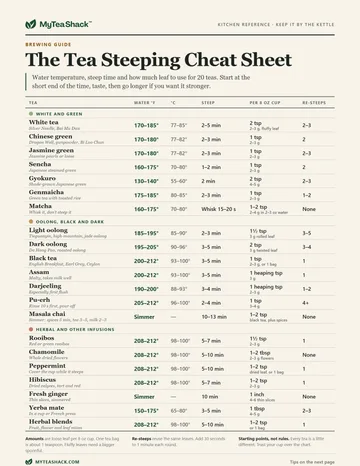
Free printable
The Tea Steeping Cheat Sheet
Water temperature, steep time and how much leaf to use for 20 teas, from sencha to rooibos, on one printable page. Plus five fixes for a bitter cup.