Best Electric Kettle for Tea: What to Look For First
How to choose an electric kettle for tea, why temperature control matters most, gooseneck vs. standard spouts, and what to buy for each budget.
In this guide · 9 sections
The one feature that actually matters for tea is variable temperature control. Everything else, gooseneck spouts, keep-warm modes, capacity, is about convenience, not the quality of what ends up in your cup.
Why Temperature Control Matters More Than Any Other Feature
Different teas need different water temperatures: roughly 160–180°F for green tea, 175–185°F for white, and a full 212°F boil for black tea and herbal infusions. A standard kettle only does one thing, boil to 212°F, which is exactly wrong for delicate teas. Boiling water scorches green and white tea leaves, pulling out excess tannins and turning a naturally sweet cup bitter and flat. A kettle that lets you set 175°F removes that risk without needing to time a cooldown period by hand. For the full breakdown by tea type, see our tea steeping chart.
Variable-Temperature vs. Standard Kettles
| Feature | Standard kettle | Variable-temperature kettle |
|---|---|---|
| Boils water | Yes | Yes |
| Sets a specific temperature | No | Yes, usually in 5–10°F increments |
| Good for black tea and herbal only | Yes | Yes |
| Good for green, white and oolong | No, requires manual cooldown | Yes |
| Typical price | $15–30 | $35–90 |
| Keep-warm function | Rarely | Usually |
If you only ever drink black tea, coffee, or herbal infusions, a standard kettle that just boils is genuinely enough, and there's no reason to pay more. The moment green, white or delicate oolong enters your rotation regularly, a variable-temperature kettle pays for itself in better-tasting tea within the first few cups.
Gooseneck vs. Standard Spout
A gooseneck kettle has a long, thin, curved spout designed for a slow, controlled pour, originally built for pour-over coffee. For tea, that control matters most when you're using a small infuser or a gaiwan and want to avoid splashing water over delicate leaves or flooding a small vessel too fast. A standard wide-spout kettle pours faster and is easier to fill a large mug or teapot with in one go, but gives you less control over a small, precise pour.
If you mostly brew tea in a standard mug or teapot, a standard spout is fine and often faster for everyday use. If you regularly use a small gaiwan, a compact infuser, or you're brewing matcha and want to control the water stream precisely, a gooseneck is worth the extra cost.
What to Look For by Budget
Under $30: A basic electric kettle with an auto-shutoff and boil-dry protection. No temperature settings, so it's best if you mostly drink black tea, herbal tea or coffee. Look for stainless steel or glass interior over unlined plastic, which can affect taste over time.
$30–60: Entry-level variable-temperature kettles with 4 to 6 preset temperatures matched to tea types (often labeled directly as "green tea," "white tea," "black tea" on the dial). This range covers the vast majority of home tea drinkers' actual needs.
$60–100+: Precision kettles with exact digital temperature settings (down to the degree), longer keep-warm times, and often a gooseneck spout built in. Worth it if you brew multiple tea types daily or you're particular about consistency cup to cup.
Capacity and Material
Most electric kettles hold 1 to 1.7 liters, enough for 4 to 7 cups. A smaller kettle (0.5–1 liter) heats faster and wastes less water and energy if you're usually making a single cup. Stainless steel interiors are the most common and don't affect flavor; glass kettles let you watch the water and look nice on a counter but are more fragile. Avoid kettles with any plastic parts that directly contact the water at high heat, since some can leach a plastic taste, especially when new.
Safety Features Worth Having
- Auto-shutoff: turns the kettle off once water reaches the set temperature or boils, rather than relying on you to catch it. Standard on nearly every kettle sold today, but worth confirming on very cheap models.
- Boil-dry protection: shuts the heating element off if the kettle is switched on with little or no water inside, preventing damage to the element and reducing fire risk.
- Cool-touch handle and exterior: matters most in households with kids or pets, since some budget kettles get hot enough on the body to burn on contact.
- Locking lid: keeps the lid from popping open and splashing hot water if the kettle is bumped while carrying it from the base to a cup.
None of these affect how your tea tastes, but they're worth checking on any kettle before buying, especially auto-shutoff and boil-dry protection, since a missing one is a real safety gap rather than a missing convenience.
Care and Descaling
Mineral buildup (limescale) from tap water coats the heating element over time and can eventually affect both heating speed and taste. Descale every 4 to 6 weeks if you have hard water, using a mix of equal parts water and white vinegar, or a 1:4 ratio of lemon juice to water: fill, let sit 20-30 minutes, then boil once and rinse thoroughly before using it for tea again, since a vinegar taste is hard to fully rinse out on the first pass.
FAQ
Do I really need a variable-temperature kettle for tea?
Only if you drink green, white or light oolong tea regularly. For black tea, chai and herbal infusions, which all want a full boil, a standard kettle does the same job for less money.
What temperature should I set for green tea?
Between 160–180°F, depending on the specific tea; delicate Japanese green teas like gyokuro want the cooler end, while more robust sencha can handle closer to 180°F. See how to make green tea for a full walkthrough.
Is a stovetop kettle just as good as electric?
A stovetop kettle with a built-in thermometer can hit the same temperatures, but most don't include one, which means guessing or using a separate thermometer. Electric variable-temperature kettles are more convenient and precise for anyone brewing more than one type of tea regularly.
How long do electric kettles typically last?
With regular descaling, a good electric kettle typically lasts 3 to 5 years before the heating element wears down or a temperature sensor drifts. Cheaper models without descaling maintenance may need replacing sooner.
The Bottom Line
If you only drink one type of tea that wants a full boil, save your money on a basic kettle. If your tea rotation includes green, white or delicate oolong, a variable-temperature kettle in the $35–60 range covers what most home tea drinkers need, and a gooseneck spout is worth the extra cost only if you're brewing in small vessels like a gaiwan or infuser. If you're also unsure whether you need a kettle or a teapot in the first place, teapot vs. tea kettle sorts out which piece of gear does what.
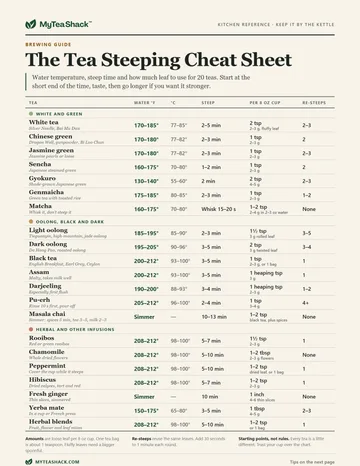
Free printable
The Tea Steeping Cheat Sheet
Water temperature, steep time and how much leaf to use for 20 teas, from sencha to rooibos, on one printable page. Plus five fixes for a bitter cup.