Tea Steeping Chart: Times and Temperatures by Type
A complete tea steeping chart with water temperature and steep time for green, white, oolong, black, pu-erh and herbal teas, plus re-steep guidance.
In this guide · 7 sections
Water that's too hot scorches delicate leaves and turns them bitter. Water that's too cool leaves flavor and caffeine still locked inside. This chart gives you the temperature and steep time for more than 20 teas, so you can stop guessing. If the term itself is new to you, start with what steeping tea actually means.
The Full Tea Steeping Chart
Steep times below are for loose leaf in a mug or infuser, about 1 teaspoon (2–3 grams) per 8 oz cup. Tea bags are more forgiving on temperature, but stick to the same time range or you'll get a bitter cup.
| Tea | Water Temp (°F) | Water Temp (°C) | Steep Time | Re-steeps |
|---|---|---|---|---|
| White tea | 175–185°F | 79–85°C | 1–3 min | 2–3 |
| Green tea (sencha) | 160–180°F | 71–82°C | 1–2 min | 1–2 |
| Gyokuro (shaded green) | 140–150°F | 60–66°C | 1–2 min | 2–3 |
| Matcha (whisked, not steeped) | 160–175°F | 71–79°C | N/A, whisk 15–30 sec | Not applicable |
| Jasmine green tea | 175–185°F | 79–85°C | 2–3 min | 1–2 |
| Light oolong (e.g. Tie Guan Yin) | 185–195°F | 85–90°C | 2–3 min | 3–5 |
| Dark, roasted oolong | 195–205°F | 90–96°C | 3–4 min | 3–5 |
| Black tea | 200–212°F | 93–100°C | 3–5 min | 1–2 |
| Earl Grey | 200–212°F | 93–100°C | 3–4 min | 1 |
| Chai (loose spiced black) | 200–212°F | 93–100°C | 4–5 min | 1 |
| Pu-erh | 205–212°F | 96–100°C | 2–5 min (rinse first) | 3–6 |
| Yellow tea | 170–180°F | 77–82°C | 2–3 min | 2 |
| Rooibos | 212°F | 100°C | 5–7 min | 1 |
| Chamomile (flowers) | 212°F | 100°C | 5–10 min | 1 |
| Peppermint | 212°F | 100°C | 5–7 min | 1 |
| Hibiscus | 212°F | 100°C | 5–7 min | 1 |
| Yerba mate | 150–170°F | 66–77°C | 3–5 min (can steep all day) | 3–5 |
| Ginger (fresh, sliced) | 212°F | 100°C | 10–15 min | 1 |
| Lemongrass | 212°F | 100°C | 5–8 min | 1 |
| Fruit tisanes | 212°F | 100°C | 5–8 min | 1 |
If you only remember one rule: delicate, unoxidized teas (white, green, matcha) want cooler water and shorter time. Fully oxidized teas (black, pu-erh) and dried herbs want a full boil and longer time.
Why Temperature Matters More Than People Think
Boiling water pulls tannins out of tea leaves fast. Tannins are what make an oversteeped or too-hot cup taste bitter and dry on your tongue. Green tea steeped at 212°F for 3 minutes tastes like grass clippings; the same leaf at 175°F for 90 seconds tastes sweet and grassy in a good way. The leaf didn't change, the water did.
Delicate teas like white and green also hold more of their catechins and amino acids intact at lower temperatures. Boiling water breaks some of those compounds down before they ever hit your cup, on top of making the tea taste worse.
How to Hit the Right Temperature Without a Thermometer
Most people don't own a lab thermometer, and you don't need one:
- Full rolling boil (212°F): black tea, pu-erh, herbal tisanes, chai.
- Boil, then let it sit off the heat for 30 seconds: roughly 195–200°F, good for oolong.
- Boil, then let it sit for 1–2 minutes, or pour into a second cup once before adding to the leaves: roughly 175–185°F, good for white and most green tea.
- Boil, then let it sit for 3–4 minutes: roughly 160°F, right for delicate green teas and gyokuro.
A kettle that lets you set a specific temperature removes the guesswork entirely if you drink more than one type of tea regularly; see teapot vs. tea kettle if you're not sure which piece of gear you actually need.
How Many Times Can You Re-Steep the Same Leaves?
Whole, high-quality loose leaf holds up to multiple infusions because the leaf hasn't fully unfurled or given up its flavor on the first pass. Broken leaves and tea bag "dust" release everything at once, which is why bagged tea rarely gives you a good second cup. Oolong and pu-erh are the most re-steepable; each additional infusion usually needs 15–30 seconds more time than the last to draw out what's left. See our full breakdown of loose leaf vs. tea bags for more on why that gap exists. Stale leaf gives up less flavor on every pass, so it also helps to know how long loose leaf tea stays fresh.
Common Steeping Mistakes
- Steeping straight from a rolling boil for every tea. Fine for black tea and herbal blends, but it ruins green and white tea.
- Walking away and forgetting the timer. Set an actual timer. A minute of oversteeping is the difference between smooth and bitter for delicate teas.
- Squeezing the tea bag at the end. This forces out extra tannic acid that was still trapped in the leaf, making the cup more bitter and cloudy.
- Using cold or reheated water. Water that's been reheated loses dissolved oxygen, which flattens the tea's flavor. Start with fresh, cold water each time.
For a longer walkthrough with equipment recommendations by tea type, see how to brew herbal tea and how to make green tea. We also cover a few more common tea brewing mistakes, from water quality to storage.
FAQ
What temperature should I use if I don't know what type of tea I have?
If the package doesn't say, start at 175°F and 2 minutes, then adjust. That's a safe middle ground for most leaf teas and won't scorch delicate ones. If it tastes weak, you can always steep the same leaves longer or hotter next time.
Is it OK to steep tea in boiling water and just steep it for less time?
For black tea and herbal tea, yes. For green, white and light oolong, no: even a short steep in a full boil pulls out excess tannins and can taste bitter, regardless of time. Temperature and time both matter, and one doesn't fully compensate for the other.
Does steeping longer mean more caffeine?
Yes, up to a point. Most of a tea's caffeine extracts in the first 1–2 minutes, with diminishing returns after that. Steeping longer mostly adds tannins and bitterness rather than a meaningful caffeine boost. If you want more caffeine, use more leaf per cup rather than steeping longer.
Can I use tap water for tea?
You can, but heavily chlorinated or mineral-heavy tap water can dull flavor, especially in delicate teas. Filtered or bottled water makes a noticeable difference in green, white and oolong tea; it matters less for strongly flavored black tea or herbal blends.
The Bottom Line
Match the water temperature to how processed the leaf is: cooler and shorter for green, white and light oolong, a full boil and longer for black, pu-erh and herbal tea. Save or bookmark the chart above, and if your cup still tastes bitter after fixing your temperature, see how to fix astringent tea for the other common causes.
New to all of this? Our five easiest teas for beginners is a good place to start, and these tips on how to drink tea cover what to do once it's in the cup.
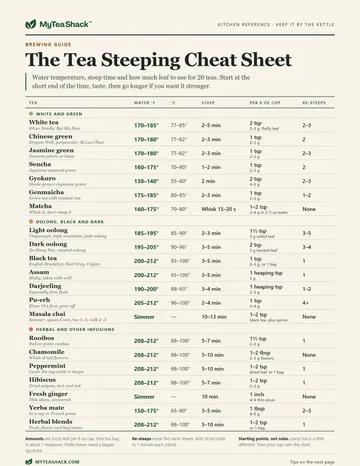
Free printable
The Tea Steeping Cheat Sheet
Water temperature, steep time and how much leaf to use for 20 teas, from sencha to rooibos, on one printable page. Plus five fixes for a bitter cup.