How to Brew Herbal Tea: A Complete 5-Step Guide
How to brew herbal tea for the best flavor: the right gear, water temperature, steep time per herb, cold brew method and common mistakes to avoid.
In this guide · 6 sections
Herbal tea comes out right when you get three things close: water just under a boil, 5 to 10 minutes of steep time, and enough leaf or flowers per cup. Bagged tea forgives a lot; loose leaf rewards paying attention. Here's how to brew it well every time, plus a cold brew method for summer and a fix for the most common mistakes. For green, oolong and black tea, the steeping times and temperatures chart covers each type.
What You Need
- A kettle, ideally one with a temperature setting or a thermometer, since herbal tea does best a bit below boiling.
- An infuser basket, tea ball, or French press for loose-leaf blends, so the plant material has room to expand. A cramped infuser is the main reason loose-leaf tea tastes weaker than expected.
- A mug with a lid or a saucer to cover the cup while it steeps. Covering it traps heat and steam, which pulls more flavor out of the leaves.
- A timer. Guessing steep time is the easiest way to end up with a bitter or watery cup.
Bagged tea just needs a mug and hot water, no infuser required.
Which Infuser Should You Use?
- Mesh ball infusers are cheap and fine for a single cup, but their small holes and cramped interior restrict flavor, especially with bulky flowers like chamomile.
- Infuser baskets (the kind that sit inside a mug or teapot) give leaves more room to expand and are the best all-around choice for loose-leaf herbal tea.
- A French press works well for larger batches. Add the herbs loose, pour hot water over them, let them steep, then press the plunger down to separate the leaves from the tea.
- A fine mesh strainer is a good backup if you don't have a dedicated infuser: steep the herbs loose in a mug or pot, then pour through the strainer into your cup.
If you're brewing a full pot rather than a single mug, scale the amount of tea and water up proportionally, but keep the steep time the same. A bigger pot doesn't need longer steeping, just more leaf and more water.
How to Brew Herbal Tea: 5 Steps
1. Measure the Right Amount
Use about 1 to 2 teaspoons of loose dried herbs (or 1 tea bag) per 8 oz cup. Bulky flowers and leaves, like chamomile or hibiscus, sit closer to 2 teaspoons since they're less dense than a fine-cut blend.
2. Match Water Temperature to Your Tea
Water that's too hot can scorch delicate herbs and turn them bitter; water that's too cool won't extract enough flavor. For most loose-leaf herbal blends, aim for water between 175–185°F, just below a full boil. Bagged tea is more forgiving, but the quality of your water still affects taste. Try bottled or filtered water for a cleaner flavor if your tap water is heavily treated.
3. Steep for the Right Amount of Time
Steeping too long makes herbal tea bitter; too short and you lose flavor. Steep time also depends on what's in your blend:
| Herb or blend | Steep time |
|---|---|
| Chamomile, lavender (flowers) | 5–7 minutes |
| Peppermint, spearmint (leaves) | 5–8 minutes |
| Hibiscus, rosehip (tart, thicker petals) | 7–10 minutes |
| Ginger (fresh or dried root) | 8–10 minutes |
| Rooibos, honeybush (woody stems) | 5–7 minutes |
| Dense root or bark blends (dandelion root, chaga) | 10–20 minutes |
For comparison, true teas steep much faster: black or green tea takes 2–5 minutes, and oolong or white tea 3–7 minutes. See what "steeping" actually means for why the timing matters so much.
4. Cover and Stir
Cover the cup while it steeps to keep the heat in, and give loose-leaf tea a stir partway through to redistribute the leaves for a more even extraction. Bagged tea just needs a few minutes to sit, covered if you can.
5. Strain and Taste Before Adding Anything
Pull the bag or infuser as soon as the time is up, taste it, and then add honey, lemon or milk if you want. Herbal tea left steeping after it's strong enough only gets more bitter, it doesn't get better.
How to Cold Brew Herbal Tea
Cold brewing skips the heat entirely and takes longer, but it produces a smoother, less bitter cup, especially for hibiscus, mint and fruit-based blends.
- Use about 1 tablespoon of loose herbs (or 2 tea bags) per 8 oz of cold or room-temperature water.
- Steep in the refrigerator for 6 to 8 hours, or overnight.
- Strain and serve over ice.
Cold brew pulls out less caffeine and less of the harsher tannins than hot brewing, which is part of why it tastes smoother, though naturally caffeine-free herbs like chamomile or hibiscus don't have that issue either way.
Common Mistakes
- Using boiling water on delicate flowers. Chamomile and hibiscus turn bitter and lose aroma if you dunk them straight into a rolling boil.
- Not measuring the leaf. Eyeballing a "pinch" usually means too little tea and a weak, watery cup.
- Leaving the bag or infuser in too long. Set a timer instead of steeping by feel.
- Reusing a bag for a second full cup. Most herbal tea bags are designed for one strong steep; a second steep will be noticeably weaker.
FAQ
What temperature should I use for herbal tea?
Aim for 175–185°F for loose-leaf herbal blends, just below boiling. Bagged tea is more flexible since most bags are designed for boiling water.
How long should herbal tea steep?
Most herbal infusions need 5 to 10 minutes, depending on what's in the blend: flowers and leaves are usually done by 7 minutes, while roots, bark and thicker petals can take up to 20.
Can you cold brew herbal tea?
Yes. Use roughly double the amount of tea you'd use hot, steep in the fridge for 6 to 8 hours, then strain. It's a good option for hibiscus, mint and fruit blends in warm weather.
Can I reuse herbal tea leaves for a second cup?
Many herbal blends can be re-steeped once for a milder second cup, though you'll get less flavor than the first steep. Loose leaf holds up to a second steep better than tea bags. See our guide on loose leaf vs. tea bags for more on that trade-off.
The Bottom Line
Good herbal tea comes down to the basics: enough leaf, water a bit below boiling, and steeping by the clock rather than by guesswork, longer for hardy roots and bark, shorter for delicate flowers. Once you've got the fundamentals down, branch out. Try chamomile tea for sleep, explore what is herbal tea for a broader primer, or check our healthiest herbal teas roundup for what to brew next.
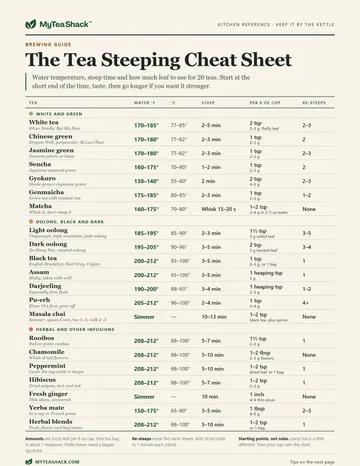
Free printable
The Tea Steeping Cheat Sheet
Water temperature, steep time and how much leaf to use for 20 teas, from sencha to rooibos, on one printable page. Plus five fixes for a bitter cup.