What Does Steeping Tea Mean? A Complete Guide
What does steeping tea mean? How long to steep different teas, why it matters, and how to store steeped tea so it stays fresh.
In this guide · 8 sections
Steeping tea means soaking tea leaves (or a tea bag) in hot water long enough for their flavor, color and beneficial compounds to infuse into the water. It's the single step that turns dry leaves into a drinkable cup, and getting the time and temperature right makes a noticeable difference in taste.
How to Steep Tea
- Choose your tea and measure roughly one teaspoon of loose leaf, or one tea bag, per 8 ounces of water.
- Heat water to the right temperature for your tea type (see the table below, or our full tea steeping chart for more than 20 teas).
- Pour the water over the leaves in a cup, mug or teapot.
- Cover and let steep for the recommended time.
- Strain out the leaves or remove the tea bag, then enjoy.
Covering the cup while it steeps helps keep the water hot and traps aromatic oils that would otherwise escape. It also helps to warm your teapot or cup first by rinsing it with a little hot water and discarding that water, so it doesn't cool down your tea as it steeps.
How Long Should You Steep Tea?
Steeping time and water temperature vary quite a bit by tea type. Here's a general guide:
| Tea type | Water temperature | Steep time |
|---|---|---|
| Green tea | 160–180°F (70–82°C) | 1–3 minutes |
| White tea | 170–185°F (77–85°C) | 2–4 minutes |
| Oolong tea | 185–205°F (85–96°C) | 2–5 minutes |
| Black tea | 200–212°F (93–100°C) | 3–5 minutes |
| Chai tea | 212°F (100°C) | 3–5 minutes |
| Rooibos tea | 212°F (100°C) | 5–7 minutes |
| Hibiscus tea | 212°F (100°C) | 5–7 minutes |
| Herbal tea | 212°F (100°C) | 5–10 minutes |
Steeping too long, especially for green and black tea, can pull out extra tannins and make the tea bitter or astringent. Steeping too briefly leaves flavor and beneficial compounds behind in the leaves.
Why Steeping Time Matters
The hot water opens up the cell walls in the tea leaves, releasing flavor compounds, color and antioxidants like catechins. A short steep gives a lighter, milder cup; a longer steep extracts more flavor, caffeine and tannins, which is why the same tea can taste very different depending on how long it sits.
How to Tell When Tea Is Done Steeping
Color and aroma are your best guides. Most teas turn from pale to a fuller amber or golden color as they steep, and a fresh, fragrant smell is a good sign the tea is ready. If it smells flat, stale or overly bitter, it has likely oversteeped.
How to Store Steeped Tea
- Refrigerate leftover brewed tea in a covered glass container and drink it within 2–3 days.
- To make iced tea, steep as usual, then pour over ice or refrigerate until cold; brewing tea slightly stronger than usual helps it hold its flavor once diluted with ice.
- Freeze extra tea in ice cube trays to use in smoothies or to chill future glasses of iced tea without watering it down.
If you're steeping herbal ingredients specifically, our guide to brewing herbal tea has more tea-by-tea detail, and our tea drinking tips cover serving and tasting once your tea is ready.
Common Steeping Mistakes
- Squeezing the tea bag. This forces out extra tannins and makes the tea taste more bitter, whether you do it during steeping or after.
- Using boiling water for delicate teas. Green and white tea can turn bitter and grassy if steeped in water that's too hot; let boiled water cool for a few minutes first.
- Steeping for too short a time out of impatience. Under-steeped tea often tastes watery rather than smooth, since not enough flavor has had time to infuse.
- Leaving the tea bag in after steeping. This is one of the most common causes of bitter tea; remove the bag or strain the leaves as soon as the steep time is up.
- Using stale tea. Tea loses aroma and flavor over time, so even perfect steeping can't fully make up for old, stale leaves.
FAQ
What happens if you steep tea too long?
Oversteeping pulls extra tannins out of the leaves, which can make the tea taste bitter or overly astringent, especially with green and black tea.
Can you steep tea more than once?
Yes, especially with high-quality loose-leaf tea like oolong or green tea. Many varieties can be resteeped 2–3 times, often revealing different notes with each infusion.
Does steeping longer make tea stronger in caffeine?
Yes, up to a point. Longer steeping and hotter water generally extract more caffeine, along with more tannins and flavor compounds.
Is it okay to squeeze the tea bag?
It's better not to. Squeezing forces out extra bitter compounds that are still trapped inside the bag and can make the tea taste worse.
The Bottom Line
Steeping is simply the process of letting hot water draw flavor and compounds out of tea leaves, but the right temperature and time depend on the tea type. Match your steep to the chart above, and you'll get a noticeably better cup than a one-size-fits-all approach. For more on the tools involved, see our comparison of a teapot versus a tea kettle, or learn about loose leaf tea versus tea bags.
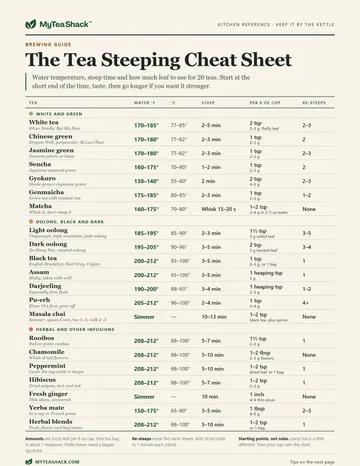
Free printable
The Tea Steeping Cheat Sheet
Water temperature, steep time and how much leaf to use for 20 teas, from sencha to rooibos, on one printable page. Plus five fixes for a bitter cup.