15 Mistakes Most People Make When Preparing Tea
Avoid the most common tea-brewing mistakes, from water temperature to steep time, and learn how to make a better cup every time.
We may earn a commission when you buy through links in this guide, at no extra cost to you. How we make money.
In this guide · 4 sections
Making tea looks simple, but small missteps in water quality, temperature or steep time can flatten the flavor and cut down on a tea's beneficial compounds. Here are the most common mistakes people make, and how to fix them. Most come down to temperature and time, which our tea steeping chart lays out by type.
Common Tea Brewing Mistakes
1. Buying Low-Quality Tea
Cheaper teas often contain broken leaves, stems, or artificial flavoring to mask a weak taste. Look for whole-leaf teas for a more delicate, fuller flavor.
2. Using Old Tea
Tea doesn't spoil, but it does lose aroma and flavor over time. Check the best-by date and store tea in an airtight container away from light and heat.
3. Ignoring Water Quality
Water makes up most of your cup, so it matters. Tap water can carry chlorine, minerals or other flavors; filtered or good-quality bottled water gives a cleaner taste.
4. Getting the Water Temperature Wrong
Every tea has an ideal brewing temperature:
| Tea type | Water temperature |
|---|---|
| Black tea, pu-erh, most oolong | 195–205°F (90–96°C) |
| Green tea | up to 175°F (80°C) |
| White tea | 160–175°F (70–80°C) |
Water that's too hot scalds delicate leaves and makes tea bitter; water that's too cool under-extracts flavor.
5. Heating Water With the Tea Already In It
Boil the water separately, then pour it over the leaves once it's at the right temperature. Adding leaves to water as it heats over-extracts tannins and makes the tea harsh.
6. Combining Herbs Without Checking Interactions
Mixing several herbal infusions can sometimes create effects you didn't intend. If you take medication or have a health condition, check with a doctor before combining herbal teas regularly.
7. Storing Brewed Tea in a Warm Spot
Tea tastes best fresh. Reheating or keeping a pot warm for hours dulls the flavor; make only what you'll drink soon.
8. Throwing Away Leaves After One Steep
Quality loose-leaf tea can usually be re-steeped two to three times, and some oolongs and pu-erhs hold up for many more infusions. Add a few extra seconds to each subsequent steep.
9. Adding Sugar to Quality Tea
Sugar masks the natural flavor of a good tea. If a brew tastes bitter, it's usually a sign of over-steeping or too-hot water, not a reason to add sweetener.
10. Squeezing the Bag Against the Cup
Squeezing releases extra tannins from inside the bag, making the tea taste more bitter and astringent. Just lift the bag out and let it drip naturally.
11. Leaving the Tea Bag in Too Long
Most tea bags are ready in 3–5 minutes. Leaving them longer pulls out excess tannins and makes the tea taste harsh.
12. Removing the Bag Too Early
Cutting the steep short leaves you with a weak, underdeveloped cup. Follow the recommended steep time for your tea type.
13. Microwaving Tea
Microwaving heats water unevenly and can scorch delicate leaves. A kettle or stovetop gives more consistent results.
14. Reheating Tea
Reheating a finished cup changes its flavor and can make it taste stale or bitter. Brew a fresh cup instead.
15. Using the Wrong Teapot Material
Unglazed clay teapots (like Yixing) absorb some flavor over time, so it's best to dedicate one to a single type of tea. Glazed ceramic, glass or porcelain won't retain flavors and work well for any tea. Iron pots hold heat less consistently than ceramic.
How to Brew Tea With a Teapot
- Choose a teapot sized for how many cups you're making.
- Pick a tea suited to the time of day — black tea and chai in the morning, green or white tea midday, and caffeine-free herbal blends in the evening.
- Heat water to the right temperature for your tea type (see the table above).
- Add the tea to the pot, pour over the water, and steep for the recommended time before serving.
Related guides: how to brew tea by type and tips for drinking tea.
FAQ
How long should I steep tea?
Most black teas need 3–5 minutes, green teas 2–3 minutes, and herbal infusions 5–7 minutes. Steeping longer generally makes tea more bitter, not stronger in a good way.
Can I reuse a tea bag?
You can usually get a second, lighter cup from a tea bag, but the flavor and antioxidant content drop noticeably after the first steep.
Does water temperature really matter that much?
Yes — using water that's too hot for delicate teas like green or white tea is one of the most common reasons homemade tea tastes bitter or grassy.
The Bottom Line
Most brewing mistakes come down to water temperature, steep time, and storage. Fix those three, and almost any tea you buy will taste noticeably better.
For more on getting the details right, see our guides on the astringency in tea, what it means for tea to steep, and loose leaf vs. tea bags.
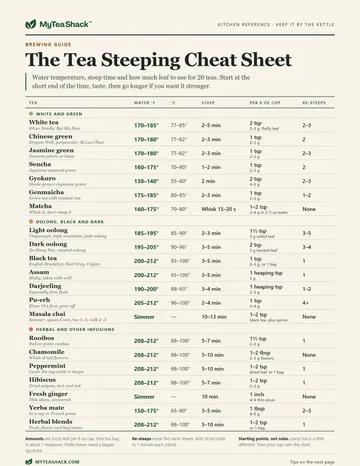
Free printable
The Tea Steeping Cheat Sheet
Water temperature, steep time and how much leaf to use for 20 teas, from sencha to rooibos, on one printable page. Plus five fixes for a bitter cup.