Best Teas for Beginners: Top 5 Picks and Why
New to tea? Here are the 5 best teas for beginners, why each one works for a first-time drinker, and simple tips for finding a flavor you'll love.
We may earn a commission when you buy through links in this guide, at no extra cost to you. How we make money.
In this guide · 7 sections
If you're new to tea, the sheer number of options can be overwhelming. These five teas are the easiest to enjoy right away, and each one works well whether you like your tea light and floral or bold and comforting. Once you pick one, the tea steeping chart tells you how hot and how long to brew it.
Types of Tea, Simplified
Tea generally falls into three groups:
- True teas: made from the Camellia sinensis plant (green, black, white, oolong, pu-erh).
- Herbal teas (tisanes): made from other plants, flowers, roots or spices, and naturally caffeine-free.
- Flavored teas: a true tea blended with fruit, herbs or spices for a unique taste.
The 5 Best Teas for Beginners
1. Green Tea
Green tea is a great starting point because it's light and easy to drink. If it tastes too grassy on its own, a splash of lemon juice softens the flavor and may help your body absorb more of its antioxidants.
2. Chamomile Tea
Naturally caffeine-free, chamomile has a soft, floral, slightly sweet taste and is a popular choice in the evening. A little honey brings out its relaxing, comforting side, and it pairs well with lavender or lemon balm.
3. Rooibos Tea
Rooibos is naturally caffeine-free and naturally sweet, with a smooth, reddish color. It's a gentle way to explore herbal tea without any bitterness to get used to.
4. Milk Tea
Milk tea softens and sweetens the flavor of stronger teas like black or Assam, making it an easy bridge for coffee drinkers. It's the default way tea is served in many parts of the world, so order a "black tea" specifically if you want it without milk.
5. Peppermint Tea
Naturally caffeine-free, peppermint tea is simple to make with fresh or dried mint leaves steeped in hot water. It's also commonly used to help settle an upset stomach.
Why Start a Tea Habit?
Beyond the taste, tea drinking is a low-effort ritual: it's a moment to slow down, and depending on the type you choose, it can be a lighter, gentler alternative to coffee. Many beginners find that once they find "their" tea, they naturally drink less soda and coffee.
Tips for Brewing as a Beginner
- Use fresh, filtered water and don't let it boil too hard for delicate teas like green or white. Tap water's additives can dull the flavor, and distilled water tends to taste flat.
- Start with a shorter steep time. You can always steep longer next time if you want a stronger cup. Oversteeping is the most common beginner mistake and the usual cause of a bitter cup.
- Try one new tea at a time so you learn what flavors you actually enjoy.
- For herbal infusions, bring water closer to a full boil and steep for at least 5 minutes to extract the full flavor.
| Tea type | Water temperature | Steep time |
|---|---|---|
| White tea | 175–185°F | 1–2 minutes |
| Green tea | 160–180°F | 1–2 minutes |
| Oolong tea | 185–205°F | 2–3 minutes |
| Pu-erh tea | 212°F | 2–3 minutes |
| Black tea | 212°F | 3–5 minutes |
| Herbal tea | 212°F | 5+ minutes |
A Simple Starter Kit
You don't need much to get going: a bag or box of two or three of the teas above, a basic infuser or teapot with a built-in strainer, and a kettle that lets you control temperature (even a cheap stovetop kettle with a thermometer works). A beginner-friendly sampler from Buddha Teas is an easy way to try a few types without committing to a full box of one you might not like. Skip anything with added sweeteners at first, so you can taste the tea itself before deciding what you'd add to it.
When you're ready to buy, our guide to the best tea brands sorts everyday and loose-leaf options by price per cup.
FAQ
What's the easiest tea to start with?
Chamomile and rooibos are the easiest for most beginners since they're naturally caffeine-free, mild, and hard to brew "wrong."
Is milk tea good for beginners who don't like plain tea?
Yes. Milk mellows the tannins in black tea, which is why milk tea is often the first stop for coffee drinkers trying tea for the first time.
Does tea have less caffeine than coffee?
Yes. An 8 oz cup of black tea has roughly 60–90 mg of caffeine and green tea has about 35–70 mg, compared with 150–200 mg in the same size cup of coffee.
The Bottom Line
You don't need to master the whole world of tea on day one. Start with an easy, forgiving option like green tea, chamomile, rooibos or milk tea, and build your palate from there. Our guide to caffeine-free teas is a good next stop if you'd rather skip caffeine entirely.
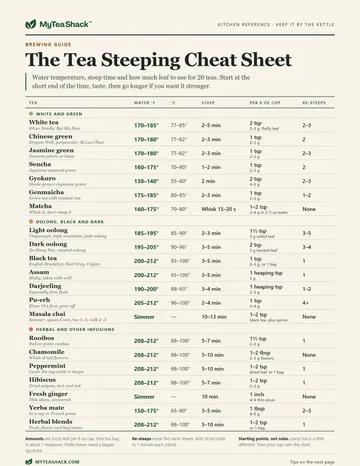
Free printable
The Tea Steeping Cheat Sheet
Water temperature, steep time and how much leaf to use for 20 teas, from sencha to rooibos, on one printable page. Plus five fixes for a bitter cup.