Is Loose Leaf Tea Better Than Tea Bags? Here's the Truth
The real differences between loose leaf tea and tea bags, including freshness, flavor, cost, and what's actually inside a tea bag.
We may earn a commission when you buy through links in this guide, at no extra cost to you. How we make money.
In this guide · 8 sections
Loose leaf tea generally offers better flavor and freshness, while tea bags win on speed and convenience. Neither is "wrong": the right choice depends on how much time and effort you want to put into your cup.
Loose Leaf Tea vs. Tea Bags: The Basics
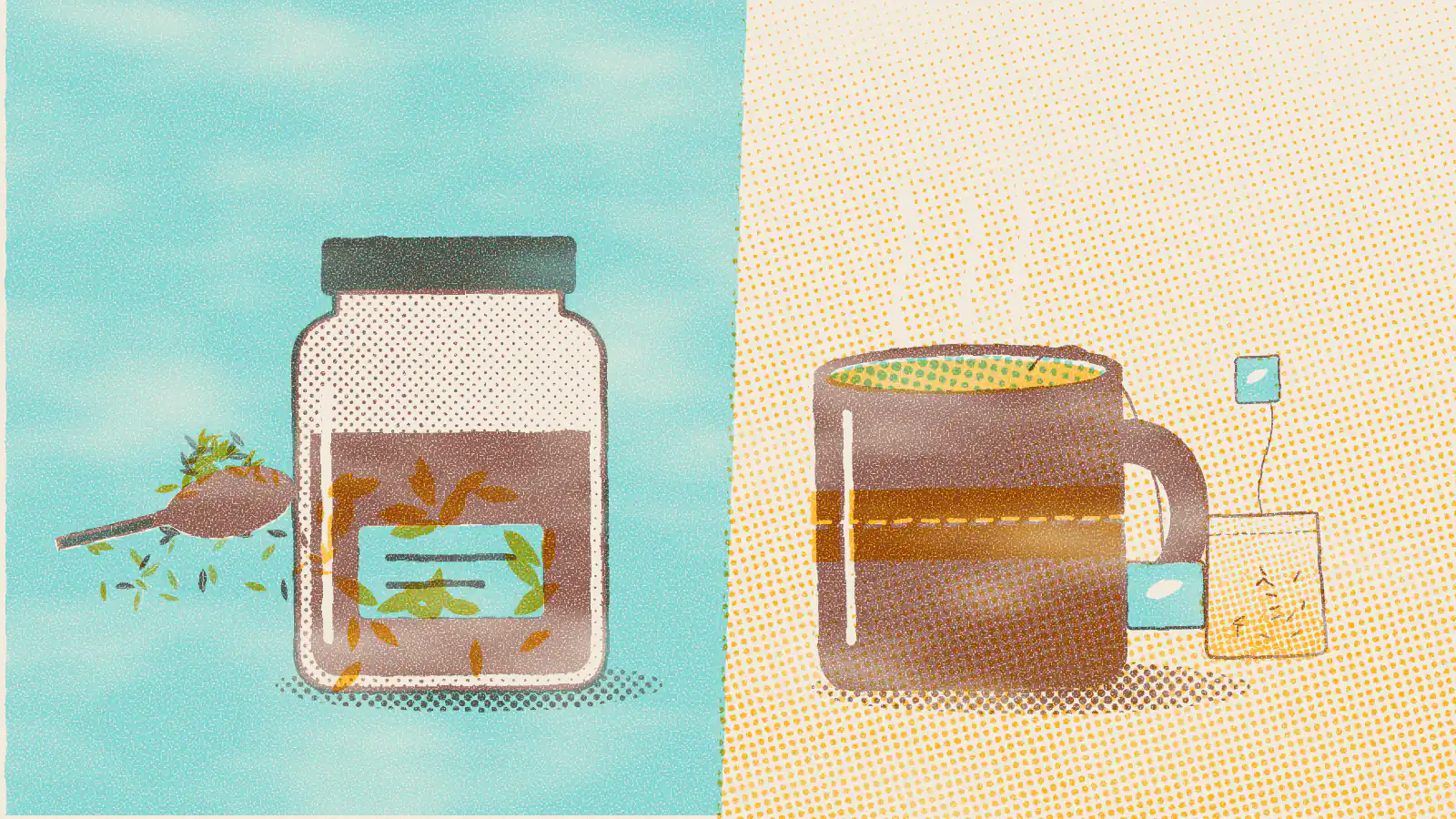
Tea bags are prized for convenience: open the box, steep for a few minutes, and you're done. They're pre-portioned, take up less storage space, and are widely available at any grocery store.
Loose leaf tea, on the other hand, lets you control exactly how much tea you use, mix your own blends, and generally results in a fresher, more flavorful cup, but it takes a bit more time and requires a strainer or infuser. Either way, the water temperatures and steep times in our tea steeping chart apply.
What's Actually Inside a Tea Bag?
Tea bags date back over a century, to a New York tea importer named Thomas Sullivan, who shipped tea samples in small silk sachets that customers started steeping bag and all.
Today, most tea bags contain "fannings" or "dust," the small, broken leftover pieces from processing whole leaves. These smaller particles release flavor and caffeine faster, which is convenient, but they also lose more of their essential oils and minerals in the process, which can mean a flatter taste. Some brands compensate with added flavoring.
Because the leaf surface area is larger, finely broken tea bag leaves can also release more tannins, giving some tea bags a more bitter or astringent taste than the equivalent loose leaf tea.
One note on packaging: some tea bags are made partly from plastic (like nylon or PET "silken" bags), and there's ongoing research into whether steeping these in near-boiling water can release small amounts of microplastic into your cup. If this concerns you, look for tea bags made from paper, cotton, or other plastic-free materials.
Don't confuse tea bag "dust" with matcha. Matcha is a finely ground whole leaf that you whisk directly into water, so you consume the entire leaf rather than an infusion.
Because the leaves stay whole, quality loose leaf tea can typically be re-steeped two or three times (some oolongs and pu-erhs many more), getting more value from the same tea. Most tea bags hold up for one strong steep, though you can often get a second, lighter cup. Avoid squeezing a used tea bag: it forces out extra tannic acid that's still trapped inside, making the tea taste more bitter, acidic and cloudy.
Freshness and Flavor
Because loose leaf tea is generally made from whole or larger leaf pieces and processed with fewer steps before it reaches you, it tends to stay fresher longer and deliver a fuller flavor. Tea bag contents can sit for longer periods before packaging, which affects both freshness and taste by the time they reach your cup.
Cost and Convenience
Tea bags are typically cheaper and require no special equipment, making them a solid everyday option. Loose leaf tea often costs a bit more per package, especially for specialty or single-origin teas, but rewards the extra effort with a stronger, more complex cup and, because it re-steeps, is often cheaper per cup when bought in bulk. It's also easier to blend your own combinations.
How to Brew Both
Tea bags: heat water to the temperature suited to your tea type, pour over the bag in a cup, and steep for the time recommended on the package, usually 2–5 minutes.
Loose leaf: measure about 1 teaspoon of leaves per cup into an infuser or teapot, pour hot water at the right temperature, and steep according to the tea type, roughly 2–3 minutes for green tea and 3–5 minutes for black tea.
What to Buy If You're Switching to Loose Leaf
You need two things: tea and a way to strain it. A basic stainless steel mesh ball or basket infuser is enough to start, a teapot with a built-in strainer is more convenient if you drink multiple cups at once, and a simple kitchen scale helps if you want consistent strength cup to cup. For the tea itself, Buddha Teas' loose leaf line is a reasonable place to start across green, black and herbal options. Avoid infusers with very fine holes for large-leaf oolongs and pu-erhs, since the leaves need room to unfurl.
If you do use bags, don't throw them straight out: there are plenty of ways to reuse tea bags once they're brewed.
FAQ
Is loose leaf tea actually healthier than tea bags?
Not necessarily healthier, but loose leaf tea generally retains more of its natural oils and flavor compounds, which can mean a richer-tasting cup.
Is instant tea the same as tea bags?
No. Instant tea is a soluble powder made from dehydrated tea extract, while tea bags contain actual processed tea leaves you steep in water.
Why does loose leaf tea taste different from tea bags?
Loose leaf tea is usually made from larger, less processed leaf pieces that release flavor more gradually and retain more essential oils, giving a smoother, fuller taste compared to the finely broken leaves in most tea bags.
Are tea bags made of plastic?
Some are. Nylon or PET "silken" pyramid bags hold their shape better, but there's ongoing research into whether steeping them in near-boiling water can release small amounts of microplastic into your cup. If this concerns you, look for bags labeled compostable, paper or otherwise plastic-free, or switch to loose leaf tea with a stainless steel infuser.
The Bottom Line
If you want convenience, tea bags are hard to beat. If you're chasing the best possible flavor and don't mind an extra minute or two of prep, loose leaf tea is worth the switch, especially for teas you drink often.
For more on the fundamentals, see our guides to how long loose leaf tea lasts and how to improve astringency in tea.
This post may contain affiliate links to Buddha Teas loose leaf tea, at no extra cost to you.
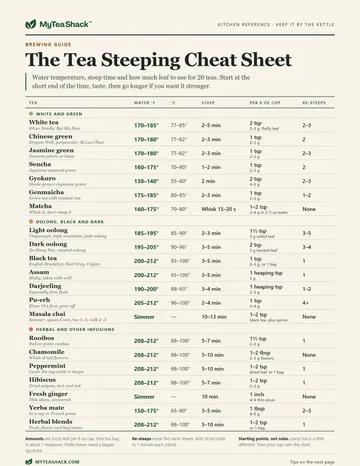
Free printable
The Tea Steeping Cheat Sheet
Water temperature, steep time and how much leaf to use for 20 teas, from sencha to rooibos, on one printable page. Plus five fixes for a bitter cup.