Cold Brew Tea: Ratios and Steep Times for Every Type
How to cold brew tea for a smoother, less bitter cup, with the exact fridge time and tea-to-water ratio for green, black, herbal and fruit teas.
In this guide · 9 sections
Cold brewing swaps heat for time: instead of hot water pulling flavor out of the leaves in minutes, cold water does it slowly over hours in the fridge. The result is a naturally smoother, less bitter, less acidic cup than hot-brewed tea, iced or not.
Cold Brew Tea Ratio and Time, by Type
Use cold or room-temperature filtered water, a clean jar or pitcher, and let it steep in the refrigerator, not on the counter, to avoid bacterial growth over the longer steep time.
| Tea type | Ratio (tea to water) | Fridge time | Notes |
|---|---|---|---|
| Green tea | 1 tbsp per 8 oz | 4–8 hours | Shorter end for a lighter, sweeter cup |
| Black tea | 1 tbsp per 8 oz | 8–12 hours | Longer steep than green without turning bitter |
| White tea | 1.5 tbsp per 8 oz | 6–10 hours | Needs more leaf since cold water extracts it slowly |
| Oolong tea | 1 tbsp per 8 oz | 8–12 hours | Re-steep the same leaves once for a second batch |
| Herbal tea (chamomile, peppermint, hibiscus) | 2 tbsp per 8 oz | 8–12 hours | Needs more leaf and longer time; no caffeine to worry about extracting too fast |
| Fruit and berry tisanes | 2 tbsp per 8 oz | 8–12 hours | Color and tartness build gradually; taste-test at 8 hours |
| Yerba mate | 2 tbsp per 8 oz | 6–10 hours | Base for a quick homemade tereré |
Scale the ratio up for a full pitcher: for a 32 oz pitcher, use about 4 tablespoons of tea for green or black, doubled for herbal blends.
How to Cold Brew Tea, Step by Step
- Add loose tea or tea bags to a clean jar or pitcher.
- Cover with cold, filtered water at the ratio above. Filtered water matters more here than in hot brewing, since there's no heat to mask off-flavors from tap water.
- Stir once to make sure all the leaves are wet, then cover and refrigerate.
- After the minimum time listed, taste. If it's too weak, let it sit longer rather than adding more leaf mid-steep.
- Strain out the leaves or remove the bags once it tastes right. Leaving them in past the recommended window can eventually turn even a cold brew tea slightly bitter, though far more slowly than a hot steep.
- Store strained cold brew tea in the fridge for up to 3 to 4 days.
Why Cold Brew Tastes Different
Heat speeds up the release of tannins, the compounds responsible for bitterness and a dry, puckering feeling on the tongue. Cold water extracts flavor and caffeine much more slowly and pulls out proportionally fewer tannins relative to the sugars and amino acids that make tea taste sweet and smooth. That's the whole reason cold brew tea tastes rounder even from the exact same leaves you'd use for a hot cup; see how to fix astringent tea if a hot-brewed cup of the same tea usually tastes too dry or bitter for you.
Cold brewing also extracts less caffeine overall than a hot steep of the same length, though the longer total steep time partly closes that gap. A cold-brewed black tea generally lands somewhat below its hot-brewed caffeine content; see is green tea caffeinated, and how much for hot-brew baselines you can use as a reference point.
Cold Brew vs. Regular Iced Tea
Regular iced tea is brewed hot at full strength, then poured over ice or refrigerated to cool, which dilutes it slightly as the ice melts. Cold brew skips the hot step entirely. Iced tea is faster (minutes, not hours) and tastes closer to a standard hot cup; cold brew takes planning but produces a smoother, naturally sweeter result with less bitterness even without sugar. For a side-by-side of the hot method and serving tips, see iced tea: what it is, benefits and how to make it.
Can You Cold Brew Tea Bags?
Yes. Use one standard tea bag per 8 oz of water and treat it the same as loose leaf for timing. Tea bags work fine for cold brewing since the finer, more broken leaf inside extracts faster than whole loose leaf, so you can lean toward the shorter end of the time range.
Best Teas to Cold Brew
Not every tea benefits equally from the cold method:
- Green tea is the clearest upgrade. Hot-brewed green tea is the type most likely to turn bitter from a slightly-too-hot kettle, and cold brewing removes that risk entirely while keeping the grassy, slightly sweet flavor.
- Hibiscus and fruit tisanes cold brew into a naturally tart, refreshing drink with a deeper color than a quick hot steep, since the extra hours give the color and acidity time to fully develop.
- Black tea cold brews into a smoother, less astringent cup than hot-brewed and cooled, which matters if you usually add sugar to cut bitterness; you may find you need less sweetener with cold brew.
- Delicate white tea benefits from cold brewing too, though it needs a longer steep and more leaf since it's the least concentrated tea to begin with.
Skip cold brewing for chai and other spice-heavy blends. The spices need heat to release their oils fully, so a cold steep tends to taste flat and underspiced compared to a hot brew.
Common Mistakes
- Steeping on the counter instead of the fridge. Room temperature over many hours is long enough for bacteria to multiply; always refrigerate.
- Using too little leaf. Cold water extracts more slowly, so cold brew genuinely needs more tea per cup than a hot steep, not less.
- Steeping green or white tea too long. Even cold, an 18-hour steep can turn slightly bitter and grassy; taste-test rather than guessing.
- Forgetting to strain. Leaving bags or loose leaf in the pitcher after straining time keeps extracting flavor, slowly shifting the taste over a few days in the fridge.
FAQ
Is cold brew tea healthier than hot tea?
Neither is inherently healthier. Cold brewing extracts somewhat different proportions of compounds, generally fewer tannins and slightly less caffeine, but the underlying tea and its properties are the same. Choose based on taste and convenience rather than any health difference.
How long does cold brew tea last in the fridge?
Once strained, 3 to 4 days in a sealed container in the refrigerator. If it develops an off smell or cloudiness before then, discard it.
Can I cold brew matcha?
Not in the same way, since matcha is a powder you consume whole rather than an infusion you strain out. You can whisk matcha into cold water directly for a quick cold matcha, but that's a different process from cold brewing loose leaf or bagged tea.
Do I need special equipment to cold brew tea?
No. A mason jar or any pitcher with a lid works. A fine mesh strainer or the removable infuser basket from a pitcher makes straining easier, but isn't required if you're using tea bags.
The Bottom Line
Cold brew tea trades speed for smoothness: more leaf, cold filtered water, and several hours in the fridge instead of minutes on the stove. Start with the ratios above, taste before straining, and adjust the time to your taste rather than the leaf amount. It's an easy way to make a pitcher of tea you can drink all week without ever turning bitter.
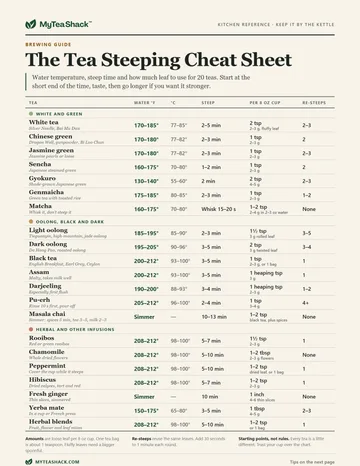
Free printable
The Tea Steeping Cheat Sheet
Water temperature, steep time and how much leaf to use for 20 teas, from sencha to rooibos, on one printable page. Plus five fixes for a bitter cup.