Best Tea Infuser: How to Pick the Right One
How to choose a tea infuser: mesh size, material, size for full leaf expansion, and how to keep it clean and stain-free.
In this guide · 10 sections
A tea infuser holds loose-leaf tea in the water while keeping the leaves out of your cup. The type you need depends less on brand and more on three things: mesh size, how much room it gives the leaves to expand, and how easy it is to clean.
Types of Tea Infusers
| Type | How it works | Best for |
|---|---|---|
| Ball infuser (mesh sphere on a chain) | Clips or hangs into a single mug | Quick, single-cup brewing; cheapest option |
| Basket infuser | Sits inside a mug or teapot, larger capacity | Everyday brewing, easier to clean than a ball |
| Infuser mug or teapot (built-in strainer) | Strainer is part of the vessel, often removable | People who want one piece of gear instead of two |
| Paper tea filter / disposable sachet | Fill-your-own bag, single use | Travel, sharing tea with others, zero cleanup |
| Flat mesh strainer (spoon-shaped or basket that sits over the cup) | Tea steeps loose in the pot, then you strain it out | Best flavor, since leaves have full room to unfurl |
Mesh Size Matters More Than Material
The biggest difference between a good infuser and a bad one is the size of the mesh holes, not whether it's stainless steel or silicone.
- Fine mesh works for small-leaf teas and fannings (broken leaf pieces), like most bagged-style black tea or rooibos.
- Wider mesh or basket-style infusers are necessary for whole-leaf teas like oolong or many green teas, which expand significantly as they steep. A tight ball infuser crushes the leaves against each other, which restricts water flow and gives a weaker, less even brew.
If you mostly drink whole-leaf tea, a basket infuser or a flat strainer that sits over the cup will consistently taste better than a small mesh ball, simply because the leaves have room to open up and release flavor.
Size: Give the Leaves Room
A common mistake is buying an infuser that's too small for the amount of tea you actually use. Whole-leaf teas, especially oolong and some greens, can expand to two or three times their dry size. If the infuser is packed tight, water can't circulate around the leaves evenly, so you get a weaker cup even after a full steep. As a rule of thumb, an infuser should be no more than half full of dry leaf, leaving room to expand.
Material
- Stainless steel is the most common and durable option. It doesn't absorb flavors or stain the way some materials can, and it holds up to daily use.
- Silicone infusers are cheap and flexible but tend to have less effective mesh (bigger holes to keep the silicone from tearing), so more small tea particles end up in your cup.
- Ceramic infuser mugs look nice and retain heat well but are heavier and easier to chip.
For daily use, stainless steel with a proper basket or mesh (not silicone) is the most reliable choice.
Cleaning
Tea leaves, especially oxidized teas like black tea and pu-erh, can stain and leave residue in tight mesh. To keep an infuser from smelling stale or tasting like old tea:
- Rinse immediately after use, before the leaves dry onto the mesh.
- Use a soft brush (an old toothbrush works) to get residue out of fine mesh.
- Occasionally soak in a mix of warm water and a little baking soda to lift stains and odor, then rinse thoroughly.
- Let it dry fully before storing, since damp mesh left folded up can develop a musty smell.
Matching Infuser Style to Tea Type
| Tea type | Best infuser style | Why |
|---|---|---|
| Black tea, chai, rooibos (small or broken leaf) | Ball infuser or fine basket | Leaves are already broken small, so they don't need much expansion room |
| Green tea, white tea (whole or lightly rolled leaf) | Basket infuser or flat strainer | Needs more room to unfurl than a tight ball allows |
| Oolong (tightly rolled balls that unfurl a lot) | Large basket infuser or brew loose and strain after | Some oolongs expand dramatically, more than any small infuser can accommodate |
| Herbal blends with large pieces (dried flowers, chunks of fruit or root) | Large basket infuser or a flat mesh strainer over the cup | Bulky ingredients need the most room and the widest mesh openings |
What to Avoid
Skip infusers with very fine, tightly woven mesh marketed mainly on looks rather than tea type. They're fine for dust-sized fannings but choke off water flow for anything larger, which under-extracts the tea no matter how long you steep it. Also be cautious with infuser lids or handles that get hot to the touch. A cool-touch handle or a hook that rests on the mug's rim without dropping the infuser into scalding water is a small detail that makes daily use much easier.
Infuser vs. Tea Bag: When It's Worth Switching
Loose-leaf tea with a proper infuser generally gives more flavor and lets you control strength (add more leaf, or steep longer) compared to a pre-portioned bag. It's a bigger upfront step: buying loose tea, having an infuser on hand, and cleaning up after. If you're not sure it's worth the switch yet, see our full comparison of loose leaf tea vs. tea bags, and if your cups have been coming out bitter or weak regardless of infuser, check our list of common tea-making mistakes.
FAQ
What's the best type of tea infuser for beginners?
A basket-style infuser that fits inside a standard mug is the easiest starting point: more room for leaves to expand than a small mesh ball, and simple to rinse clean.
Do silicone tea infusers work as well as stainless steel?
Not usually. Silicone infusers tend to have larger mesh holes to avoid tearing the material, which lets more small tea particles through into your cup compared to a well-made stainless steel mesh.
Can I use a tea infuser for coffee too?
A basket-style infuser can technically hold coarse coffee grounds for a rough cold brew, but a dedicated French press or coffee filter will always give a cleaner cup, since coffee grounds are finer and need tighter filtration than most tea leaves.
How big should a tea infuser be?
Big enough that your usual serving of dry leaf fills it no more than halfway, so the leaves have room to expand fully as they steep.
The Bottom Line
Pick an infuser based on mesh size and room for the leaves to expand, not the price tag or the material alone. A basket-style stainless steel infuser covers most people's needs, while a flat mesh strainer over the cup gives the best flavor for whole-leaf teas that need the most room. For the temperatures and steep times to pair with whichever infuser you choose, see our brewing herbal tea guide and how to make green tea.
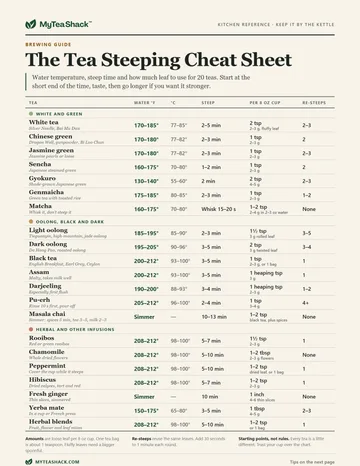
Free printable
The Tea Steeping Cheat Sheet
Water temperature, steep time and how much leaf to use for 20 teas, from sencha to rooibos, on one printable page. Plus five fixes for a bitter cup.