Best Tea Brands for Everyday, Loose Leaf and Herbal Tea
The best tea brands for everyday bags, loose leaf, herbal, matcha and chai, compared on price per cup, quality and where to buy them in the US.

In this guide · 10 sections
There's no single "best" tea brand because everyday bagged tea, loose leaf, matcha and herbal tea are different products with different quality bars. Here's how the major brands stack up in each category, with what you actually pay per cup.
How to Judge a Tea Brand
Before the brand names, know what separates a good one from a mediocre one:
- Leaf grade, not just origin. "Whole leaf" or "orthodox" on the label means larger, less broken leaf pieces, which generally means better flavor and more re-steeps than "fannings" or "dust," the small broken bits used in most cheap bags.
- Sourcing transparency. Brands that name the estate, region or farm (not just "Product of multiple countries") tend to have tighter quality control.
- Price per cup, not price per box. A $14 box of 20 bags looks expensive next to a $4 box of 100, but the $14 box may use double the leaf per bag. Divide price by number of servings to compare fairly.
- Third-party testing. Brands that publish pesticide or heavy metal testing results are worth a premium, especially for tea you drink daily.
Best Everyday Bagged Tea Brands
| Brand | Best for | Approx. price per cup | Where to buy |
|---|---|---|---|
| Twinings | Widest variety, reliable flavor | $0.15–0.25 | Grocery stores, Amazon, Target |
| Bigelow | Budget everyday black and herbal | $0.10–0.15 | Grocery stores, Walmart, Amazon |
| Tazo | Flavored and specialty blends | $0.20–0.30 | Grocery stores, Starbucks, Amazon |
| Yorkshire Tea | Strong, milk-friendly black tea | $0.15–0.20 | Amazon, specialty importers |
| Numi Organic | Organic, fair-trade certified | $0.25–0.35 | Whole Foods, Amazon, Target |
Twinings and Bigelow cover the most ground for someone who just wants a decent cup without thinking about it. If you drink tea with milk daily, Yorkshire Tea is stronger than most American grocery-store black teas and holds up better once milk is added.
Best Loose Leaf Tea Brands
| Brand | Best for | Approx. price per cup | Where to buy |
|---|---|---|---|
| Harney & Sons | Classic and flavored blends, gift-friendly tins | $0.30–0.50 | Own site, Amazon, specialty stores |
| Rishi Tea | Single-origin and organic loose leaf | $0.35–0.60 | Own site, Whole Foods, Amazon |
| Adagio Teas | Build-your-own blends, sample sizes | $0.20–0.40 | Own site only |
| Plum Deluxe | Small-batch, unusual flavor combos | $0.40–0.60 | Own site, Amazon |
| Upton Tea Imports | Serious single-estate teas, bulk pricing | $0.20–0.45 | Own site |
Loose leaf costs more per box but often less per cup than it looks, since good leaf re-steeps 2 to 5 times depending on the type; see loose leaf vs. tea bags for the full cost and flavor comparison. Adagio and Upton are the best value if you're buying in bulk and don't need fancy packaging. For oolong specifically, our best oolong tea guide walks through styles from light pouchong to roasted Da Hong Pao.
Best Herbal Tea Brands
| Brand | Best for | Approx. price per cup | Where to buy |
|---|---|---|---|
| Traditional Medicinals | Single-herb, wellness-focused blends | $0.30–0.45 | Grocery stores, Whole Foods, Amazon |
| Celestial Seasonings | Widest herbal variety, budget-friendly | $0.10–0.15 | Grocery stores, Walmart |
| Buddha Teas | Organic, unbleached bags, single-origin herbs | $0.25–0.40 | Own site, Amazon |
| Pukka Herbs | Organic blends, UK import | $0.30–0.45 | Whole Foods, Amazon |
| Yogi Tea | Spiced wellness blends | $0.20–0.30 | Grocery stores, Amazon |
Celestial Seasonings wins on price and variety for daily chamomile, peppermint or lemon ginger. Buddha Teas and Traditional Medicinals use whole, unbleached bags with fewer additives, which matters more if you're drinking a specific herb for a specific reason night after night.
Best Matcha Brands
| Brand | Best for | Approx. price per gram | Where to buy |
|---|---|---|---|
| Ippodo Tea | Ceremonial grade, traditional Japanese sourcing | $0.80–1.20 | Own site, select US retailers |
| Encha | Organic, single-origin ceremonial and culinary | $0.50–0.90 | Own site, Amazon |
| Jade Leaf | Budget culinary grade for lattes and baking | $0.15–0.25 | Amazon, Whole Foods |
| MatchaDNA | Bulk culinary matcha | $0.10–0.20 | Own site, Amazon |
If you're only using matcha in lattes or smoothies, don't pay ceremonial-grade prices; culinary grade from Jade Leaf or MatchaDNA tastes fine once it's mixed with milk. Save Ippodo or Encha for drinking matcha plain. Our best matcha powder guide compares ceremonial and culinary picks, and the matcha starter kit guide covers the whisk and bowl you actually need.
Best Chai Brands
| Brand | Best for | Approx. price per cup | Where to buy |
|---|---|---|---|
| Rishi Tea | Loose leaf masala chai, strong spice | $0.35–0.55 | Own site, Whole Foods |
| The Tao of Tea | Organic loose chai blends | $0.30–0.50 | Own site, Amazon |
| Oregon Chai | Liquid concentrate, quick lattes | $0.60–0.90 | Grocery stores, Amazon |
| Tazo Chai | Bagged, widely available | $0.20–0.30 | Grocery stores, Starbucks |
Loose chai from Rishi or The Tao of Tea gives you more control over spice strength and sweetness than a pre-made concentrate. Oregon Chai is the fastest option if you want a latte in under a minute with no simmering.
What "Organic" and "Fair Trade" Labels Actually Mean
USDA Organic on a tea label means the leaves were grown without most synthetic pesticides and fertilizers, verified by a third-party certifier; it says nothing about leaf grade or flavor. Fair Trade Certified means the growers and workers were paid a minimum price and premium, which can be worth paying for on principle even when it doesn't change what's in the cup. Neither label guarantees better taste, so treat them as ethical or health considerations separate from quality.
Red Flags When Choosing a Brand
- Ingredient lists with "natural flavor" as the only detail and no herb or spice named specifically.
- No sourcing information at all beyond "imported."
- Extremely cheap loose leaf (under $0.10/cup) that turns out to be mostly stem and dust once opened.
- Health claims on the packaging that sound too specific ("detoxifies your liver," "burns fat fast"); reputable brands stick to flavor and tradition, not medical claims.
FAQ
What's the best tea brand overall?
There isn't one best brand across every category. Twinings and Bigelow are the most reliable everyday bagged options, Harney & Sons and Rishi lead loose leaf, and Traditional Medicinals is the standout for herbal. Pick based on the type of tea you drink most.
Are expensive tea brands actually better?
Often yes, but not always. Price usually tracks leaf grade and sourcing quality up to a point, then starts reflecting packaging and brand prestige instead. Mid-range loose leaf from Adagio or Upton often matches the quality of premium tins at a lower price per cup.
What tea brand do coffee shops usually use?
Many independent coffee shops use Rishi, Numi or a regional roaster's private-label tea; large chains typically use their own house blends, as with Starbucks and Tazo. See our Starbucks tea drinks guide if you're trying to recreate a specific order at home.
Is store-brand tea worth buying?
For everyday black or herbal tea, store brands are often made by the same large suppliers as name brands and taste nearly identical. The gap widens for green, white and specialty teas, where freshness and leaf grade matter more and store brands tend to cut corners.
The Bottom Line
Match the brand to the category: Twinings or Bigelow for daily bags, Harney & Sons or Rishi for loose leaf, Traditional Medicinals for herbal, and culinary-grade Jade Leaf or MatchaDNA if matcha is going into a latte rather than a bowl. If you're just getting into tea and don't know where to start, our best teas for beginners guide narrows it down to five easy picks before you commit to a brand. Coming from coffee or soda instead? These teas for non-tea drinkers are the gentlest way in.
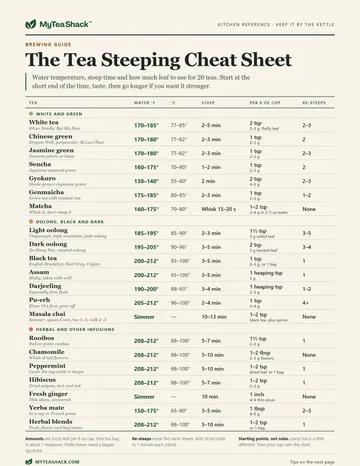
Free printable
The Tea Steeping Cheat Sheet
Water temperature, steep time and how much leaf to use for 20 teas, from sencha to rooibos, on one printable page. Plus five fixes for a bitter cup.