Best Tea for Non-Tea Drinkers to Start With
New to tea? Here are the easiest, most approachable teas for non-tea drinkers, plus what makes them a good coffee alternative.
In this guide · 7 sections
If you're used to coffee or don't drink tea regularly, some varieties are a much easier entry point than others. This guide covers the most approachable options, why they work well for beginners, and a few ways to start incorporating tea into your routine. When you're ready to buy, our tea brand guide sorts the options by price per cup.
Why Give Tea a Try?
Tea, especially green and black tea, contains catechins and other flavonoids that population studies associate with lower cardiovascular risk and better blood vessel (endothelial) function (PMC: tea flavonoids and cardiovascular mortality). Green tea tends to have more of these compounds than black tea, and both typically fall in the roughly 14–60 mg of caffeine per 8-ounce cup range — noticeably less than a cup of coffee, which runs about 95–200 mg (MedlinePlus: Caffeine). Some early research also looks at green tea and bone density, but the evidence isn't strong enough yet to call it a reliable benefit.
Easy Teas to Start With
- Black tea — A rich, full-bodied tea that's the closest in strength to coffee, making it a natural first step for coffee drinkers.
- Green tea — Lighter and slightly grassy, green tea is packed with antioxidants and works well hot or iced.
- Oolong tea — Partially oxidized, oolong sits between green and black in flavor, offering a good middle ground if you're unsure which direction to go.
- Earl Grey — A classic black tea infused with bergamot, popular for its bright citrus aroma. Our Earl Grey guide covers the full history and how to brew it.
The Best Tea After Exercise
Different teas suit different post-workout needs:
- Oolong and green tea both offer a good antioxidant boost.
- Black tea's more mellow caffeine release can make it a good lower-key post-workout option.
- Green tea's caffeine content makes it a solid pre-workout pick if you want an energy boost without coffee.
Ways to Ease Into Tea
- Swap one coffee for tea. Try replacing your afternoon coffee with a cup of black or oolong tea to ease into it without giving up caffeine entirely.
- Host a tasting. Invite friends to bring their favorite teas and sample a few side by side — it's an easy way to find what you like.
- Try a tea flight. Buy small amounts of a few different types and compare them over a week.
Side Effects and Precautions
Caffeinated teas can cause jitteriness or trouble sleeping if you drink them late in the day or are sensitive to caffeine. If you want to avoid caffeine altogether, herbal teas like chamomile, peppermint, or rooibos are naturally caffeine-free — see our caffeine-free tea guide for more options.
FAQ
What is the easiest tea to start with if I don't like tea?
Black tea is often the easiest starting point for former coffee drinkers, since it's bolder and closer in strength to coffee than green or white tea.
Is tea a good substitute for coffee?
Yes, for many people. It typically has less caffeine than coffee but still offers a noticeable lift, along with antioxidants that coffee doesn't provide in the same way.
Which tea has the least "tea" flavor for beginners?
Oolong and lightly flavored black teas, like Earl Grey, tend to be more approachable than earthier green or herbal teas for people who aren't used to tea at all.
The Bottom Line
You don't have to love tea right away — starting with a bolder option like black tea or oolong, and easing in gradually, is the simplest way to find what works for you. Once you've found a favorite, branch out into our best teas for beginners guide for more ideas.
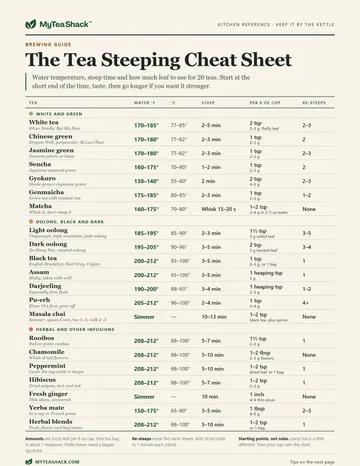
Free printable
The Tea Steeping Cheat Sheet
Water temperature, steep time and how much leaf to use for 20 teas, from sencha to rooibos, on one printable page. Plus five fixes for a bitter cup.