Best Matcha Powder: Ceremonial vs. Culinary Grade
How to choose the best matcha powder for you, the real difference between ceremonial and culinary grade, price per gram, and what to avoid.
In this guide · 9 sections
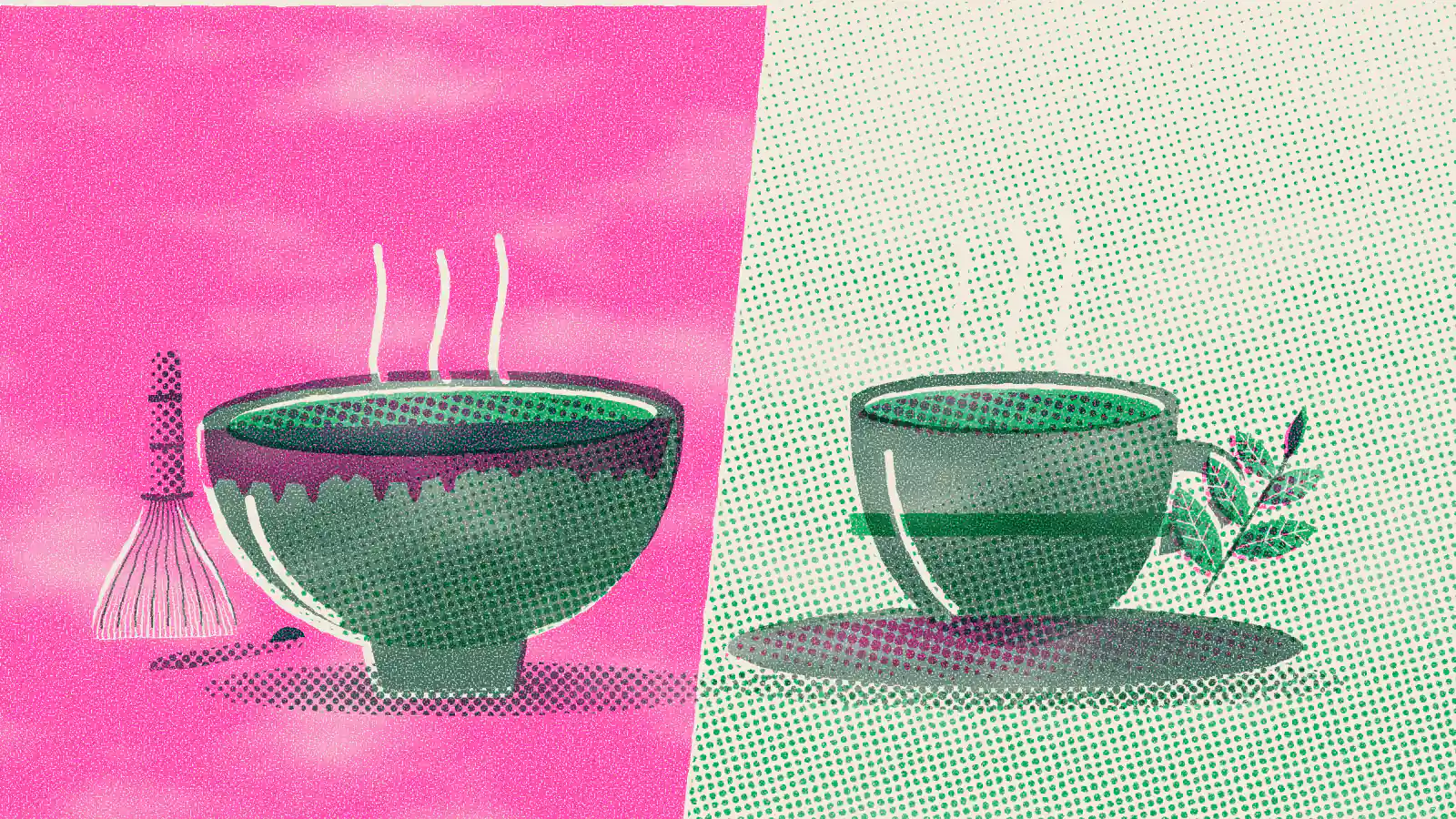
The best matcha powder for you depends on how you're drinking it. If you're whisking it plain with water, ceremonial grade is worth the extra cost. If it's going into a latte, smoothie or baked goods, culinary grade does the job for less money, since milk, sweetener and other flavors mask the more bitter, robust taste. For other kinds of tea, see our roundup of the best tea brands.
Ceremonial vs. Culinary Grade, Side by Side
"Grade" isn't a regulated term, so brands apply it inconsistently, but these are the general differences you'll actually taste and see.
| Ceremonial grade | Culinary grade | |
|---|---|---|
| Leaves used | Youngest, first-harvest leaves only | Older leaves, later harvests |
| Color | Vivid, almost neon green | Duller green, sometimes yellowish |
| Texture | Very fine, almost silky powder | Slightly coarser |
| Taste | Smooth, naturally sweet, low bitterness | More bitter and astringent |
| Best use | Whisked plain with hot water | Lattes, smoothies, baking, iced drinks |
| Typical price | $25–45 for 30g (about $0.85–$1.50/g) | $12–25 for 30g (about $0.40–$0.85/g) |
Some brands add a middle tier, sometimes called "premium" or "latte grade," aimed at people who want a smoother taste than culinary but don't need true ceremonial quality. Treat these labels as a rough guide, not a certification.
How to Judge Matcha Quality Yourself
Grade names vary by brand, so check these instead:
- Color. A vivid, almost fluorescent green is a good sign. Dull green, yellowish or brownish powder usually means older leaves, more oxidation, or a stale batch.
- Origin and harvest. Japanese matcha from Uji, Nishio or Kagoshima is the most established, though quality varies within any region. Look for a harvest date or "best by" date, not just a production date.
- Texture. Rub a pinch between your fingers if you can. It should feel like fine talcum powder, not gritty.
- Smell. Fresh matcha smells grassy and slightly sweet, almost like fresh-cut grass or steamed vegetables. A flat or hay-like smell suggests it's old.
- Ingredient list. Real matcha is 100% ground tea leaf. Skip anything with added sugar, maltodextrin or "matcha blend" unless you specifically want a pre-sweetened mix.
Price Per Gram Matters More Than Sticker Price
A 30g tin at $18 and a 100g bag at $50 look different at checkout, but the second one is actually cheaper per gram ($0.50/g vs. $0.60/g). Always divide price by grams before comparing brands, especially since package sizes range from 20g starter tins to 1kg culinary bags.
| Package size | Typical price range | Best for |
|---|---|---|
| 20–30g (starter tin) | $15–40 | Trying a new brand |
| 50–80g | $20–45 | Regular home drinker, plain matcha |
| 100g+ | $25–60 | Daily lattes or smoothies, better value per gram |
| 500g–1kg (culinary bulk) | $30–80 | Baking, cafés, high-volume use |
What to Avoid
- Powder that isn't bright green. Brown or yellow-tinted matcha has oxidized and lost flavor and some of its antioxidant content.
- No harvest or "best by" date. Matcha loses flavor within months of grinding, faster than whole tea leaves, so a bag with no dating is a red flag.
- Vague "Japanese-style" labeling. This can mean the matcha was actually grown elsewhere and processed to imitate Japanese matcha. It's not automatically bad, but check the actual origin if that matters to you.
- Clumpy or hard powder. Matcha should sift easily. Clumping usually means it picked up moisture during storage.
How to Store It So It Doesn't Go to Waste
- Keep it in an airtight, opaque container away from light.
- Store it in the refrigerator or a cool, dark cabinet, and let it come to room temperature before opening to avoid condensation.
- Use it within a few weeks to a couple of months of opening for the best flavor; it doesn't spoil the way food does, it just fades.
Where Matcha Comes From, and Why It Matters
Most well-regarded matcha is grown in Japan, with Uji (near Kyoto), Nishio and Kagoshima among the best-known regions, each with slightly different growing conditions that show up in flavor: Uji matcha tends toward a delicate, umami-forward taste, while Nishio matcha often has a stronger, more vegetal profile. Matcha is also grown in China and a few other countries, and while origin alone doesn't guarantee quality, a brand that's vague about where its matcha comes from is harder to hold accountable for freshness or growing practices than one that names a specific region and farm.
This doesn't mean you need to chase a specific region by name. It means that when two matchas cost the same, the one with a clear, specific origin is usually the safer bet.
Common Matcha Buying Mistakes
- Buying the biggest bag first. Matcha fades faster than whole-leaf tea. Start with a small tin (20–30g) from a new brand before committing to a 100g+ bag.
- Judging quality by color in a dim photo. Product photos can make dull matcha look brighter than it is. If you can, check reviews that mention color specifically, or buy from a seller with a real return policy.
- Assuming "organic" means "high grade." Organic certification says nothing about harvest timing or grinding quality. It's a separate consideration, not a substitute for checking color, smell and freshness.
- Ignoring how you'll actually drink it. Buying an expensive ceremonial tin and then only ever using it in smoothies wastes the parts of ceremonial grade that justify its price.
FAQ
Is ceremonial grade matcha worth the extra cost?
If you're drinking it plain, whisked with hot water, yes, the smoother taste is noticeable. If it's always going into milk, a smoothie or a recipe, culinary grade delivers the same color and caffeine for less money.
Does more expensive matcha always mean better quality?
Usually, but not always. Compare price per gram, check for a harvest date, and judge color and smell yourself rather than relying on price alone.
Can I use culinary matcha for a traditional whisked cup?
Yes, it will just taste more bitter and less smooth than ceremonial grade. Many people find it perfectly fine, especially with a little sweetener.
How much caffeine is in a serving of matcha powder?
A typical whisked serving (about 1–2 teaspoons in 8 oz of water) has roughly 35–70 mg of caffeine, on the higher end for tea since you consume the whole ground leaf. See our full caffeine in tea chart for how that compares to coffee.
The Bottom Line
Pick ceremonial grade for drinking matcha plain, and save money with culinary grade for lattes, smoothies and baking. Either way, judge quality by color, smell and a real harvest date rather than the grade name alone, and compare price per gram before you buy. For more ways to use it, try our matcha overnight oats, matcha coconut milk latte or matcha in a smoothie, and see what is matcha if you're still new to it.
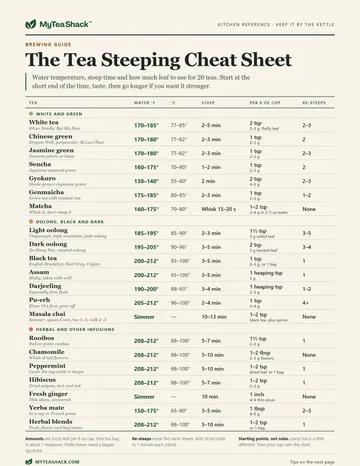
Free printable
The Tea Steeping Cheat Sheet
Water temperature, steep time and how much leaf to use for 20 teas, from sencha to rooibos, on one printable page. Plus five fixes for a bitter cup.