Caffeine in Tea Chart: mg by Type, Compared to Coffee
A single chart with caffeine in mg per 8 oz for 25+ teas, matcha, coffee, espresso and energy drinks, with sources and brewing notes.
In this guide · 9 sections
Caffeine in tea ranges from 0 mg in herbal infusions to 130 mg in a strong cup of yerba mate. The chart below covers every common type, side by side with coffee, espresso and energy drinks, so you can see where your daily cup actually lands.
Caffeine in Tea Chart (per 8 oz / 240 ml)
Ranges are wide because caffeine content depends on the variety, how much leaf you use, water temperature and steep time. A longer steep and hotter water both pull more caffeine out of the leaf.
| Drink | Caffeine (8 oz) | Notes |
|---|---|---|
| Rooibos, chamomile, peppermint, hibiscus | 0 mg | Herbal infusions, not from the tea plant |
| Decaf tea (any type) | 2–10 mg | Decaffeination removes most, not all, caffeine |
| White tea | 15–30 mg | Least processed, lowest caffeine of the true teas |
| Green tea | 25–50 mg | Sencha, dragonwell, jasmine green |
| Oolong tea | 30–55 mg | Partial oxidation puts it between green and black |
| Chai tea (bagged) | 25–50 mg | Comes from the black tea base, diluted by spices |
| Pu-erh tea | 30–70 mg | Fermented; varies more than other true teas |
| Black tea | 40–70 mg | English breakfast, Assam, Earl Grey |
| Matcha | 35–70 mg | You drink the whole ground leaf, not a strained infusion |
| Yerba mate | 65–130 mg | Higher than most true teas, closer to coffee |
| Cola soda (12 oz) | 30–40 mg | For scale, not a tea comparison |
| Energy drink (8 oz) | 70–100 mg | Some cans are 16 oz or more with 200–300 mg total |
| Espresso (1 oz shot) | 47–64 mg | Small volume, concentrated |
| Drip coffee | 95–200 mg | Widest range of anything on this list |
Sources: Mayo Clinic's caffeine content chart, MedlinePlus on caffeine, and USDA FoodData Central for coffee and soda values.
Why the Same Tea Can Vary So Much
Four things move the number more than the type of tea itself:
- Leaf amount. More dry leaf per cup means more caffeine, regardless of type.
- Water temperature. Hotter water extracts caffeine faster. That's part of why green and white teas, brewed cooler, tend to land lower than black tea.
- Steep time. A 5-minute steep pulls noticeably more caffeine than a 2-minute one, for the exact same tea.
- Leaf size and grind. Broken leaf and tea bags release caffeine faster than whole loose leaf, and matcha (a fine powder you drink whole) releases essentially all of it.
None of this is about "strength" of flavor. A pale, mild-tasting green tea steeped hot and long can carry more caffeine than a dark, malty black tea steeped briefly.
Does Brewing Time Really Change It That Much?
Yes. A rough rule: doubling the steep time doesn't double the caffeine, but it does meaningfully raise it, usually 20–30% more for the same leaf. That's the opposite of the old myth that a quick 30-second "rinse" removes most of the caffeine from a cup, since caffeine extracts steadily across the whole steep rather than all at once at the start.
Matcha vs. Steeped Green Tea
Matcha and steeped green tea come from the same plant, but matcha almost always has more caffeine per cup, since you're consuming the ground leaf itself instead of an infusion you then discard. See our what is matcha guide for grades and prep, and our best matcha powder picks if you want to try it.
Tea Bags vs. Loose Leaf: Does Format Change Caffeine?
Somewhat, yes. Tea bags typically hold broken leaf or "fannings," smaller particles that release caffeine faster because more surface area is exposed to the water. Whole-leaf loose tea releases caffeine more slowly, so a quick 1–2 minute steep of loose leaf can land lower in caffeine than a bagged tea steeped for the same time. Over a full recommended steep (3–5 minutes for black tea, for example), the difference mostly evens out.
How to Brew for Less Caffeine, Without Switching Teas
If you like a specific tea but want less of a jolt from it, these adjustments matter more than the type of tea itself:
- Cooler water. Brewing green or white tea at the low end of its recommended range (around 160–175°F) extracts less caffeine than the high end.
- Shorter steep. Cutting a 4-minute steep to 2 minutes noticeably lowers caffeine, though it also mutes flavor, so you're trading intensity for a gentler cup either way.
- Less leaf. Using slightly less tea per cup is the most direct lever, since caffeine scales roughly with leaf quantity.
- One rinse, longer rest. A very brief (10–15 second) rinse and discard, followed by a full steep of fresh water, removes a small amount of surface caffeine, though nowhere near the "instant decaf" some people claim. It works better as a way to soften bitterness than to meaningfully cut caffeine.
None of these turn a caffeinated tea into a decaf one. If you truly need zero caffeine, an herbal infusion or a labeled decaf product is the only reliable option.
How Much Caffeine Is Too Much?
The FDA generally considers up to 400 mg of caffeine a day reasonable for most healthy adults, which is roughly 4–10 cups of tea depending on type, or about 2–4 cups of coffee. Pregnant people, anyone with a heart condition, and people especially sensitive to caffeine should aim lower and check with a doctor about a safe daily amount.
FAQ
Does darker tea always have more caffeine?
No. Color comes from oxidation, not caffeine content. Pu-erh is dark and fermented but can land lower in caffeine than black tea, while pale green tea steeped hot and long can rival it.
Is matcha stronger in caffeine than coffee?
Cup for cup, no. An 8 oz serving of matcha (35–70 mg) usually has less caffeine than an 8 oz cup of drip coffee (95–200 mg), though a strong, concentrated matcha preparation can close the gap. We compare cost, crash and prep time in matcha vs. coffee.
What tea has the most caffeine?
Yerba mate typically has the most caffeine of any tea-like infusion, at roughly 65–130 mg per 8 oz cup, close to a shot of espresso by volume. Among true teas, black tea and matcha sit at the top.
Does adding milk or sugar change the caffeine content?
No. Milk, sugar, honey and other additions don't add or remove caffeine; they only change flavor.
The Bottom Line
Caffeine in tea runs from zero in herbal infusions to well over 100 mg in yerba mate, and the biggest swing factors are steep time, water temperature and leaf amount, not just the type of tea. If you want to cut back, start with caffeine-free tea options or the full low-caffeine tea guide, and if you're curious about a specific type, see how much caffeine is in green tea, white tea caffeine content or chai tea caffeine content.
Coming at it from the coffee side? See black tea vs. black coffee, what to expect when you drink tea instead of coffee, the best teas for your morning cup and teas for a steadier energy boost.
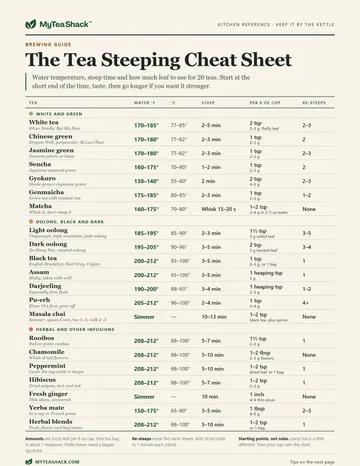
Free printable
The Tea Steeping Cheat Sheet
Water temperature, steep time and how much leaf to use for 20 teas, from sencha to rooibos, on one printable page. Plus five fixes for a bitter cup.