13 Best Teas for Energy to Beat Afternoon Fatigue
Looking for a natural pick-me-up? These 13 teas, from black to yerba mate, offer a steadier energy boost than coffee without the crash.
In this guide · 6 sections
When coffee feels like too much but you still need a lift, tea can offer a steadier energy boost thanks to its mix of caffeine, L-theanine and antioxidants. Here are 13 teas worth trying, from strongest to gentlest. For milligram figures on each, see the tea caffeine chart.
Best 13 Teas for Energy
Black Tea
Black tea has the most caffeine of the true teas (about 25–100 mg per cup), making it a solid coffee substitute for breakfast.
Sencha Green Tea
Japan's most popular tea, sencha delivers a moderate caffeine dose along with L-theanine for calmer, more focused alertness.
Green Tea
Beyond its stimulant effect, green tea is rich in potassium and magnesium and is a favorite for fighting daily fatigue, especially after exercise.
Oolong Tea
Also from Camellia sinensis, oolong sits between green and black tea in caffeine content. Its stronger stimulant effect means it's worth being cautious with if you're pregnant or sensitive to caffeine. Learn more in our oolong tea benefits guide.
Yerba Mate
This South American herbal tea contains caffeine, theobromine and theophylline, a combination associated with sustained mental alertness and concentration. Some people who find coffee too harsh tolerate yerba mate more comfortably.
Guayusa Tea
Similar to yerba mate, guayusa is a caffeinated herbal leaf traditionally used for an energizing, smooth lift without coffee's edge.
Ginseng Tea
A traditional energizer used to support mental alertness and reduce fatigue; short-term use appears safe for most healthy adults, though NCCIH notes long-term safety is less well studied. It's often taken as a coffee alternative for people cutting back on caffeine.
Chai Tea
Built on a black tea base with warming spices, chai provides caffeine alongside potential digestive benefits, making it a flavorful coffee alternative. See our chai tea guide for how to make it at home.
Earl Grey Tea
A black tea flavored with bergamot oil, Earl Grey offers the same caffeine lift as black tea plus a boost of vitamins and minerals.
Ginger Tea
Ginger doesn't contain caffeine, but its stimulating aroma and circulation-boosting properties make it a popular non-caffeinated pick-me-up, especially after a workout.
Ashwagandha Tea
An adaptogenic herb studied for helping the body manage stress, which may indirectly reduce the fatigue that stress causes.
Licorice Root Tea
Traditionally used to support energy levels and physical endurance, though it should be used in moderation (see precautions below).
Basil Tea
A good caffeine-free option for people cutting back, sacred (holy) basil is an adaptogen studied for supporting a balanced immune response.
Other Ways to Fight Daytime Fatigue
Poor sleep isn't the only cause of low energy. Screen time before bed, dehydration, skipped meals, and ongoing stress can all contribute to feeling drained, even after a full night's sleep. Pairing an energizing tea with better sleep habits and regular meals will do more for your energy than tea alone.
Caffeine and L-Theanine by Tea
Caffeine gives you the lift; L-theanine, an amino acid found only in true teas (Camellia sinensis), is what keeps that lift from turning into jitters. It's why a cup of green tea or matcha tends to feel calmer than coffee with a similar amount of caffeine.
| Tea | Caffeine per cup | L-theanine |
|---|---|---|
| Matcha | 35–70 mg | High (whole leaf) |
| Black tea | 25–100 mg | Moderate |
| Oolong tea | 10–50 mg | Moderate |
| Green tea | 10–50 mg | Moderate to high |
| White tea | ~1 mg | Moderate |
| Yerba mate | 65–130 mg | None (contains theobromine instead) |
Health authorities generally recommend capping caffeine at 300 mg a day. Actual amounts vary by leaf, fermentation and how long you steep.
If you want the steadiest, least jittery lift on this list, start with what is matcha for the whole-leaf version of green tea, or benefits of yerba mate tea if you prefer an herbal option with a longer-lasting effect.
Side Effects and Precautions
- Licorice root can raise blood pressure and affect potassium levels with regular heavy use; avoid daily long-term use if you have high blood pressure, heart or kidney conditions, and check with your doctor first.
- Oolong, black and green tea are best limited during pregnancy and for people with hypertension or nervous system conditions, given their caffeine content.
- Yerba mate and guayusa contain meaningful caffeine; treat them the same as coffee when tracking your daily intake.
- Ginseng can raise blood pressure and interact with blood thinners at higher doses, so check with your doctor if you have hypertension or take regular medication.
FAQ
What is the best tea for energy without caffeine?
Ginger tea and basil tea are caffeine-free but still feel energizing thanks to their aroma and circulation-supporting properties. Ashwagandha may also help indirectly by supporting a calmer stress response.
Does green tea give you more energy than coffee?
Green tea has less caffeine than coffee, but its L-theanine content is associated with steadier alertness and fewer jitters, so many people feel it lasts longer even with a smaller dose.
Is yerba mate stronger than coffee?
Yerba mate has less caffeine per cup than coffee but combines it with theobromine and theophylline, which some people find gives a smoother, longer-lasting lift.
The Bottom Line
For a strong, familiar lift, reach for black tea or chai. For something gentler with fewer jitters, try green tea, sencha or yerba mate, and save caffeine-free options like ginger and basil for the evening. Pair any of these with proper brewing — see our how to brew herbal tea guide — and compare caffeine levels in our teas low in caffeine roundup.
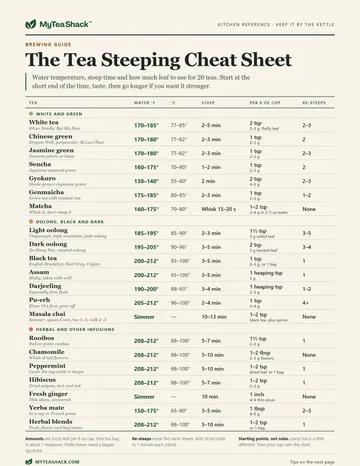
Free printable
The Tea Steeping Cheat Sheet
Water temperature, steep time and how much leaf to use for 20 teas, from sencha to rooibos, on one printable page. Plus five fixes for a bitter cup.