Matcha vs Coffee: Caffeine, Cost and Which One to Drink
Matcha vs coffee compared on caffeine, the crash, cost per cup, taste and prep time, so you can decide which one actually fits your morning.
In this guide · 9 sections
Matcha and coffee both wake you up, but they don't do it the same way. Coffee hits fast and can drop you just as fast. Matcha releases more slowly and tends to hold steadier, largely because of an amino acid called L-theanine that isn't in coffee at all. Here's how they actually compare, cup for cup.
Caffeine: How Much and How It Feels
An 8-ounce cup of brewed coffee has roughly 95 mg of caffeine on average, though it can range from about 95 to 200 mg depending on the bean, roast and brew method, according to Mayo Clinic. A standard matcha serving, about 1 to 2 grams whisked into hot water, runs closer to 35–70 mg. Our tea caffeine chart puts both next to every other common tea.
So coffee usually wins on raw caffeine. The difference is what happens after you drink it.
Coffee's caffeine hits your bloodstream quickly, which is part of why it feels so effective first thing in the morning, and also why some people feel jittery or crash an hour or two later. Matcha contains L-theanine, an amino acid that has been studied for its calming, focus-supporting effects when combined with caffeine, and matcha itself is a whole ground leaf rather than an extraction, so its caffeine tends to release more gradually. Most regular matcha drinkers describe the effect as longer and steadier rather than more intense.
If you're sensitive to caffeine or get anxious on coffee, matcha is usually the gentler option even though it isn't caffeine-free. If you need a fast, strong hit before an early meeting, coffee still does that job better.
The Crash: Why Matcha Feels Different
The "coffee crash" isn't really about caffeine amount, it's about how fast blood caffeine rises and falls. Coffee's quick absorption means a quick peak, then a quicker drop as it clears. Matcha's slower release, combined with L-theanine's effect on brain activity, tends to produce a flatter curve: less of a spike, and less of a hard drop a few hours later.
This is anecdotal for most people rather than a guarantee. If you're extremely caffeine-sensitive, both drinks can disrupt sleep if you have them too late in the day. A safe cutoff for either one is early-to-mid afternoon.
Cost Per Cup
This is where the gap is bigger than most people expect.
| Coffee | Matcha | |
|---|---|---|
| Home, basic setup | $0.15–$0.40/cup (drip, ground beans) | $0.80–$1.50/cup (culinary-grade powder, ~1.5–2 g per cup) |
| Home, premium | $0.50–$1/cup (specialty beans) | $1.50–$3/cup (ceremonial-grade powder) |
| Coffee shop / cafe | $3–$6 | $4–$6 |
A tin of decent culinary matcha (around 30 g) typically runs $15–$25, which works out to roughly $1–$1.50 per cup if you're using 1.5 grams a serving. Ceremonial-grade matcha, meant to be enjoyed on its own rather than in a latte, costs more per gram and pushes the per-cup price higher. Coffee is cheaper at home in almost every scenario; the gap mostly closes at coffee shops, where a matcha latte and a specialty coffee drink cost about the same.
Prep Time
Coffee wins on convenience if you have a machine: a drip coffee maker or pod machine takes seconds of hands-on time. Pour-over and French press coffee take a few minutes of attention.
Matcha requires sifting or at least breaking up clumps, adding hot (not boiling) water, and whisking with a bamboo whisk (chasen) until it's frothy, which takes about 1–2 minutes once you have the routine down. It's a small ritual, which some people like and others find like one more step before coffee even brews.
Taste
Coffee is bitter, roasted and (depending on the bean) can have chocolate, nutty or fruity notes. Matcha is grassy, slightly vegetal and a little sweet, with a smoothness that ceremonial grades emphasize more than culinary grades. If you've only had bad matcha (bitter, chalky, or made with boiling water that scorches it), it's worth trying a properly brewed cup before writing it off. See our guide on what matcha is for grades and how to store it properly, since stale or low-grade matcha is often the reason people don't like it.
Common Mistakes That Make Matcha Seem Worse Than It Is
- Using boiling water. Water straight off a rolling boil scorches matcha and brings out bitterness that isn't there when it's made properly. Aim for 160–175°F (70–80°C).
- Buying culinary-grade matcha and drinking it straight. Culinary grade is meant for lattes and baking, where milk and sweetener balance its stronger, more bitter flavor. Straight matcha calls for ceremonial grade.
- Not whisking enough. Matcha needs a brisk, zigzag whisking motion for about 15–20 seconds to fully dissolve and develop the light foam that makes it taste smooth rather than gritty.
- Letting matcha powder sit open for months. Like coffee, matcha oxidizes once opened. A tin that's been open for over two or three months will taste noticeably flatter than fresh matcha.
Which One Should You Drink?
- Want the strongest, fastest wake-up: coffee.
- Want a steadier, longer caffeine curve with less of a crash: matcha.
- Sensitive to caffeine or prone to jitters: matcha, in smaller servings.
- Budget matters and you're drinking multiple cups a day: coffee, by a wide margin.
- You like a small prep ritual in the morning: matcha.
Plenty of people don't pick one. A common pattern is coffee in the morning and matcha in the early afternoon, when a hard caffeine spike isn't as welcome but a lighter lift still helps. If energy and focus are the actual goal rather than ritual or taste, it's worth comparing matcha against other options in our teas for energy guide, and if you're curious how matcha differs from the green tea it's made from, see is matcha the same as green tea.
FAQ
Does matcha have less caffeine than coffee?
Usually, yes. A typical matcha serving has about 35–70 mg of caffeine, compared to roughly 95 mg or more in an 8-ounce cup of brewed coffee, though both ranges vary by preparation.
Is matcha a good substitute for coffee?
For most people, yes, especially if you're trying to reduce jitters or an afternoon crash. It still has real caffeine, though, so it's not a caffeine-free swap.
Why doesn't matcha make me crash like coffee does?
Matcha pairs caffeine with L-theanine, an amino acid that appears to smooth out the stimulant effect, plus its caffeine releases more gradually since you're drinking the whole ground leaf rather than a fast-brewed extraction.
Is matcha more expensive than coffee?
At home, yes, typically $1–$3 per cup versus $0.15–$1 for coffee. At a coffee shop, matcha lattes and specialty coffee drinks usually cost about the same.
The Bottom Line
Coffee gives you more caffeine, faster, for less money. Matcha gives you a smaller, steadier lift with fewer jitters, at a higher cost per cup. Neither is objectively better, it depends on how your body handles caffeine and what your morning actually needs. If you want to try matcha properly, start with our guide on what matcha is and how to make it, or see how it compares if you're deciding what to drink instead of coffee more broadly. Once you've got matcha powder on hand, blending it into a smoothie is another easy way to use it beyond a straight cup.
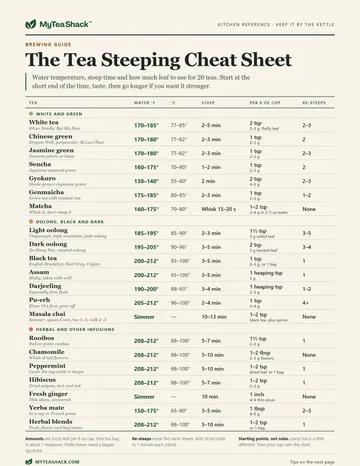
Free printable
The Tea Steeping Cheat Sheet
Water temperature, steep time and how much leaf to use for 20 teas, from sencha to rooibos, on one printable page. Plus five fixes for a bitter cup.