Matcha Starter Kit: What You Actually Need to Begin
The real matcha starter kit: which tools are essential (whisk, bowl, sifter), which ones are optional, and three complete kit options by budget.
In this guide · 10 sections
You need three things to make matcha at home: matcha powder, a whisk, and a way to sift out clumps. Everything else in a "matcha set" is nice to have, not required. Our guide to tea brands worth buying includes the matcha makers we'd start with.
The Short Answer: What's Essential vs. Optional
| Tool | Essential? | Why |
|---|---|---|
| Matcha powder (culinary grade to start) | Yes | The whole point |
| Bamboo whisk (chasen) | Yes | Breaks up clumps and creates the froth that carries the flavor |
| Sifter or fine strainer | Yes | Matcha clumps badly; sifting before whisking prevents gritty tea |
| Matcha bowl (chawan) | No | A regular wide, shallow bowl or big mug works fine |
| Bamboo scoop (chashaku) | No | A regular teaspoon measures close enough |
| Electric frother | No | Convenient, but a whisk gets you the same result with practice |
| Whisk holder (kusenaoshi) | No | Only matters if you want your whisk to last years, not months |
If you only buy one thing beyond the powder, make it the whisk. A fork or regular kitchen whisk can't create the fine, even froth that a bamboo chasen's thin tines produce, and without it matcha tends to sit in clumps at the bottom of the cup no matter how much you stir.
Budget Kit ($15–25)
A bamboo whisk, a small handheld sifter, and a bag of culinary-grade matcha. Use any wide mug you already own instead of a dedicated bowl; the wide shape matters more than the material, since it gives the whisk room to move in a "W" or "M" motion without splashing. This setup makes a genuinely good cup and is where most people should start before spending more.
Mid-Range Kit ($35–55)
Adds a ceramic matcha bowl (chawan) with a wider, more stable base than a mug, a bamboo scoop for consistent measuring, and a whisk holder that keeps the tines curved so the whisk doesn't go flat and stiff between uses. This is the point where a set starts looking and functioning like the traditional Japanese setup, and where a daily matcha habit starts to feel worth the extra gear.
Premium Kit ($70+)
Ceremonial-grade matcha, a hand-carved bamboo whisk (100+ tines instead of the standard 60–80, which whisks a finer froth), a glazed chawan, and often a travel case. Worth it if you're drinking matcha daily and want the ceremony as much as the tea, but it makes no difference to caffeine content or nutrition compared to the budget kit.
How to Use a Basic Kit
- Sift 1–2 teaspoons of matcha into your bowl to break up clumps. Skipping this step is the #1 reason people end up with gritty tea.
- Add 2–3 oz of water heated to about 175°F, not a full boil. Boiling water makes matcha taste bitter and burns off some of its more delicate flavor compounds.
- Whisk briskly in a fast "W" or zig-zag motion, from the wrist rather than the whole arm, until a thin layer of froth forms on top, usually 15–30 seconds.
- Drink as is (usucha, "thin tea") or add hot water and milk for a latte. For a full latte recipe, see matcha coconut milk latte.
Caring for a Bamboo Whisk
Rinse it in warm water right after use, no soap, and let it air dry on a whisk holder or resting on the edge of a cup so the tines keep their curve. A whisk stored flat in a drawer will straighten out and lose its ability to whip up froth within a few weeks. With proper care, a bamboo whisk lasts 6–12 months of regular use before the tines start to fray.
Do You Need Ceremonial-Grade Matcha for a Starter Kit?
No. Culinary-grade matcha is more affordable, has a slightly more bitter, robust flavor, and works well while you're still practicing your whisking technique. Save ceremonial grade for once you're drinking matcha plain and want to taste the difference; mixed into a latte or smoothie, the distinction is much harder to notice. For more on the difference between grades, storage and caffeine content, see what is matcha.
Troubleshooting a New Kit
Matcha clumps no matter how much I whisk. You skipped or rushed the sifting step. Matcha packs down tightly in the bag, and once it's wet, clumps get harder to break apart. Sift every time, not just the first time.
My whisk feels stiff and won't froth anymore. It was likely stored flat or left wet. Rinse with warm water only (soap residue affects the tines) and store it tines-down on a whisk holder or propped over the edge of a cup so it keeps its curve.
The tea tastes bitter even though I sifted and used the right water temperature. Check the grade. Culinary-grade matcha is naturally more bitter and robust than ceremonial grade; it's built for lattes and baking, not drinking plain. If it's ceremonial grade and still bitter, the water was likely too hot or the matcha is old and past its peak flavor window.
Is a matcha kit a good gift? Yes, a budget or mid-range kit is an easy gift for a tea drinker who hasn't tried matcha, since it includes everything needed to get a real result on the first try rather than a bag of powder and no way to prepare it properly.
FAQ
Can I make matcha without a bamboo whisk?
You can use a small electric milk frother in a pinch, and it will break up most clumps. A regular fork or wire whisk generally isn't fine enough to fully dissolve matcha, so you'll likely still get some grit at the bottom of the cup.
Do I need a special bowl, or can I use a regular mug?
A regular wide mug works fine for everyday matcha. A traditional chawan is wider and shallower, which gives the whisk more room to move without splashing over the sides, but it's a comfort upgrade, not a requirement.
Is a matcha kit worth it if I only drink matcha lattes?
The whisk and sifter still matter for a smooth latte base, since clumps don't fully dissolve just because you're adding milk. The bowl and scoop matter less for lattes since you're measuring into a larger cup or blender anyway.
How much matcha powder comes in a typical starter kit?
Most starter bags run 30–40 grams, enough for roughly 15–20 cups depending on how strong you like it. Buy the whisk and sifter as a one-time purchase and replace just the powder once it runs out.
The Bottom Line
A real matcha starter kit is a bamboo whisk, a sifter, and matcha powder; a bowl and scoop make it more traditional but aren't required to make a good cup. Start with the budget setup, and only upgrade to a mid-range or premium kit once you know matcha is a habit you'll keep. Pair it with our matcha vs. coffee comparison if you're still deciding whether to make the switch, or our matcha lemonade recipe for a cold-brew way to use the same powder.
Free printable
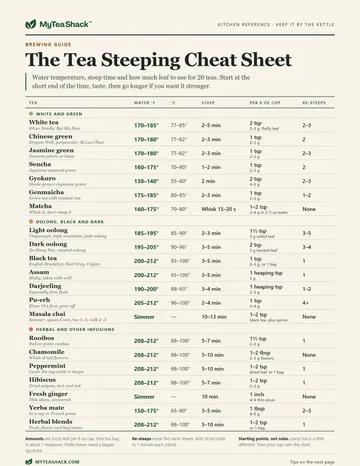
The Tea Steeping Cheat Sheet
Water temperature, steep time and how much leaf to use for 20 teas, from sencha to rooibos, on one printable page. Plus five fixes for a bitter cup.