Best Oolong Tea: 6 Top Picks From China and Taiwan
The 6 best oolong teas from China and Taiwan, what to look for when buying, brewing times and temperatures, and where to buy each style.
We may earn a commission when you buy through links in this guide, at no extra cost to you. How we make money.
In this guide · 7 sections
The best oolong teas span a wide range, from light, floral pouchong to dark, toasty Da Hong Pao. If you're new to oolong, start with a lightly oxidized style like pouchong or Ali Shan; if you already like black tea, Da Hong Pao or a roasted Dong Ding will feel more familiar. For other styles of tea and where to buy them, see our best tea brands guide. Oolong comes from the same plant as green and black tea (Camellia sinensis) but is partially oxidized, giving it a flavor somewhere between the two. It originated in China's Fujian province and has since become a specialty of Taiwan, where growers have developed some of the world's most distinctive varieties.
6 Best Oolong Teas to Try
Pouchong (Baozhong)
A lightly oxidized, usually unroasted oolong from Fujian and Taiwan's Pinglin district. Its name refers to the old practice of wrapping the leaves in paper while drying. At its best, pouchong has a floral, melon-like fragrance and a smooth, rich taste. This "spring tea" is typically harvested from late March.
Dong Ding (Tung Ting)
Originally from Lugu, Nantou County, Taiwan, Dong Ding is one of the most popular and widely imitated oolongs in the world. Genuine Dong Ding has real body and a lingering sweetness shaped by the mineral-rich soil of its namesake mountain.
Ali Shan
The most widely consumed oolong in Taiwan, Ali Shan comes from high-altitude gardens that stay covered in fog for much of the year. That extra moisture and cooler climate concentrate its flavor into more floral notes and a longer, sweeter finish.
King Hsuan (Formosa Tea)
A newer Taiwanese cultivar known for a smooth, sweet, fragrant flavor and a cool, silky texture. It's semi-fermented and unscented, with a mild floral aroma and a clean, buttery finish.
Oriental Beauty
A highly oxidized oolong with fruity and floral notes, grown in Taiwan and, more recently, China. Its name comes from a (possibly apocryphal) story about Queen Victoria admiring its taste. The leaves wither longer than most oolongs and are moistened before rolling, giving Oriental Beauty a fruity, Muscat-grape-like character.
Da Hong Pao
A heavily oxidized Chinese oolong, closer to black tea in style, from Fujian's Wuyi Mountain. It has a coppery color, floral and toasted notes, and a distinctive mineral quality tea drinkers call "Yun Yan." Authentic Da Hong Pao from the original ancient trees is extremely rare and tightly controlled.
Possible Benefits of Oolong Tea
Like other true teas, oolong contains catechins and other antioxidants that have been studied for a range of health effects. Research associates regular oolong consumption with:
- Support for healthy cholesterol and blood pressure levels.
- Aiding digestion.
- Supporting dental health as part of good oral hygiene, since tea polyphenols are traditionally associated with limiting bacteria linked to cavities and gum issues, though this shouldn't replace brushing, flossing and dental checkups.
- Contributing to a modest metabolism boost as part of an overall healthy diet.
These are general associations from population and lab research, not guarantees, and oolong tea isn't a treatment for any of these conditions. As with other true teas, the catechins and caffeine in oolong may have a modest, individually-variable effect on metabolism rather than a dramatic one.
Side Effects and Who Should Be Careful
Oolong tea contains caffeine, so the same precautions that apply to other true teas apply here:
- Pregnant or breastfeeding women should limit or avoid oolong tea because of its caffeine content. Talk to your doctor about what's appropriate for you.
- People with high blood pressure, diabetes, glaucoma, or irritable bowel syndrome should check with a doctor before making oolong a daily habit.
- Caffeine sensitivity: oolong can cause jitteriness, disrupted sleep, or a faster heart rate in sensitive people, especially later in the day.
How to Brew Oolong Tea
Oolong is forgiving, but a few details change the cup a lot:
- Heat water to 185–195°F (85–90°C). Full boiling water scorches the leaf and brings out bitterness, especially with lighter styles like pouchong.
- Use about 1 tablespoon of loose leaf per 8 oz cup. Oolong leaves are often rolled into tight balls, so they look like less than they are.
- Steep 2–4 minutes for the first cup. Lighter oolongs (pouchong, Ali Shan) are done closer to 2 minutes; darker, roastier styles (Dong Ding, Da Hong Pao) can go 3–4.
- Re-steep the same leaves. Good-quality oolong holds up to 3–5 infusions, adding 30–60 seconds to each round. This is where loose leaf earns back its higher price over tea bags.
What to Look for When Buying
- Whole or lightly rolled leaves, not dust or fannings. You should be able to see individual leaf balls or twists.
- A harvest or "best by" date, ideally within the last 12–18 months. Oolong doesn't age like pu-erh; fresher is better for flavor.
- Origin on the label (Fujian, Wuyi Mountain, Nantou, Ali Shan) rather than just "oolong tea." Single-origin bags cost more than generic blends but taste noticeably better.
- Roast level, if listed. Lightly roasted oolongs are more floral; heavily roasted ones taste closer to black tea.
For an easy, organic starting point that's sold as loose leaf, Buddha Teas' oolong tea brews well hot or iced and is a reasonable everyday option while you figure out which style you like. From there, specialty tea shops and Taiwanese or Chinese grocery stores are the best places to find single-origin Dong Ding, Ali Shan or Da Hong Pao.
FAQ
What is the best oolong tea?
There's no single best oolong, it depends on taste. Pouchong and Ali Shan are the best starting points if you like floral, green-leaning flavors; Dong Ding and Da Hong Pao suit people who prefer a roastier, black-tea-like cup.
What makes oolong tea different from green or black tea?
Oolong is partially oxidized: more than green tea but less than black tea, which gives it a flavor and caffeine level in between the two.
Which oolong tea is the strongest in flavor?
Da Hong Pao and Oriental Beauty tend to have the boldest, most complex flavors thanks to their higher oxidation levels.
What's the best oolong tea brand?
Look for a brand that lists the origin and harvest date rather than just "oolong tea." Buddha Teas is a reliable, organic pick for everyday loose leaf; for single-origin Taiwanese oolongs, a specialty tea retailer will have more variety than a supermarket shelf.
Is oolong tea good for weight loss?
Oolong may offer a modest metabolism boost as part of a balanced diet, similar to green tea, but it isn't a stand-alone weight-loss solution. See our guide on Chinese teas for weight loss for more context.
The Bottom Line
From delicate pouchong to bold Da Hong Pao, oolong tea offers a wide range of flavors worth exploring beyond the more familiar green and black teas. Buy loose leaf with an origin and harvest date if you can, brew it a notch cooler than boiling, and re-steep the leaves to get your money's worth. If you want to dig deeper into oolong's health effects, see our full breakdown of oolong tea benefits, and if you'd rather skip the caffeine altogether, check out our caffeine-free tea guide.
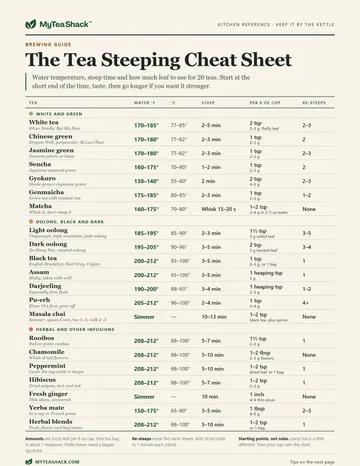
Free printable
The Tea Steeping Cheat Sheet
Water temperature, steep time and how much leaf to use for 20 teas, from sencha to rooibos, on one printable page. Plus five fixes for a bitter cup.