British Afternoon Tea: History, Etiquette and Menu Guide
Explore the history of British afternoon tea, what makes up the perfect spread, brewing tips, etiquette, and where to enjoy it around the world.
In this guide · 8 sections
Afternoon tea is a British tradition built around a simple pleasure: good tea, a few delicate bites, and unhurried company. Here's where it came from, what belongs on the tray, and how to host or enjoy it properly.
The History of Afternoon Tea
Afternoon tea dates back to the 1840s, when Anna, the Duchess of Bedford, found herself hungry in the long gap between lunch and a late dinner. She began requesting a tray of tea, bread, butter, and cake in the late afternoon, then started inviting friends to join her. The habit caught on with the upper classes and, over time, spread into tea rooms accessible to the wider public.
Tea itself had already been part of British life since the 17th century, brought over largely through trade with China and India. By the time afternoon tea became fashionable, it had become a symbol of refinement, and it also gave women a respectable space to socialize independently.
Afternoon Tea vs. High Tea
The two terms are often confused. Afternoon tea is the lighter, more elegant meal described here, traditionally served mid-afternoon with sandwiches, scones, and pastries. High tea, despite the grander-sounding name, actually originated as a working-class evening meal served at a "high" dining table, and traditionally includes heartier, hot dishes like meat pies alongside tea. The names come from the height of the furniture used, not from formality: high tea at a tall dining table, afternoon (or "low") tea at a lower parlor table, though usage has since blurred. If you're planning an event, afternoon tea is the better fit for a light, social gathering, while high tea suits a more substantial early-evening meal.
What Goes on an Afternoon Tea Tray
A proper spread has three components, traditionally served on a tiered stand with sandwiches on the bottom, scones in the middle, and pastries on top.
- Sandwiches: small, crustless finger sandwiches with fillings like cucumber and cream cheese, smoked salmon and dill, or egg and cress.
- Scones: served warm with clotted cream and jam, split in half rather than cut, cream first, then jam.
- Cakes and pastries: classics include Victoria sponge, lemon drizzle, and chocolate eclairs, though macarons and tarts are common too.
How to Brew Tea for an Afternoon Tea Spread
| Tea Type | Water Temperature | Steeping Time |
|---|---|---|
| Black tea (Earl Grey, English Breakfast) | Just off the boil | 3–5 minutes |
| Green tea | Slightly below boiling | 1–3 minutes |
| Oolong tea | Just below boiling | 3–5 minutes |
| Herbal tea | Boiling | 5–7 minutes |
Offer a mix so guests with different preferences have something to choose: a classic black tea like Earl Grey, Assam, Darjeeling or Lapsang Souchong, a lighter green tea, and a caffeine-free herbal option.
Afternoon Tea Etiquette
- Dress smart casual to formal, depending on the venue.
- Arrive on time, or a few minutes early.
- Hold your teacup with your thumb and index finger on the handle, resting your middle finger underneath; skip the raised pinky.
- Add milk or sugar sparingly, tasting as you go.
- Stir gently in a back-and-forth motion rather than clinking the spoon against the cup.
- Keep conversation light, and thank the host at the end.
Afternoon Tea Around the World
While the ritual is British in origin, other cultures have their own versions worth exploring. Japan's tea ceremony centers on matcha and mindfulness. India's version leans into spiced masala chai served with savory snacks. France's "le goûter" pairs tea or hot chocolate with pastries. If you want to build your own themed spread at home, borrowing from a few traditions is a fun way to make it your own.
You don't need scones to make a ritual of it; here's how to set up an everyday tea time.
FAQ
What is afternoon tea?
Afternoon tea is a British tradition of drinking tea alongside small sandwiches, scones, and pastries in the late afternoon.
What's the difference between afternoon tea and high tea?
Afternoon tea is a lighter, more elegant meal served mid-afternoon, while high tea is a more substantial evening meal that traditionally includes hot dishes.
What's the proper way to serve afternoon tea?
Serve it on a three-tiered stand: sandwiches on the bottom, scones in the middle, and pastries on top, with tea poured separately and milk or sugar offered on the side.
Is loose-leaf tea better for afternoon tea?
Many hosts prefer loose-leaf tea over teabags for a fuller flavor, though a good quality teabag works fine too.
The Bottom Line
Afternoon tea has stayed popular for well over a century because it's simple to enjoy and easy to adapt. Whether you're recreating the classic British spread at home or visiting a proper tea room, the key elements are the same: good tea, a balance of savory and sweet bites, and unhurried company.
Free printable
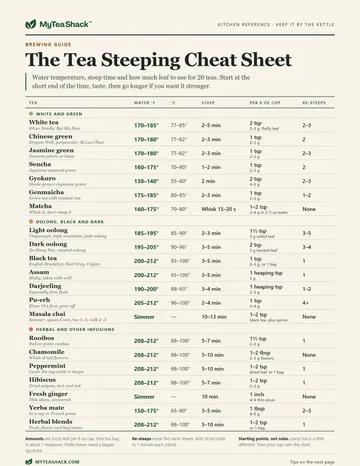
The Tea Steeping Cheat Sheet
Water temperature, steep time and how much leaf to use for 20 teas, from sencha to rooibos, on one printable page. Plus five fixes for a bitter cup.