Is Earl Grey Tea Good for You? Benefits and Side Effects
Is Earl Grey tea good for you? Learn its real health benefits, caffeine content, possible side effects, and how to brew a proper cup.
We may earn a commission when you buy through links in this guide, at no extra cost to you. How we make money.
In this guide · 9 sections
Earl Grey is a black tea flavored with bergamot oil, and yes, it can be part of a healthy routine. It combines the antioxidants of black tea with bergamot's aroma, and most people can enjoy a few cups a day without issues.
What Is Earl Grey Tea?
Earl Grey is a blend of black tea, usually from India or Sri Lanka, scented with oil from the bergamot orange, a citrus fruit grown mainly in Italy and southern France. Some versions swap in green, white, or rooibos tea as the base, but classic Earl Grey keeps the black tea backbone.
The name comes from Charles Grey, 2nd Earl Grey and a 19th-century British prime minister. The story of how the tea got his name is disputed — a popular one claims a Chinese official gave him the recipe as a thank-you gift — but there's no reliable record confirming any single origin story.
Earl Grey Tea Benefits
- Antioxidants: like other black teas, Earl Grey contains polyphenols that help fight free radicals and oxidative stress.
- Caffeine plus L-theanine: this combination provides steady energy and focus without the jitteriness of coffee.
- Digestive comfort: black tea is traditionally used to ease mild stomach discomfort after meals.
- Mood and relaxation: bergamot's aroma is associated with a calming effect for many people, which is part of why Earl Grey is a popular afternoon tea.
- Oral health: black tea contains fluoride and catechins, which may help support healthy teeth and gums.
Some circulating claims — that Earl Grey "cures" colds or "prevents" cancer — go further than the evidence supports. Treat it as a pleasant, antioxidant-containing beverage, not a treatment for any condition.
Does Earl Grey Tea Have Caffeine?
Yes. Since it's made from black tea, Earl Grey has a similar caffeine content to other black teas: roughly 14–61 mg per 8 oz cup, compared to about 95–200 mg in brewed coffee and 24–40 mg in green tea. Actual caffeine varies with steep time and the amount of tea used.
How to Make Earl Grey Tea
- Use about 1½ teaspoons of loose tea (or one tea bag) per cup.
- Bring water to a boil, then let it sit a few seconds so it's just off the boil (around 200°F).
- Pour over the tea and steep for 4–5 minutes.
- Strain and enjoy plain, or add a splash of milk, a slice of lemon, or a small amount of honey.
Popular Earl Grey Variations
| Variation | What's Different |
|---|---|
| Lady Grey | Softer blend with added lemon and orange peel |
| French Earl Grey | Traditional blend with rose petals added |
| Green Earl Grey | Green tea base instead of black tea |
| London Fog | Earl Grey brewed with steamed milk and vanilla syrup |
Earl Grey Brands and Bagged vs. Loose Leaf
Bagged Earl Grey is fine for an everyday cup, but the bergamot flavor fades fast once the bag is opened, so buy smaller boxes and store them airtight. Our roundup of tea brands by category covers the everyday names worth buying. Loose-leaf versions, like organic Earl Grey from Buddha Teas, tend to use real bergamot oil rather than artificial flavoring, which gives a rounder citrus note instead of a sharp, perfume-like one. If you want a decaf option for the afternoon, look for a decaffeinated Earl Grey rather than cutting your steep time short, which mostly just weakens the flavor without removing much caffeine.
Side Effects and Precautions
Earl Grey is safe for most adults in moderate amounts (up to about 3–4 cups a day), but keep a few things in mind:
- Bergamot and potassium: this is a rare but documented issue — a case report described a man who drank nearly a gallon of Earl Grey a day and developed muscle cramps, twitching and blurred vision from bergapten, a compound in bergamot oil that affects potassium movement in muscle; his symptoms resolved within a week of switching to plain black tea. This took extreme, sustained overconsumption — a normal cup or two isn't a concern.
- Iron absorption: like other teas, Earl Grey contains tannins that can reduce absorption of non-heme iron (the type in plant foods) when tea is drunk with a meal. If you're managing iron levels, drink tea between meals rather than with them.
- Caffeine sensitivity: Earl Grey has real caffeine, so it can contribute to insomnia, a fast heartbeat, or jitters if combined with other caffeinated drinks. People who are pregnant, sensitive to caffeine, or managing a heart condition should talk to a doctor about how much is appropriate.
Earl Grey is a popular first cup of the day; see how it compares in our roundup of the best morning teas.
FAQ
Does Earl Grey have more caffeine than coffee?
No. An 8 oz cup of Earl Grey has less caffeine than the same amount of brewed coffee, though more than most green teas.
What does Earl Grey taste like?
It tastes like black tea with a bright, citrusy, slightly floral note from the bergamot oil.
Can I drink Earl Grey every day?
For most healthy adults, a few cups a day is fine. If you're sensitive to caffeine or have a medical condition affecting iron, blood pressure, or heart rhythm, check with your doctor about how much fits your situation.
Is Earl Grey tea good for your skin?
Bergamot oil is used in some skincare products for its soothing properties, but drinking Earl Grey tea itself hasn't been shown to have a direct effect on skin.
The Bottom Line
Earl Grey tea is a flavorful black tea with real antioxidant content and a pleasant citrus aroma from bergamot. It's a safe daily drink for most people in moderate amounts — just watch total caffeine intake and consider spacing it out from iron-rich meals. If you enjoy classic black teas, explore the differences between types of black tea and how they compare in black tea vs. green tea, or try our Masala Chai guide.
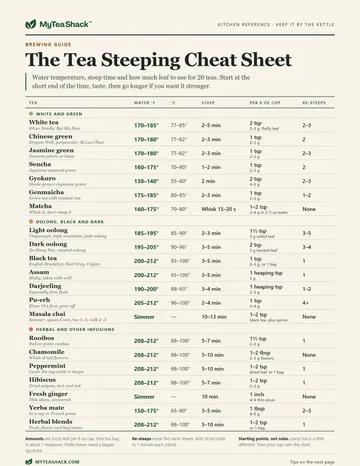
Free printable
The Tea Steeping Cheat Sheet
Water temperature, steep time and how much leaf to use for 20 teas, from sencha to rooibos, on one printable page. Plus five fixes for a bitter cup.