15 Best Teas to Help You Relax
The 15 best herbal teas for relaxation, what makes each one calming, and tips for using tea to unwind and manage everyday stress.
In this guide · 5 sections
Stressful days call for a moment to slow down, and a warm cup of the right herbal tea can genuinely help. Here are 12 of the best teas for relaxation and what makes each one calming.
The 15 Best Teas to Help You Relax
1. Chamomile Tea
One of the most popular relaxing teas there is. Small studies associate chamomile with reduced anxiety and better sleep quality, on top of its long-standing reputation as a calming, comforting drink.
2. Peppermint Tea
Peppermint's menthol content is linked to muscle relaxation, which some people find helps them settle in for better rest. It's also a common pick for calming an upset stomach tied to stress.
3. Jasmine Flower Tea
Light, floral and fragrant, jasmine tea (often blended with green or white tea) is associated with a calming evening ritual and has antioxidant properties.
4. Linden Tea
Linden has calming properties that may help with everyday nervousness and mild indigestion linked to stress. Mixing it with chamomile can enhance its soothing, digestive effect.
5. Turmeric Tea
Curcumin, turmeric's active compound, is associated with lower stress-hormone levels and has antioxidant, anti-inflammatory properties. Some research suggests it may support mood, though it's not a substitute for treatment of clinical depression or anxiety.
6. Damiana Leaf Tea
Traditionally used to lift mood and ease a heavy heart, damiana leaf tea is a gentle option for calming everyday anxious feelings.
7. St. John's Wort Tea
St. John's Wort has a long history of use for mild low mood, but it's one of the riskiest herbs on this list to combine with medication: it can weaken the effect of birth control pills, blood thinners like warfarin, and many other prescription drugs, and combining it with certain antidepressants can raise the risk of serotonin syndrome (NCCIH: St. John's Wort). Check with your doctor before using it, especially if you take any regular medication.
8. Licorice Root Tea
Some research links licorice root to lower stress hormone levels and reduced tension headaches. Licorice can raise blood pressure with heavy, regular use, so keep intake moderate and avoid it if you have hypertension.
9. Passionflower Tea
Used for centuries as a natural, gentle relaxer, passionflower tea may help ease everyday tension and support a positive mood at any time of day.
10. Lavender Tea
Lavender's calming aroma comes from linalool, a compound associated with reduced anxiety and improved mood, and it's also a popular choice for easing tension before sleep.
11. Valerian Root Tea
Valerian is widely used as a sedative, though clinical trial results for improving sleep have been inconsistent (NCCIH: Valerian). Avoid it before driving or operating machinery, since it can cause drowsiness, and don't combine it with other sedatives, alcohol, or during pregnancy without medical advice.
12. Rosemary Tea
Beyond its cognitive benefits, rosemary tea may help relieve nervous tension and support mental clarity.
13. Lemon Balm Tea
A member of the mint family, lemon balm is associated with reduced stress and anxiety, and it doubles as a gentle digestive aid.
14. Green Tea
Green tea's L-theanine content is linked to lower everyday stress in some studies. Since it also contains caffeine, it's better suited to daytime relaxation than an evening wind-down.
15. Lemongrass Tea
Lemongrass is traditionally used as a calming herb, and animal studies point to a possible anxiety-easing effect, but clinical studies in people haven't confirmed that lemongrass tea lowers anxiety (Memorial Sloan Kettering, About Herbs: Lemongrass). It's still a pleasant, bright, citrusy tea — just don't count on it for anxiety relief. Avoid it if you're pregnant, since animal studies link its compounds to birth defects.
Building a Relaxation Tea Ritual
Tea alone won't resolve chronic stress or anxiety, but pairing a calming cup with a consistent routine — regular exercise, good sleep habits and time away from screens — can make a real difference. If sleep is your main goal, see our dedicated guide on teas that help you sleep.
Side Effects and Precautions
- Herb interactions: St. John's Wort in particular interacts with many prescription medications — it can weaken birth control and blood thinners, and raise the risk of serotonin syndrome with certain antidepressants.
- Pregnancy: lemongrass should be avoided in pregnancy (animal studies link it to birth defects), and licorice and several other herbs on this list aren't well studied in pregnancy either — check with your doctor first.
- Blood pressure: licorice root can raise blood pressure with regular heavy use; avoid it if you have hypertension.
- Drowsiness: valerian can cause drowsiness, so avoid driving or operating machinery shortly after drinking it.
- Ragweed allergy: chamomile is related to ragweed and can trigger allergic reactions in people sensitive to that plant family.
A less common option people ask about is kava tea, a traditional Pacific Island drink; our guide explains why it needs more caution than most herbal teas.
FAQ
What is the single best tea for relaxation?
Chamomile and valerian are among the most studied options for relaxation and sleep, but the "best" tea often comes down to personal taste and tolerance.
Can I drink relaxing tea every day?
Most of these teas are fine for daily use in moderation, but rotate them and watch for any herb-specific interactions, especially if you take medication.
Does green tea help you relax if it has caffeine?
Yes — the L-theanine in green tea can promote calm focus even alongside its caffeine content, which is why some people find it relaxing rather than energizing.
The Bottom Line
From chamomile to valerian, these 15 teas offer a natural, low-risk way to unwind during a stressful day. Steep 1 teaspoon of dried herb, or one tea bag, in 8 oz of just-boiled water for 5–10 minutes; herbal infusions tolerate a longer steep than true teas without turning bitter. Check with your doctor before relying on any herbal tea if you're pregnant, on medication, or managing a chronic health condition.
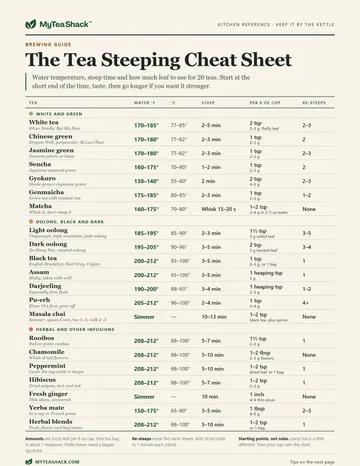
Free printable
The Tea Steeping Cheat Sheet
Water temperature, steep time and how much leaf to use for 20 teas, from sencha to rooibos, on one printable page. Plus five fixes for a bitter cup.