Best Peppermint Tea: Bags vs. Loose Leaf, by Budget
How to pick the best peppermint tea, peppermint vs. spearmint, bagged vs. loose leaf, and picks by budget for after-dinner or before-bed cups.
In this guide · 11 sections
The best peppermint tea comes down to the mint itself: peppermint or spearmint, and whether you want dried leaf in a bag or loose whole leaves. Both are naturally caffeine-free, but they taste noticeably different, and quality varies a lot more between brands than most people expect from something as simple as mint.
Peppermint vs. Spearmint
| Peppermint | Spearmint | |
|---|---|---|
| Menthol content | Higher, sharper cooling sensation | Lower, milder and sweeter |
| Flavor | Strong, almost toothpaste-like when fresh | Softer, slightly sweet, less "medicinal" |
| Best for | After a heavy meal, sinus or stomach discomfort | Everyday sipping, blends with other herbs well |
| Common in | Standalone peppermint tea, digestive blends | Moroccan mint tea, mixed herbal blends |
If a peppermint tea tastes flat or grassy instead of sharp and cooling, it's often spearmint mislabeled or blended in, or simply a low-menthol batch of peppermint.
Bags vs. Loose Leaf
- Tea bags: consistent, convenient, and fine for peppermint specifically, since mint holds its flavor reasonably well even cut into small pieces. Good for daily use and travel.
- Loose leaf (whole dried leaves): stronger aroma and a fresher, more vivid mint flavor, especially if the leaves are a recent harvest. Worth it if you drink peppermint tea often or want a stronger cup.
- Fresh mint: the most intense flavor of all, if you have access to a plant. A small handful of fresh leaves steeped 5–7 minutes makes a noticeably brighter cup than dried, though it doesn't keep like dried tea does.
What to Look For
- Color. Good dried peppermint is a deep green, not brown or gray. Faded, dull leaves have usually lost most of their essential oil.
- Whole vs. powdered leaf. Whole or roughly cut leaves hold flavor longer than finely ground "dust," which is common in the cheapest bagged teas.
- Smell. Fresh peppermint tea should smell sharp and cooling right out of the bag or tin. If it smells like hay, it's stale.
- Single-ingredient label. The best peppermint teas list only peppermint leaf. Blends with "natural flavor" added on top of actual peppermint aren't bad, but they're compensating for a weaker base leaf.
Picks by Budget
| Budget | What to look for |
|---|---|
| Under $10 | A reputable bagged brand with whole or large-cut leaf, not powder |
| $10–18 | A mid-size loose-leaf tin from a dedicated tea or herb brand |
| $18+ | Organic, single-origin loose leaf, often fresher and more aromatic, sometimes sold by tea shops that also grow or source directly |
Peppermint doesn't have the wide price range that specialty teas like matcha or oolong do, so spending more mostly buys freshness and leaf quality rather than a completely different product.
How to Brew It
- Use water at a full boil, 212°F. Unlike green or white tea, mint holds up fine to boiling water.
- Steep 5–7 minutes for a fuller flavor; shorter (3–4 minutes) for something lighter.
- Use 1 teaspoon of loose leaf or 1 tea bag per 8 oz cup, and loose leaf can usually be resteeped once at a slightly longer time.
- Add honey if you like it sweeter; peppermint doesn't usually need milk.
Iced Peppermint Tea
Peppermint's cooling flavor works especially well iced. Brew it double-strength (twice the usual leaf for the same water) so it doesn't taste watery once it hits ice, steep the full 5–7 minutes, then pour hot over a full glass of ice. A few fresh mint leaves and a squeeze of lemon make it feel more like a warm-weather drink than a wellness cup.
Growing Your Own
Peppermint is one of the easiest herbs to grow at home, in a pot or in the ground, and it spreads aggressively enough that most gardeners keep it contained in its own planter. A handful of fresh leaves, rinsed and steeped 5–7 minutes, makes a noticeably brighter cup than store-bought dried tea, and a single healthy plant can supply tea for months. If you already grow mint for cooking, it's the same plant, just steeped instead of chopped.
A Note on Sourcing
Peppermint doesn't carry the same origin cachet as, say, Japanese matcha or Ceylon black tea, so brand reputation and leaf freshness matter more than where it was grown. US-grown and imported peppermint (often from Egypt or Morocco, both major mint exporters) are both fine choices; judge by color, smell and whether the leaf is whole or powdered rather than by country of origin alone.
Blends Worth Trying
If plain peppermint feels one-note to you, a few pairings are well established rather than gimmicky:
- Peppermint and licorice root: a classic combination in many "digestive" herbal blends, with licorice adding natural sweetness.
- Peppermint and green tea (Moroccan-style, usually with spearmint): adds a small amount of caffeine and a grassier base note.
- Peppermint and ginger: a warming pairing that works well after a heavy or rich meal.
These are preference calls, not upgrades. Plain, good-quality peppermint is a complete tea on its own.
FAQ
Is loose-leaf peppermint tea stronger than bags?
Generally yes, since whole leaves retain more essential oil than the small, broken pieces typically used in bags, though a good-quality bag with whole leaf can come close.
Does peppermint tea have caffeine?
No. Peppermint is an herbal infusion, not made from the Camellia sinensis tea plant, so it's naturally caffeine-free. See our full caffeine-free tea guide for other options.
What's the difference between peppermint tea and mint tea?
"Mint tea" is a broader term that can mean peppermint, spearmint or a blend of both. Peppermint has a sharper, more cooling menthol flavor, while spearmint is milder and sweeter.
Can I drink peppermint tea every night?
Most people can enjoy a cup in the evening without issue since it's caffeine-free, though anyone with acid reflux should be cautious, as peppermint can relax the muscle that keeps stomach acid down for some people. See our peppermint tea before bed guide for more.
Can I use fresh mint from the grocery store instead of dried tea?
Yes, as long as it's labeled peppermint (not just "mint," which could be spearmint or a blend). Use a larger handful than you'd think, since fresh leaves are less concentrated by volume than dried leaf.
Why does bagged peppermint tea sometimes taste weak?
It's usually finely ground "dust" rather than whole leaf, which loses its essential oil faster during storage. A whole-leaf bag or loose leaf from a fresher batch will taste noticeably stronger.
The Bottom Line
Choose peppermint over spearmint for a sharper, more cooling cup, pick loose leaf if you want the strongest flavor, and check for whole, deep-green leaves rather than powder regardless of format. For more on what peppermint tea can (and can't) do, see our peppermint tea benefits guide.
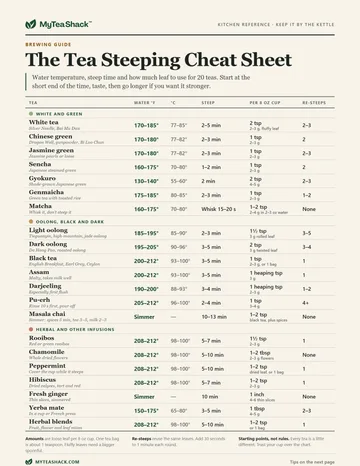
Free printable
The Tea Steeping Cheat Sheet
Water temperature, steep time and how much leaf to use for 20 teas, from sencha to rooibos, on one printable page. Plus five fixes for a bitter cup.