Peppermint Tea Before Bed: Benefits and How to Use It
Learn how peppermint tea before bed may support sleep and digestion, plus who should avoid it and how to brew a soothing cup at night.

We may earn a commission when you buy through links in this guide, at no extra cost to you. How we make money.
In this guide · 7 sections
A warm cup of peppermint tea before bed is a popular caffeine-free wind-down ritual. Its calming aroma and mild anti-inflammatory properties may help you relax and ease into sleep, though it isn't a cure for chronic insomnia.
What Is Peppermint Tea Good For?
Peppermint has a long history as a soothing herb, and small studies point to a few areas where it may help:
- May ease bloating and support digestion after meals; peppermint oil has the most research behind it for digestive symptoms like IBS
- May help relieve tension headaches when used alongside other remedies
- Has a calming, menthol-driven cooling effect that many people find relaxing
- May help soothe minor muscle tension
- Naturally caffeine-free, making it a reasonable substitute for a nightcap
These are supportive effects, not medical treatments, so peppermint tea works best as part of a broader wind-down routine rather than a standalone fix for sleep or pain issues.
Why Peppermint Tea Before Bed?
Peppermint's calming aroma may help you feel more relaxed heading into sleep, though there isn't strong clinical evidence that it acts as a sedative. What it does have real support for is settling the stomach — enteric-coated peppermint oil has been shown to ease digestive discomfort — and reducing the bloated feeling that can follow a heavy dinner, which can make it easier to fall asleep comfortably.
Because it contains no caffeine, adding a cup to your nightly routine is one of the simpler herbal-tea habits to build, alongside other calming options like chamomile tea with honey.
Other Teas That Support Sleep
- Chamomile is a classic choice for winding down after a stressful day, especially with a little honey.
- Lemon balm may help reduce stress and support better sleep, and pairs well with chamomile or valerian.
- Valerian root tea is traditionally used to ease anxiety and may shorten the time it takes to fall asleep for some people.
- Lavender tea is another common bedtime infusion valued for its calming aroma.
If you want to explore more caffeine-free options, see our guide to teas for sleep and the full list of healthiest herbal teas.
How to Make Peppermint Tea
Ingredients:
- 2 cups (500 ml) purified water
- 1 tablespoon fresh peppermint leaves (or 1 peppermint tea bag)
Steps:
- Wash the mint leaves if using fresh peppermint.
- Bring the water to a boil, then add the mint leaves.
- Boil for 2 to 3 minutes, then strain.
- Serve warm, about 1 to 2 cups at bedtime.
Consistency matters more than any single cup: pairing peppermint tea with a calming bedtime routine, dim lighting, and putting your phone away tends to make the biggest difference.
Side Effects and Precautions
Peppermint tea is generally well tolerated, but a few groups should be cautious:
- Pregnancy: peppermint in food amounts (like a cup of tea) is generally considered fine, and it's sometimes used to help with morning sickness, but talk to your doctor before using concentrated peppermint products regularly during pregnancy.
- Acid reflux: peppermint can relax the muscle that keeps stomach acid down, so it may worsen heartburn or GERD symptoms in some people.
- Medication interactions: peppermint can affect how the body processes certain drugs, including some blood pressure medications (like felodipine) and immunosuppressants; check with your doctor or pharmacist if you take prescription medication regularly and want to make peppermint tea a nightly habit.
FAQ
Is peppermint tea good for an upset stomach?
Yes, peppermint is commonly used to ease digestive discomfort, and a cup after a heavy meal may help settle the stomach.
Does peppermint tea have caffeine?
No, peppermint tea is naturally caffeine-free, which is part of why it's a popular choice before bed.
Is peppermint tea safe during pregnancy?
It's used traditionally for nausea, but you should talk to your doctor before drinking it regularly, especially in the first trimester or in large quantities.
The Bottom Line
Peppermint tea is a gentle, caffeine-free way to wind down before bed, with a calming aroma and mild digestive benefits. It's not a substitute for treating chronic insomnia or digestive conditions, but as part of a consistent nightly routine, many people find it genuinely helps them relax.
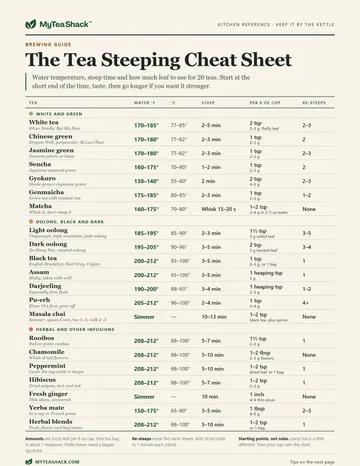
Free printable
The Tea Steeping Cheat Sheet
Water temperature, steep time and how much leaf to use for 20 teas, from sencha to rooibos, on one printable page. Plus five fixes for a bitter cup.