Best Chamomile Tea: Whole Flower vs. Bags Compared
How to pick a good chamomile tea: whole flower vs. dust-filled bags, organic certification, and picks by budget, plus how to brew it for the best flavor.

In this guide · 8 sections
The single biggest quality difference in chamomile tea is whole dried flowers versus the crushed "fannings" and dust packed into most cheap tea bags. Whole flowers hold their essential oils longer and brew a noticeably more floral, less flat cup.
Whole Flower vs. Bagged Chamomile
| Whole flower (loose) | Standard tea bags | |
|---|---|---|
| What's inside | Whole or mostly whole dried chamomile flower heads | Crushed flowers, stems and dust ("fannings") |
| Flavor | Fuller, more floral, slightly sweet | Milder, sometimes flat or hay-like |
| Essential oil retention | Higher, since less surface area is exposed before brewing | Lower, oils degrade faster once crushed |
| Visual check for quality | You can see whole yellow-centered flower heads | You can't inspect what's inside a sealed bag |
| Price per cup | $0.20–0.40 | $0.10–0.20 |
| Best for | Regular drinkers who care about flavor | Convenience, travel, occasional cup |
If you drink chamomile tea most nights, whole flower loose tea or pyramid bags (mesh bags roomy enough to hold whole flowers) are worth the extra cost. If it's an occasional cup, a decent flat bag brand is a reasonable trade-off for convenience.
How to Tell If a Bag Brand Is Any Good
Flat, stapled paper tea bags are almost always filled with fannings or dust rather than whole flowers, simply because whole flowers don't pack well into a flat bag. Pyramid-shaped mesh bags have room for whole or large flower pieces and tend to signal a brand that cares about ingredient quality. When you can, tear open a bag before brewing: if you see intact, dime-sized yellow-and-white flower heads rather than a fine green-brown powder, that's a sign of a better product.
What "Organic" Means Here
USDA Organic certification on chamomile tea means it was grown without most synthetic pesticides and fertilizers, verified by a third-party inspector. It doesn't guarantee whole flowers or better flavor by itself, but combined with a visible whole-flower check, it's a reasonable way to narrow down brands, especially since chamomile is a delicate flower crop where residue concerns come up often in buying guides.
Picks by Budget
Budget ($0.10–0.15/cup, bagged): Widely available grocery-store brands. Fine for occasional drinking; expect a milder, sometimes flat cup since these are almost always fannings, not whole flowers.
Mid-range ($0.20–0.30/cup, pyramid bags or loose): Brands that specify "whole flower" or "German chamomile" on the label and use pyramid bags or resealable loose-leaf pouches. This is the sweet spot for most regular drinkers, noticeably better flavor without paying specialty prices.
Premium ($0.35–0.50/cup, loose or single-origin): Loose whole flowers from a named growing region (Egyptian and German chamomile are the most commonly cited origins), often organic and sold in resealable tins or pouches rather than bags. Worth it if chamomile is your everyday tea and you notice the flavor difference.
How to Brew Chamomile for the Best Flavor
Use 1 to 2 teaspoons of whole dried flowers (or one bag) per 8 oz cup, water at a full boil (212°F), and steep for 5 to 10 minutes. Chamomile is one of the few teas that benefits from a longer steep since it has no tannins to speak of, so there's little risk of bitterness even at 10 minutes; a short 2-3 minute steep is actually the more common mistake, since it leaves most of the flower's flavor and aroma still locked in the petals. A dash of honey brings out the tea's slightly sweet, apple-like side. For a wider comparison of what's naturally caffeine-free alongside chamomile, see caffeine-free tea.
German vs. Roman Chamomile
Most tea is made from German chamomile (Matricaria chamomilla), which has a sweeter, more apple-like flavor and is the type used in nearly all commercial tea bags and loose blends. Roman chamomile (Chamaemelum nobile) is more bitter and is used more often in essential oils and skincare than in tea. If a package doesn't specify, it's almost certainly German chamomile. For more on what chamomile is generally used for and its side effects, see what is chamomile tea good for.
FAQ
Is loose leaf chamomile really better than bags?
In terms of flavor, generally yes, since loose whole flowers retain more essential oil than the crushed material in most bags. Nutritionally the difference is minor; it comes down to taste and how much you're willing to pay per cup.
How can I tell if chamomile tea has gone stale?
Stale chamomile loses its floral aroma and tastes flat or like plain hot water with a faint hay note. Whole flowers stay fresh longer than crushed tea, generally 12 to 18 months in a sealed, dark container versus 6 to 12 months for bagged fannings.
Does more expensive chamomile tea mean more benefits?
Price mostly reflects flower quality and flavor, not proven health effects, which are similar across whole-flower and bagged versions as long as you're using real chamomile flowers rather than a flavored blend with little actual chamomile in it.
What should I look for on the ingredient label?
"Chamomile flowers" or "Matricaria chamomilla flower" listed as the only ingredient, or close to the top of a short list, is the best sign. Be cautious of blends where chamomile is listed after several other ingredients, since that usually means it's a flavoring note rather than the main content.
The Bottom Line
For everyday drinking, look for whole flowers in a pyramid bag or loose form over a flat paper bag, and expect to pay $0.20–0.30 per cup for a noticeable upgrade in flavor. Brew it longer than you'd expect, 5 to 10 minutes at a full boil, since chamomile has no tannins to turn bitter. If chamomile is part of a wind-down routine, our guide to chamomile tea with honey covers pairings worth trying at night, and teas to sleep rounds up other caffeine-free options.
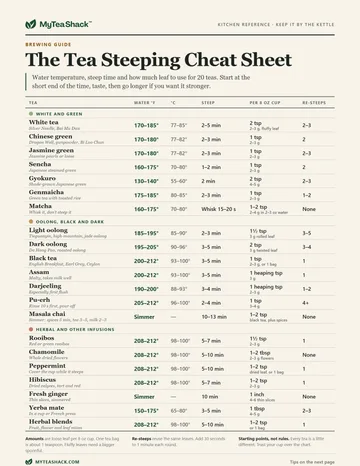
Free printable
The Tea Steeping Cheat Sheet
Water temperature, steep time and how much leaf to use for 20 teas, from sencha to rooibos, on one printable page. Plus five fixes for a bitter cup.