What Tea Helps With Kidney Stones? 7 Options to Try
Herbal teas that may support kidney health and help prevent kidney stones, plus what actually helps and when to see a doctor.

We may earn a commission when you buy through links in this guide, at no extra cost to you. How we make money.
In this guide · 8 sections
Kidney stones are painful, and while diet and hydration are the main ways to prevent and manage them, some herbal teas are traditionally used alongside medical care to support kidney and urinary health. Here's what they are and what the evidence says.
What Causes Kidney Stones?
Kidney stones form when minerals and salts in urine — most often calcium oxalate — crystallize into a hard mass. Risk factors include not drinking enough fluids, a diet high in sodium, oxalate or animal protein, and certain family or metabolic tendencies.
Common symptoms include sharp pain in the side or back below the ribs, pain that radiates to the lower abdomen, pain or burning during urination, and nausea. If you have these symptoms, see a doctor — kidney stones need proper diagnosis and, sometimes, medical treatment.
Herbal Teas Traditionally Used for Kidney Health
These teas are used traditionally for urinary and kidney support and have some early research behind them, but none of them are a substitute for medical care or a proven way to treat existing stones.
- Horsetail tea — used traditionally as a diuretic to support urine output.
- Dandelion tea — a mild diuretic that may support fluid balance and urine flow.
- Nettle tea — a natural diuretic that may help the body eliminate excess fluid.
- Uva ursi (bearberry) tea — contains compounds traditionally used to support urinary tract health.
- Parsley tea — traditionally used for its diuretic properties.
- Burdock root tea — has anti-inflammatory and mild diuretic properties.
- Ginger tea — has general anti-inflammatory properties and is easy on the stomach, making it a good caffeine-free choice for regular hydration.
- Turmeric tea — contains curcumin, an antioxidant compound studied in lab and animal research for possible effects on stone-related inflammation, though human evidence for kidney stones specifically is limited.
- Green tea — see below.
Does Lemon Help With Kidney Stones?
Citrate from lemon juice is recognized by Mayo Clinic as a way to help prevent calcium-based stones, since it keeps calcium and oxalate from crystallizing as easily. Adding fresh lemon juice to water or a mild herbal tea is a reasonable, low-risk habit, just skip the added sugar, which can work against the benefit.
A Simple Lemon-Ginger Hydration Infusion
A flavorful way to increase fluid intake, not a treatment for an existing stone.
Ingredients: juice of half a lemon, 1/2 teaspoon fresh grated ginger (or 1 ginger tea bag), a pinch of turmeric, 2 cups hot water.
Method: Steep the ginger (and turmeric, if using loose) in hot water for 8–10 minutes, strain, then stir in the lemon juice once it's cooled slightly. Drink throughout the day alongside plain water.
Is Green Tea Good for Kidney Stones?
Lab research from Sichuan University found that green tea extract can change the shape of calcium oxalate crystals, making them flatter and less likely to form large, stable stones — an early, lab-based finding, not proof that drinking green tea dissolves or prevents stones in people. More reassuringly, a human study of hypercalciuric stone patients found daily green tea drinkers had no increase in stone risk factors, and none of the female tea drinkers had oxalate-dependent stones, versus 42% of non-drinkers — though this doesn't mean tea prevents stones for everyone, and people who form calcium oxalate stones are still often told to moderate high-oxalate foods and drinks.
Side Effects and Precautions
Most of these teas act as diuretics, which means drinking a lot of them increases urination and fluid loss. That's generally mild, but it's worth pairing with plenty of plain water rather than relying on tea alone for hydration.
Talk to your doctor before using these teas regularly if you:
- Have an existing kidney condition or reduced kidney function — some diuretic herbs aren't appropriate here.
- Take diuretic medication, blood pressure medication, or lithium, since herbal diuretics can interact with these.
- Are pregnant or breastfeeding.
- Have a known kidney stone that hasn't been evaluated by a doctor — stones can require medical treatment depending on size and type.
- Take blood thinners or have a liver condition: turmeric in large amounts can interact with blood clotting medication and, in concentrated supplement form, has been linked to liver problems in some people (NCCIH).
There's no set "dose" of these teas that's proven to prevent stones; a cup or two a day as part of good hydration habits is a reasonable way to try them, not a treatment plan.
Preventing Kidney Stones
Alongside any tea, the habits with the best evidence for reducing kidney stone risk are:
- Drinking enough water to keep urine pale yellow (roughly 2–3 liters a day for most adults).
- Moderating sodium and animal protein intake.
- Getting enough dietary calcium (from food, not supplements) alongside oxalate-rich foods.
- Staying active, since prolonged inactivity is linked to higher stone risk.
You may also see palo azul tea recommended for kidney support, particularly in Mexican folk tradition; our guide covers what's known and what isn't. Related: tea for bladder infections.
FAQ
What tea is best for kidney stones?
No single tea is proven to treat kidney stones. Diuretic herbal teas like dandelion, nettle and parsley are traditionally used to support urine flow, but plain water and medical care remain the foundation of prevention and treatment.
Can tea dissolve kidney stones?
There's no reliable evidence that any tea dissolves existing kidney stones. Some lab research on green tea and crystal formation is promising but preliminary.
How much tea should I drink for kidney stone prevention?
There's no established dose. A cup or two a day of a diuretic herbal tea, on top of adequate water intake, is a reasonable way to include it in your routine.
Does lemon water help prevent kidney stones?
There's reasonable evidence that citrate from lemon juice can help reduce the risk of calcium-based stones by keeping calcium from crystallizing as easily.
How much fluid should I drink to help prevent kidney stones?
Many doctors suggest enough fluid to produce about 2–2.5 liters of urine a day, which usually means drinking more than most people do by default. Ask your doctor what's right for your situation.
The Bottom Line
Certain herbal teas have a long history of traditional use for kidney and urinary support, and some early lab research is encouraging, but none of them replace proper hydration, diet, or medical treatment for kidney stones. If you have symptoms of a kidney stone, see a doctor.
For more on this topic, see our guides on teas for kidney health and the connection between kidney stones and green tea.
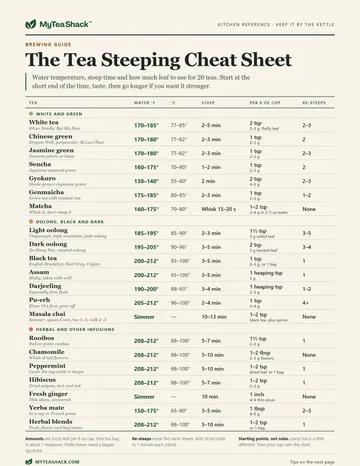
Free printable
The Tea Steeping Cheat Sheet
Water temperature, steep time and how much leaf to use for 20 teas, from sencha to rooibos, on one printable page. Plus five fixes for a bitter cup.