7 Best Teas for Kidney Health, According to Research
Teas with early research support for kidney health, plus the warning signs of kidney stones and when to see a doctor.

In this guide · 4 sections
Your kidneys filter waste and excess fluid from your blood and help regulate blood pressure, so keeping them working well matters. No tea can treat or reverse kidney disease, but a few have some early research behind them for supporting general kidney function and comfort.
7 Teas With Research Behind Them for Kidney Health
Burdock Root Tea
Traditionally used as a mild diuretic, burdock root tea is sometimes used by people prone to kidney stones, though direct clinical evidence in humans is limited.
Ginger Tea
Ginger contains gingerol, a compound with anti-inflammatory and antioxidant properties. It's more established for digestive comfort than for kidney-specific effects, but its anti-inflammatory profile makes it a reasonable everyday choice.
Milk Thistle Tea
Milk thistle's main active compound, silymarin, is best studied for liver support, with some early research suggesting it may also help protect kidney cells from oxidative damage. Evidence in humans specifically for kidney health is still limited.
Parsley Leaf Tea
Parsley has a long history as a mild diuretic in folk medicine, which is thought to help the body flush waste through increased urine output. Human clinical data is sparse, so treat this as a traditional use rather than a proven treatment.
Dandelion Tea
Dandelion is another traditional diuretic, sometimes used to support urine flow and ease mild bloating. As with the others here, it's a complement to a healthy lifestyle, not a treatment for kidney disease.
Pomegranate Tea
Rich in potassium and citric acid, pomegranate tea may support healthy fluid balance and has been studied for antioxidant effects relevant to kidney tissue in preliminary research.
Uva Ursi Tea
Uva ursi (bearberry) has traditional use for urinary tract discomfort, but it's generally considered unsuitable for pregnancy and for regular long-term use, and isn't a substitute for antibiotics in a diagnosed urinary tract infection. Check with your doctor before adding it to your routine.
What Are the Symptoms of Kidney Stones?
Kidney stones form when minerals and waste products crystallize inside the kidney, sometimes causing painful blockages in the urinary tract. Watch for:
- Sharp pain in the back, side, lower abdomen, or groin
- Pink, red, or brown-tinged urine (blood in the urine)
- A frequent, urgent need to urinate
- Pain or burning when urinating
- Cloudy or foul-smelling urine
If you notice any of these symptoms, see a doctor promptly — kidney stones and other kidney problems need proper diagnosis, and tea is not a treatment for an active stone or infection.
Side Effects and Precautions
- These teas are a complement to — not a substitute for — medical care if you have diagnosed kidney disease, since some herbs can be inappropriate for people with reduced kidney function.
- If you take diuretic medication or have low blood pressure, check with your doctor before adding diuretic herbal teas like dandelion or parsley.
- Uva ursi shouldn't be used long-term, during pregnancy, or as a replacement for antibiotics in a confirmed UTI.
The Bottom Line
A cup of ginger, dandelion, or pomegranate tea is a reasonable, low-risk addition to a kidney-friendly lifestyle that also includes moderate salt intake, regular exercise, and enough water. If you have any symptoms of kidney stones or existing kidney disease, talk to a healthcare professional before relying on herbal teas.
For more on this topic, see our guides on teas that may help with kidney stones, or check whether green tea affects kidney stones.
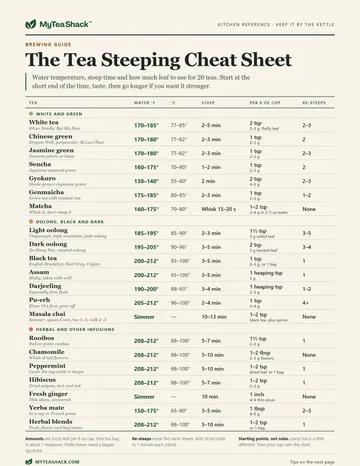
Free printable
The Tea Steeping Cheat Sheet
Water temperature, steep time and how much leaf to use for 20 teas, from sencha to rooibos, on one printable page. Plus five fixes for a bitter cup.