Fertility Tea for Women: What the Research Really Says
What's actually known about herbal teas and fertility, which ones to be cautious with, and why talking to a doctor matters most.
In this guide · 6 sections
No tea has been shown to increase fertility or the number of eggs a woman produces, and you should be cautious of any product that claims otherwise. Some herbal teas are traditionally used to support general reproductive health, but they work best as a small part of an overall healthy routine, not a fertility treatment.
What "Fertility Tea" Actually Means
"Fertility tea" is a marketing term more than a medical one. It usually refers to a blend of herbs traditionally associated with reproductive health, such as red raspberry leaf, nettle or red clover. The evidence behind these blends is limited, and none of them have been shown to reliably increase the chances of conception.
Teas Sometimes Used to Support Reproductive Health
Red Raspberry Leaf Tea
Red raspberry leaf is one of the most commonly used herbs for women's reproductive health, often associated with uterine tone. It's studied far more in the context of pregnancy and labor than fertility itself, and even there the evidence is thin: a prospective observational study found no adverse outcomes in a small group of raspberry-leaf users, but the authors were explicit that this "should not be taken as evidence that raspberry leaf is safe," since the study was too small to prove safety or effectiveness either way. Talk to your doctor before use if you're trying to conceive or are pregnant.
Green Tea
Green tea is rich in antioxidants, which support overall health. Keep intake moderate: a 2016 NIH-funded study linked higher caffeine intake before and during early pregnancy to a greater risk of miscarriage, and other research associates high caffeine consumption with reduced fertility, so it's worth cutting back further if you're trying to conceive or become pregnant.
Nettle Tea
Nettle is a source of iron and other minerals, which can be useful since iron needs increase for women trying to conceive. Check with a doctor about your iron levels before using it as a supplement source.
Chasteberry (Vitex) Tea
Chasteberry is a popular herbal choice related to menstrual cycle regularity, and some small studies have looked at its effect on hormone balance. Memorial Sloan Kettering notes it can interact with hormonal medications, including oral contraceptives and other hormone-containing drugs, so talk to your doctor before trying it, especially if you're using fertility treatment.
What Actually Supports Fertility
The habits with the strongest evidence behind them are not exotic teas:
- Maintaining a healthy weight
- Not smoking and limiting alcohol
- Managing chronic conditions like diabetes or thyroid issues
- Reducing stress where possible
- Getting a preconception checkup with your doctor
Side Effects and Precautions
- No tea is a fertility treatment. If you're having trouble conceiving, see a doctor rather than relying on herbal tea.
- Caffeine: Limit caffeinated teas if you're trying to conceive or are pregnant.
- Hormonal interactions: Chasteberry and similar herbs can interact with fertility medications and hormonal birth control.
- Pregnancy: Some fertility teas (including raspberry leaf in larger amounts) are typically discussed in a pregnancy context; talk to your doctor about timing and amounts.
If you're further along in life than trying to conceive, see our guide to teas for menopause.
FAQ
Does fertility tea actually work?
There's no reliable evidence that any tea increases fertility or egg count. Some herbs are traditionally used to support general reproductive health, but they aren't a substitute for medical care if you're trying to conceive.
Is red raspberry leaf tea good for fertility?
It's more commonly discussed for pregnancy and uterine tone than fertility specifically, and evidence is limited either way. Talk to your doctor before regular use.
Can tea affect my chances of getting pregnant?
High caffeine intake has been linked to reduced fertility and higher miscarriage risk in some research, so moderating caffeinated tea is a reasonable precaution. Beyond that, no tea has been shown to significantly change fertility outcomes.
The Bottom Line
Be skeptical of any tea marketed as a fertility booster. Herbs like red raspberry leaf, nettle and chasteberry are traditionally used to support reproductive health, but the real drivers of fertility are medical, not herbal. If you're trying to conceive, talk to your doctor. For related reading, see our guides to red raspberry leaf tea and fertility and teas for pregnancy.
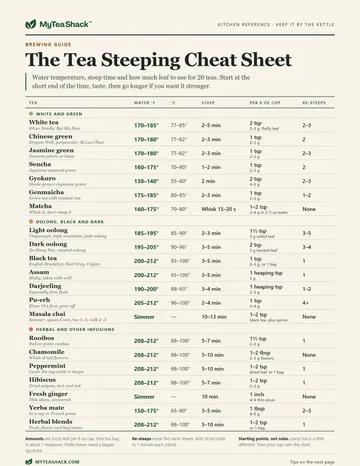
Free printable
The Tea Steeping Cheat Sheet
Water temperature, steep time and how much leaf to use for 20 teas, from sencha to rooibos, on one printable page. Plus five fixes for a bitter cup.