Does Tea Help With Bladder Infections? What to Know
Which teas people use for bladder and urinary tract health, what the evidence actually supports, and when to see a doctor instead.

In this guide · 5 sections
Certain herbal teas are commonly used alongside standard care for mild urinary discomfort, but no tea treats or cures a urinary tract infection (UTI). If you suspect a UTI, see a doctor, since untreated infections can spread to the kidneys.
What Is a Urinary Tract Infection?
A UTI is a bacterial infection anywhere in the urinary tract: the kidneys, ureters, bladder or urethra. The most common form, cystitis, is inflammation of the bladder lining. UTIs are more common in women, partly due to anatomy, and can be triggered by sexual activity, catheter use or hormonal changes.
Typical symptoms include a burning sensation when urinating, frequent urges to urinate, cloudy or strong-smelling urine, and pelvic discomfort. Fever, back pain or blood in the urine can signal a more serious kidney infection and need prompt medical attention.
Can Tea Help With Bladder Health?
Increasing fluid intake in general can help flush the urinary tract, and some herbal teas are traditionally used for this purpose. The evidence behind specific teas is limited, and none of them are a substitute for antibiotics when a UTI is confirmed.
Cranberry Tea
Cranberry is the most researched option for urinary tract health. NCCIH reports that cranberry products may lower the risk of recurrent UTIs in women by roughly 25–30%, thanks to compounds that make it harder for bacteria to stick to the bladder wall — but it stresses that cranberry isn't a treatment for a UTI you already have, and results across studies are mixed.
Parsley Tea
Parsley has a mild diuretic effect, which may support flushing the urinary tract. To make it, steep a tablespoon of fresh parsley in a cup of hot water for 10–15 minutes, then add lemon or honey. Avoid it in medicinal amounts during pregnancy.
Moringa Tea
Moringa is rich in vitamins and minerals and has traditionally been used to support the urinary tract, though direct research on UTIs specifically is limited.
Side Effects and Precautions
- Not a treatment: Herbal teas do not treat an active UTI. See a doctor for antibiotics if you have UTI symptoms.
- Pregnancy: Avoid parsley tea in concentrated amounts during pregnancy.
- Kidney conditions: If you have kidney disease or recurring UTIs, talk to your doctor before relying on herbal remedies.
- When to seek care immediately: Fever, chills, back or side pain, or blood in the urine can indicate a kidney infection and need urgent medical attention.
Related: palo azul tea, a traditional Mexican diuretic tea.
FAQ
What is the best tea for a UTI?
No tea cures a UTI. Cranberry tea has the most research behind it for supporting urinary tract health, but antibiotics are the standard treatment for a confirmed infection.
Can drinking tea prevent bladder infections?
Staying well hydrated in general may help reduce UTI risk. Cranberry products are the most studied option specifically, though evidence is mixed.
Is parsley tea safe for the bladder?
In normal culinary amounts, parsley tea is generally considered safe, but avoid concentrated or medicinal amounts if you're pregnant, and check with your doctor if you have kidney issues.
The Bottom Line
Tea can be a supportive habit for urinary tract health, with cranberry showing the most research behind it, but no tea treats a UTI on its own. If you have symptoms like burning, urgency or pelvic pain, see a doctor rather than relying on tea alone. For related reading, see our guides to tea for kidney health and what tea helps kidney stones.
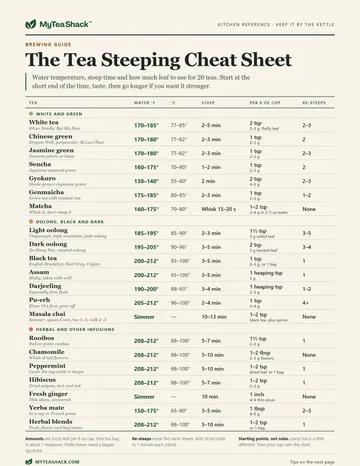
Free printable
The Tea Steeping Cheat Sheet
Water temperature, steep time and how much leaf to use for 20 teas, from sencha to rooibos, on one printable page. Plus five fixes for a bitter cup.