Guava Leaf Tea: Benefits, Side Effects and How to Make It
What guava leaf tea is, what research says about its potential benefits, who should be cautious, and a simple way to brew it at home.
In this guide · 7 sections
Guava leaf tea is a caffeine-free herbal infusion made from the leaves of the guava plant, long used in traditional remedies across Mexico and Central America. It's rich in vitamin C, antioxidants and minerals like manganese, iron and potassium, and modern research is starting to test some of its traditional uses.
What Is Guava Leaf Tea?
Guava leaves are steeped to make a tea that's naturally sweet with a mild, slightly bitter edge depending on how long it brews. It's caffeine-free, so it works any time of day, and can be enjoyed hot, iced, or lightly sweetened with honey.
Potential Benefits of Guava Leaf Tea
Research on guava leaf extract is still mostly limited to small human studies, animal studies, or lab work, so think of these as promising early findings rather than settled facts.
- Blood sugar support. Small human trials, reviewed in PubMed Central, suggest guava leaf extract may modestly reduce post-meal blood sugar spikes, likely due to compounds that slow carbohydrate absorption. Most of the strongest evidence for this effect comes from animal studies, so it shouldn't replace prescribed diabetes medication — talk to your doctor before using it alongside treatment for diabetes.
- Antioxidant content. Guava leaves are rich in polyphenols like quercetin, which help the body counter oxidative stress from free radicals.
- Digestive comfort. Guava leaf tea has traditionally been used to help settle the stomach and has shown antimicrobial activity against some diarrhea-causing bacteria in lab studies.
- Heart health markers. Animal studies have linked guava leaf extract to modestly lower blood pressure and improved cholesterol ratios, but human evidence is limited, so treat this as a possible complement to — not a replacement for — a doctor's care.
- Skin and scalp use. Crushed guava leaves are traditionally used as a topical scrub or rinse; there's limited clinical research on this use, but it's low-risk for most people.
What the Evidence Doesn't Support
Older versions of guava leaf tea articles online sometimes claim it can fight or prevent cancer, cure diarrhea outright, or reverse baldness. Lab studies have looked at compounds in guava leaves for possible anticancer activity, but this hasn't been shown in humans, and no tea should be treated as a cancer treatment or prevention strategy. If you're managing a serious health condition, guava leaf tea is not a substitute for medical care.
How to Make Guava Leaf Tea
- Bring water to a boil and pour over a guava leaf tea bag or 1–2 teaspoons of dried leaves.
- Cover and steep for 10–15 minutes — guava leaf tea benefits from a longer steep than most herbal teas.
- Strain and drink plain or with a little honey.
Side Effects and Precautions
- May interact with diabetes medication by further lowering blood sugar — talk to your doctor before regular use if you take insulin or other glucose-lowering drugs.
- Limited safety data exists for pregnancy and breastfeeding, so check with your doctor before drinking it regularly during either.
- Stick to 1–2 cups a day; there's no established higher "dose" that improves results.
If you like fruit-based teas, see our guide to pomegranate tea.
FAQ
Is guava leaf tea good for diabetes?
Some small studies suggest it may modestly help blood sugar control, but it should be used alongside — not instead of — any treatment your doctor has prescribed.
Does guava leaf tea help you lose weight?
There's no strong evidence it directly causes weight loss; any effect is likely secondary to better blood sugar control and replacing sugary drinks.
How often can I drink guava leaf tea?
One to two cups a day is a reasonable amount for most healthy adults.
The Bottom Line
Guava leaf tea is a caffeine-free herbal option with encouraging early research on blood sugar and antioxidant support, though most of that evidence is still preliminary. Enjoy it as part of a balanced diet, and check with your doctor first if you're pregnant, breastfeeding, or managing diabetes or blood pressure with medication.
Pair it with other fruit-forward options like fruit teas and wild berry hibiscus tea, or see how it compares to other kidney-friendly picks in our teas for kidney health guide.
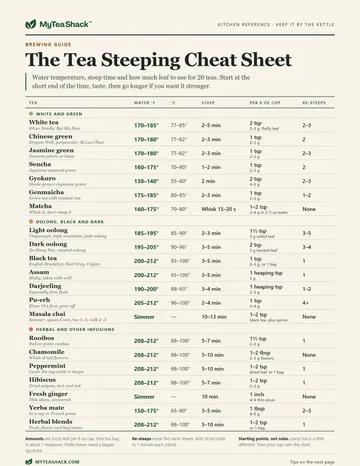
Free printable
The Tea Steeping Cheat Sheet
Water temperature, steep time and how much leaf to use for 20 teas, from sencha to rooibos, on one printable page. Plus five fixes for a bitter cup.