Benefits of Tea: 15 Reasons to Drink It Every Day
Discover 15 evidence-based benefits of tea, from antioxidants to immune support, plus caffeine content, side effects and tips for choosing the best cup.

In this guide · 6 sections
Drinking tea every day is linked to a long list of health perks, from a steady antioxidant boost to support for your heart, immune system and even your teeth. Here are 15 research-backed benefits, plus what to know about caffeine, side effects and how to brew it right.
How Tea Benefits Your Body
Tea is rich in polyphenols and catechins, plant compounds tied to lower inflammation and a reduced risk of several chronic conditions. Green tea in particular has been studied for its role in cardiovascular health, blood sugar regulation and brain aging.
Because tea naturally contains caffeine (roughly 30–50 mg per cup, less than coffee), it can also give you a gentler, longer-lasting energy lift than coffee without the same jittery crash.
15 Benefits of Drinking Tea Every Day
1. It's rich in antioxidants
Tea contains antioxidants that help the body fight everyday cellular damage. Green, black, white and oolong tea all rank among the highest antioxidant beverages.
2. It may support healthy blood pressure
Observational studies link regular tea drinking to a modestly lower risk of high blood pressure, and some clinical trials of tea and green tea catechins have found small reductions in blood pressure among people who already have elevated readings. Effects are modest and inconsistent across studies. If you already have hypertension or take blood pressure medication, talk to your doctor before relying on tea for this purpose — see our guide on herbal teas and blood pressure for more detail.
3. It's calorie-free
Plain tea with no added milk, sugar or syrup has essentially zero calories, making it an easy swap for sugary drinks.
4. It may support metabolism
NCCIH notes that green tea's catechins and caffeine may give metabolism a modest, temporary boost through mild increases in fat oxidation — not a substitute for diet and exercise, but a helpful nudge.
5. It may support immune function
Tea's antioxidants, including EGCG, are associated with stronger immune cell activity, which may help the body respond to everyday viruses and bacteria.
6. It's linked to lower stress
One small study found that people who drank several cups of black tea a day had lower cortisol (the stress hormone) after a month, though more research is needed to confirm the effect.
7. It may help manage blood sugar
Black tea has been shown to blunt blood sugar spikes after sugary meals, and green tea's catechins are linked to improved blood sugar regulation overall.
8. It helps you stay hydrated
Tea is over 90% water, so it counts toward your daily fluid intake while also supplying antioxidants — a good option if you find plain water boring.
9. It has less caffeine than coffee
An 8 oz cup of coffee has roughly 150–200 mg of caffeine, compared with about 60–90 mg for black tea and 35–70 mg for green tea, so tea gives you a gentler lift that's less likely to disrupt sleep.
10. It may support brain health
Lab research suggests compounds in black and green tea may help slow age-related cognitive decline, though this hasn't been confirmed in large human trials.
11. It may ease cold and flu symptoms
A warm cup of black tea can help loosen congestion and soothe a sore throat the way any warm fluid does — comfort care, not a cure.
12. It may support joint comfort
According to the Arthritis Foundation, green tea's polyphenols have anti-inflammatory properties that may help ease everyday joint discomfort.
13. It may support bone strength
Some research has found regular tea drinkers tend to have stronger bones than non-tea-drinkers, though tea should complement, not replace, calcium and vitamin D.
14. It may help with bad breath and gum health
Polyphenols in black and green tea can help control the bacteria responsible for plaque and bad breath.
15. It supports healthy teeth
Tea is a natural source of fluoride, which strengthens tooth enamel, while its catechins may help fight the bacteria linked to cavities and gum disease.
Choosing and Brewing Tea by Type
| Tea type | Water temperature | Steep time |
|---|---|---|
| White tea | 149–158°F | 1–2 minutes |
| Green tea | 167–176°F | 1–2 minutes |
| Yellow tea | 158–167°F | 1–2 minutes |
| Oolong tea | 185–205°F | 2–3 minutes |
| Black tea | 203–210°F | 2–3 minutes |
| Pu-erh (red) tea | 194–210°F | 2–3 minutes |
Choose organic, whole-leaf tea when you can, and drink it fresh rather than storing brewed tea in the fridge, since some compounds degrade over time.
Side Effects and Precautions
- Caffeine sensitivity: most healthy adults can safely have up to 400 mg of caffeine a day (about 3–4 cups of tea), but more can cause jitteriness or disrupt sleep.
- Iron absorption: tannins in tea can reduce absorption of non-heme iron from plant foods; drink tea between meals rather than with them if you're managing anemia.
- Digestive sensitivity: very strong tea can cause stomach upset in people sensitive to tannins.
- Pregnancy and breastfeeding: keep caffeine intake modest and talk to your doctor about how much tea is appropriate for you.
- Medication interactions: if you take blood pressure or blood-thinning medication, ask your doctor before making tea a daily habit.
If you're choosing between specific teas, our ranking of the healthiest teas compares them side by side.
FAQ
How many cups of tea should I drink a day?
Most healthy adults do well with 2–3 cups a day. Going beyond 4–5 cups increases your caffeine and tannin intake, which can bring on side effects for some people.
Does milk cancel out tea's benefits?
Milk doesn't eliminate tea's benefits, but some research suggests it may blunt certain antioxidant effects. If you drink tea mainly for health reasons, try it without milk at least some of the time.
What's the best tea to drink at night?
Caffeine-free herbal teas like chamomile, valerian or lemon balm are better choices before bed than green or black tea, which contain caffeine that can interfere with sleep — see what teas are good to help you sleep.
The Bottom Line
Tea is a low-calorie, antioxidant-rich drink with real, if modest, health benefits — support for your heart, metabolism, immune system and more. Stick to 2–3 cups a day, choose good-quality leaves, and check with your doctor if you're pregnant, on medication, or managing a health condition.
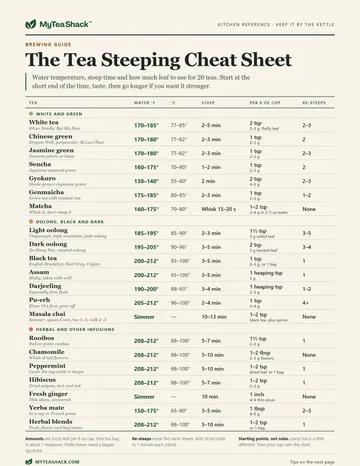
Free printable
The Tea Steeping Cheat Sheet
Water temperature, steep time and how much leaf to use for 20 teas, from sencha to rooibos, on one printable page. Plus five fixes for a bitter cup.