10 Best Teas for Gut Health and Digestion
Explore the best teas for gut health, from ginger and peppermint to fennel and chamomile, plus tips to support digestion every day.

In this guide · 5 sections
Adding the right tea to your routine is one of the simplest ways to support gut health. Stomach heaviness, bloating, and general digestive discomfort often trace back to eating habits, stress, or certain medications, and a warm cup of the right herbal infusion may help ease those symptoms.
If digestive symptoms are frequent or getting worse, it's worth talking to a doctor, since ongoing discomfort can sometimes point to an underlying condition that tea alone won't fix.
Best Teas for Gut Health
Green Tea
Green tea's polyphenols are associated with general digestive comfort, and it may help reduce bloating and gas linked to indigestion, though it's not a treatment for liver or gallbladder conditions.
Chamomile Tea
Chamomile is a gentle anti-inflammatory that may support digestion and help relax stomach muscles, thanks in part to a compound called bisabolol.
Licorice Tea
Licorice root is traditionally used to soothe the digestive tract, often combined with chamomile for heartburn and general indigestion. With regular use, licorice's glycyrrhizin content can raise blood pressure and lower potassium levels, so people with hypertension, heart, or kidney conditions should talk to a doctor before using it regularly, and it should be avoided during pregnancy (NCCIH: Licorice Root).
Ginger Tea
Ginger tea has research support for easing pregnancy-related nausea, though evidence is more mixed for other types of nausea, and it's traditionally used for indigestion and general digestive discomfort (NCCIH: Ginger). It's a good option after a large meal for most people, though it can cause heartburn in those with gastritis or a gastric ulcer.
Fennel Tea
A gentle option for sensitive stomachs, fennel may help relieve gas, cramping, and colic, and supports the natural movement of the intestines.
Peppermint Tea
Peppermint is one of the most versatile digestive teas, traditionally used for indigestion, gas, nausea, and bloating. It also has a carminative effect, helping move trapped gas through the digestive tract. For more detail, see our guide to peppermint tea's benefits.
Dandelion Tea
Dandelion has a mild laxative effect and is traditionally used for bloating, slow digestion, and as a gentle diuretic.
Lemon Balm
A calming herb often used for stress-related digestive issues, colic, and stomach spasms.
Boldo Tea
Boldo may support bile flow from the gallbladder, which can help with fat digestion when taken before meals.
Senna Tea
Senna is a stimulant laxative traditionally used for occasional constipation, typically taken in the evening. It isn't meant for regular, long-term use; check with a doctor if you need a laxative often.
4 Habits That Support Gut Health
- Keep a consistent meal schedule. Eating at similar times each day helps regulate digestion.
- Chew thoroughly. Slowing down and chewing well supports nutrient absorption and eases the digestive load.
- Avoid very cold drinks with meals. Very cold liquids can make digestion harder; a warm drink is generally gentler on the system.
- Eat in a relaxed setting. Stress affects digestion, so a calm, unhurried meal can make a real difference.
Side Effects and Precautions
Most of these teas are safe in normal amounts, but a few deserve extra care. Licorice can raise blood pressure and lower potassium with regular use, shouldn't be used long-term without medical guidance, and should be avoided in pregnancy. Senna and dandelion have laxative effects and aren't meant for daily long-term use. If you're pregnant, breastfeeding, or on medication, check with a doctor before adding a new herbal tea to your routine, and see a doctor if digestive symptoms are severe or persistent.
Kombucha, a fermented tea, comes up a lot in gut health conversations; here's what kombucha is and what the research shows.
FAQ
What is the best tea for gut health?
Ginger, peppermint, and chamomile are among the most versatile options, each supporting a different aspect of digestion, from nausea to bloating to general relaxation of the stomach muscles.
What tea helps with bloating and gas?
Peppermint and fennel tea are both known for easing gas and bloating; see our full guide on teas for bloating and indigestion.
Is tea good for constipation?
Senna and dandelion tea have mild laxative effects, but they're best for occasional use. For gentler, more frequent options, see the best herbal tea for constipation.
Can tea help with gastritis?
Some people find chamomile and licorice soothing for gastritis symptoms, but ginger and very strong teas can sometimes make it worse. If you have diagnosed gastritis, check with your doctor about which teas are safe for you.
The Bottom Line
The right tea can be a simple, natural way to ease everyday digestive discomfort, from bloating and gas to occasional constipation. Pair it with steady eating habits, and see a doctor if symptoms are frequent or severe, since tea supports digestion but doesn't replace medical care. For more on how specific herbs affect digestion, see our guide on which tea helps digestion.
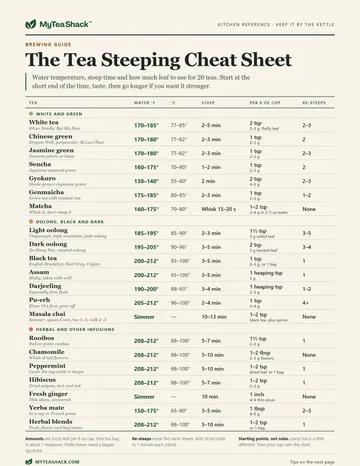
Free printable
The Tea Steeping Cheat Sheet
Water temperature, steep time and how much leaf to use for 20 teas, from sencha to rooibos, on one printable page. Plus five fixes for a bitter cup.