What Is Herbal Tea? A Beginner's Guide
Learn what herbal tea actually is, how it differs from true tea, popular varieties like chamomile and peppermint, and how to brew it.
In this guide · 7 sections
Herbal tea, technically called a tisane or herbal infusion, is any hot drink made by steeping herbs, flowers, fruit or spices in water — without any actual tea leaves. Here's what sets it apart from true tea, and how to brew and choose one.
Herbal Tea vs. True Tea
True tea (green, black, white, oolong and pu-erh) all comes from the same plant, Camellia sinensis. Herbal tea uses everything else: chamomile flowers, hibiscus petals, peppermint leaves, ginger root and so on. Because there's no Camellia sinensis involved, herbal teas are naturally caffeine-free.
Brewing also differs slightly. True tea is generally steeped just below boiling to avoid bitterness, while herbal ingredients tend to tolerate a full boil better since they're less delicate. Steep time, water temperature and how finely the plant material is cut all affect the final flavor and how many of its compounds make it into your cup.
What Is Herbal Tea Good For?
Different herbal teas are associated with different effects, mostly linked to their content of polyphenols and other plant compounds. Some are traditionally used to ease digestion, others to promote relaxation. Research on specific herbs varies a lot in quality, so think of herbal tea as a pleasant, generally low-risk habit rather than a treatment for any condition.
Popular Herbal Teas
Peppermint
A refreshing, minty infusion often used after meals to ease bloating and settle the stomach.
Chamomile
Known for a mild, apple-like flavor and a long history of use for relaxation and mild digestive discomfort. Many people drink it before bed.
Thyme
An aromatic herb used both as a cooking spice and infusion; its natural compound thymol has antimicrobial properties, which is part of why thyme tea is a traditional pick during a cold.
Lemon Balm (Melissa)
Part of the mint family, lemon balm has a light lemony taste and is traditionally used to take the edge off stress and support sleep.
Sage
An aromatic Mediterranean herb with a long history of traditional use. It's traditionally believed to reduce milk supply, so it's generally best avoided while breastfeeding unless a doctor says otherwise.
How to Make Herbal Tea
- Lightly crush or chop dried herbs to release more flavor.
- Use about 1 teaspoon of dried herb (or 3 teaspoons fresh) per 4 cups of water — adjust to taste.
- Bring water to a boil and pour it over the herbs.
- Cover and steep for 10–15 minutes.
- Strain and drink hot, or chill for iced tea.
Don't expect a deep color — most herbal infusions stay pale even at full strength.
Side Effects and Precautions
- Pregnancy and breastfeeding. Some herbs (including sage) can affect hormones or milk supply. Check with your doctor before making any herbal tea a daily habit during pregnancy or while nursing.
- Allergies. Chamomile can trigger reactions in people allergic to ragweed, chrysanthemums, marigolds or daisies, since these plants are related.
- Medication interactions. Some herbs interact with blood thinners, sedatives or blood pressure medication — ask your doctor or pharmacist if you take prescription medication regularly.
A few less common herbal teas worth knowing: palo azul, a Mexican bark tea that turns the water blue, and mushroom teas like reishi and chaga.
FAQ
Does herbal tea have caffeine?
No. Because herbal tea doesn't contain Camellia sinensis, it's naturally caffeine-free.
Is herbal tea the same as true tea?
No — "tea" technically refers only to drinks made from the tea plant. Herbal tea is more accurately called an infusion or tisane, though the terms are used interchangeably in everyday speech.
Can I drink herbal tea every day?
For most common varieties like peppermint or chamomile, yes, in moderation. If you're pregnant, nursing or on medication, check with a doctor first.
The Bottom Line
Herbal tea is a caffeine-free way to enjoy the ritual of a warm drink, with plenty of variety in flavor and traditional use. Pick a variety that matches what you want — peppermint after meals, chamomile before bed — and brew it a little longer than you would true tea. For more, see our guides to how to brew herbal tea, the healthiest herbal teas and herbal teas and blood pressure.
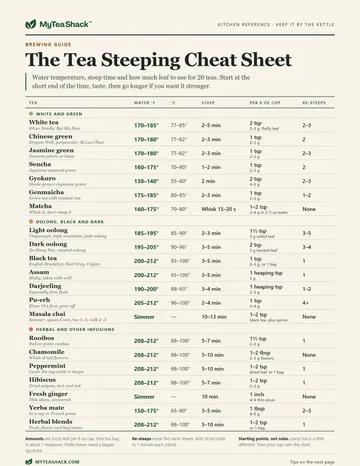
Free printable
The Tea Steeping Cheat Sheet
Water temperature, steep time and how much leaf to use for 20 teas, from sencha to rooibos, on one printable page. Plus five fixes for a bitter cup.