How to Make Mushroom Tea: Reishi, Chaga and Ashwagandha
Learn how to make reishi, chaga and ashwagandha tea at home, plus what the research does and doesn't say about their potential benefits.
We may earn a commission when you buy through links in this guide, at no extra cost to you. How we make money.
In this guide · 8 sections
Mushroom tea is made by simmering or steeping dried mushrooms like reishi or chaga, or adaptogenic roots like ashwagandha, in hot water. Each has a distinct flavor and a long history in traditional medicine, though modern research on their health effects is still limited.
What Is Mushroom Tea?
"Mushroom tea" usually refers to infusions made from functional mushrooms such as reishi and chaga. Ashwagandha is often grouped with them because it's another popular adaptogen, but it's actually a root, not a mushroom. All three have been used for centuries in traditional Chinese and Ayurvedic practices, and early lab and animal research has looked at their antioxidant content, though large human studies are still limited.
How to Make Reishi Tea
Reishi mushrooms are simmered low and slow to draw out their compounds.
- Use dried or raw reishi mushroom pieces in a ratio of about 1 part mushroom to 5 parts water.
- Cut the mushroom into small pieces to help extract more flavor.
- Simmer on low heat for at least 2 hours, stirring every 10–15 minutes.
- Strain out the mushroom pieces.
- Drink the liquid hot or cold.
How to Make Chaga Tea
Chaga has an earthy, bitter flavor that mellows when combined with cocoa.
- Add a teaspoon of chaga powder, or grated chaga, to water.
- Bring to a boil, then let it steep to taste.
- Strain and drink hot or cold.
- A pinch of unsweetened cocoa powder can soften the bitterness.
Chaga pieces can typically be reused for several more infusions before they lose flavor.
How to Make Ashwagandha Tea
Ashwagandha has a strong, earthy taste, so a little goes a long way.
Ingredients
- 1/2 cup milk (dairy or plant-based)
- 1 ashwagandha tea bag
- 1/2 cup water
- 1 tablespoon honey
- 1 teaspoon cardamom
Preparation
Simmer the milk, water, tea bag and honey over low heat. Once it's nearly boiling and slightly reduced, stir in the cardamom. Drink it warm.
Potential Benefits
Research on these ingredients is still developing, and most studies are small, done in labs, or done in animals rather than people. Some early findings suggest:
- Reishi has immune-stimulating properties and has been studied as a supportive therapy for people with cancer or HIV/AIDS, though most human evidence is still limited.
- Chaga contains antioxidant compounds that are being studied in early lab research; it has not been shown to treat or prevent any disease in people.
- Ashwagandha has been studied in some small clinical trials for stress and insomnia, with promising but still limited results.
None of these teas cure, treat or prevent any illness, and they shouldn't replace medical care.
Side Effects and Precautions
- Reishi can increase the risk of bleeding with blood thinners and may not be safe with immunosuppressant medication; check with your doctor before regular use if you take either.
- Ashwagandha should be avoided during pregnancy and while breastfeeding, and it can interact with medication for diabetes, blood pressure, thyroid conditions, seizures or sedation.
- Chaga is high in oxalates. Case reports have linked heavy, prolonged chaga use (large daily doses over months) to serious kidney damage, so avoid it if you have kidney disease or a history of kidney stones, and don't exceed the amount on the product label.
- Start with small amounts to check for allergic reactions or an upset stomach.
FAQ
Can I drink mushroom tea every day?
Small daily amounts are typically well tolerated, but talk to your doctor before making it a regular habit, especially if you take medication.
Do these teas taste like mushrooms?
Chaga and reishi have earthy, slightly bitter notes. Adding honey, cocoa or milk can make them easier to enjoy.
Can I reuse the mushroom pieces?
Yes, chaga and reishi pieces can often be steeped multiple times before they lose their flavor and color.
The Bottom Line
Reishi, chaga and ashwagandha teas are easy to make at home and have a long history of traditional use, but the science behind their benefits is still early. Enjoy them for their flavor and as part of a varied diet, not as a substitute for medical treatment.
Free printable
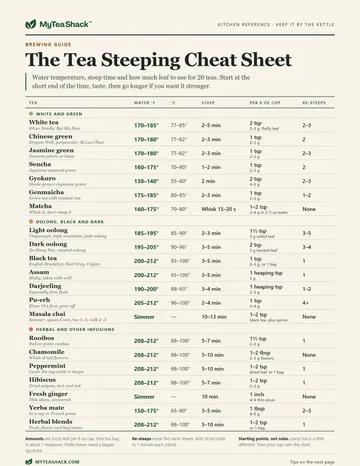
The Tea Steeping Cheat Sheet
Water temperature, steep time and how much leaf to use for 20 teas, from sencha to rooibos, on one printable page. Plus five fixes for a bitter cup.