Butterfly Pea Flower Tea: Benefits and How to Make It
Butterfly pea flower tea's striking blue color comes from natural antioxidants. Here's what it's made of, its possible benefits, and how to brew it.
In this guide · 7 sections
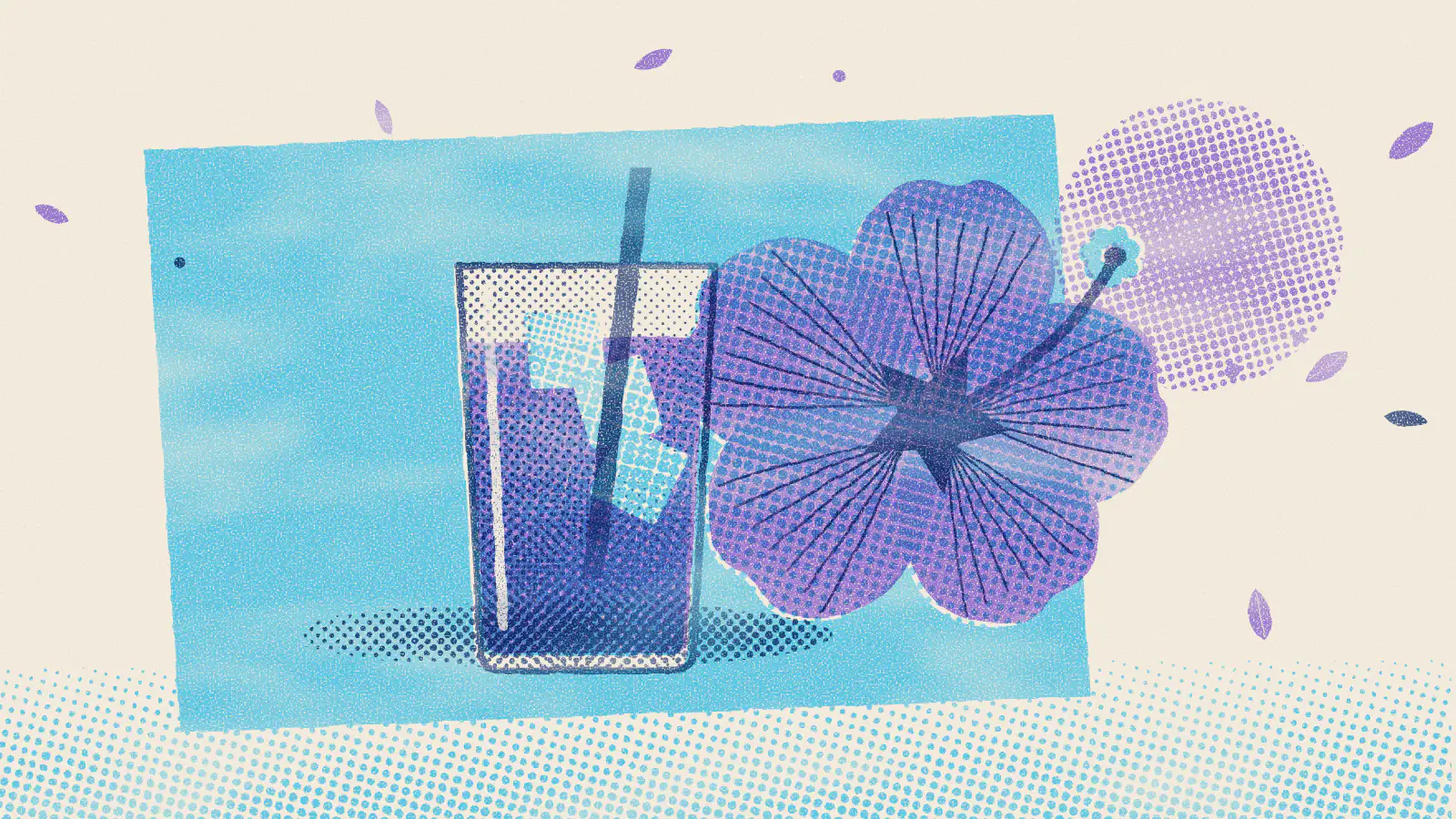
Butterfly pea flower tea is a vivid blue herbal infusion made from the dried flowers of Clitoria ternatea, a plant native to Southeast Asia. It's naturally caffeine-free, and its striking color — along with a party trick where a squeeze of lemon turns it from blue to purple — has made it popular well beyond the region where it originated.
What Gives Butterfly Pea Tea Its Color?
The blue comes from anthocyanins, the same family of antioxidant pigments found in blueberries and red cabbage. These compounds are pH-sensitive, which is why adding an acid like lemon or lime juice shifts the tea's color from blue toward purple or pink.
Possible Benefits of Butterfly Pea Flower Tea
- Antioxidants: anthocyanins help the body manage oxidative stress, which is associated with a lower long-term risk of some chronic conditions. This is a general association, not a guarantee from drinking the tea itself.
- Naturally caffeine-free: a good option if you want the ritual of tea without the caffeine.
- Traditional use for relaxation: in Southeast Asian traditional medicine, butterfly pea flower is used as a calming drink, and a small animal study found anxiolytic-like effects and improved sleep when butterfly pea flower was combined with mulberry leaf — human research on the tea itself is still limited.
- A sugar-free way to add color and interest to drinks: bartenders and home cooks use it as a natural food coloring in drinks, rice, and desserts.
Research on butterfly pea flower tea in humans is still fairly limited, so treat its wellness benefits as promising rather than proven.
Culinary Uses Beyond the Cup
Because of its natural pigment, butterfly pea flower is often used well beyond tea: as a natural blue food coloring in rice dishes, desserts, and cocktails throughout Southeast Asia. It has little flavor of its own — a mild, slightly earthy, grassy note — which is part of why it works so well as a natural dye for other dishes and drinks.
Side Effects and Precautions
Butterfly pea flower tea is generally considered safe for most adults in normal amounts. A few notes:
- Some people report mild digestive upset, such as nausea or an upset stomach, with excessive consumption.
- Safety during pregnancy and breastfeeding hasn't been well studied, so it's best to talk to your doctor before making it a regular habit if you're pregnant or nursing.
- If you're on blood pressure medication, check with your doctor, since some traditional accounts suggest the flower may have a mild effect on blood pressure.
How to Make Butterfly Pea Flower Tea
- Bring water to a boil, then let it cool for about a minute.
- Pour the hot water over 1–2 teaspoons of dried butterfly pea flowers in a cup or teapot.
- Steep for 5–10 minutes — the longer it steeps, the deeper the blue color.
- Strain out the flowers and serve hot, or pour over ice for a refreshing iced tea.
- Add a squeeze of lemon or lime to watch the color shift from blue to purple, and sweeten with honey if you like.
FAQ
What is butterfly pea flower tea?
It's a caffeine-free herbal tea made from the dried flowers of the butterfly pea plant, popular in Thailand, Malaysia, and Vietnam for its vivid blue color.
Does butterfly pea flower tea have side effects?
It's generally well tolerated. Drinking large amounts may cause mild digestive upset in some people.
Why does the tea change color?
Its anthocyanin pigments are sensitive to pH — adding an acid like lemon juice shifts the color from blue to purple or pink.
Where can I buy butterfly pea flower tea?
It's available at specialty tea shops, Asian grocery stores, and many online retailers.
The Bottom Line
Butterfly pea flower tea is a beautiful, low-risk, caffeine-free way to add variety to your tea routine, with real (if still emerging) antioxidant benefits. If you're new to herbal teas in general, our guide to what herbal tea is is a good place to start, if you want more flower-based options, see our roundup of flowering teas, and if you're not usually a tea drinker, our best teas for non-tea drinkers list is worth a look too.