13 Amazing Flowering Teas and Their Benefits
From chamomile to hibiscus, discover 13 flowering teas, what each one offers, and how the famous display flowering teas are made.
In this guide · 6 sections
Flowering teas cover two things: herbal infusions made from edible flowers, and the handcrafted "blooming" teas that unfurl into a flower shape in your cup. Both have roots in centuries of tradition and offer a wide range of flavors and potential benefits.
What Are Flowering Teas?
Technically, tea made purely from flowers (like chamomile) isn't a "true tea" since it contains no Camellia sinensis leaf. The artistic display version — tea leaves and dried flowers hand-tied into a bundle that blooms when steeped — originated in China during the Song Dynasty and became popular commercially starting in the 1980s. Jasmine, chrysanthemum, hibiscus, marigold and amaranth are among the most commonly used flowers.
13 Flowering Teas to Try
Chamomile Tea
A classic choice for winding down, chamomile is associated with relaxation and better sleep.
Jasmine Tea
Made from jasmine petals or jasmine-scented green, white or black tea, it's valued for its antioxidant content and delicate floral aroma.
Hibiscus Tea
Naturally diuretic and tart, hibiscus is popular for people managing fluid retention, though anyone with low blood pressure should use it cautiously (see precautions).
Lavender Tea
Known for a calming effect that may help with sleep, lavender is also used traditionally to ease coughing associated with colds.
Linden Tea
Traditionally used for its sedative and antispasmodic effects, linden may help relax muscles and support easier breathing.
Violet Tea
Used traditionally to ease headaches and support digestion, violet has a mild, calming reputation.
Rose Tea
Rose is traditionally used to ease menstrual discomfort, and pairs well with black tea.
Cherry Blossom Tea
Popular in East Asian tea traditions, cherry blossom tea has a delicate flavor and mild diuretic properties.
Rosemary Tea
Some research associates rosemary with anti-inflammatory effects and lower cortisol levels, which may help ease anxiety. See what is rosemary tea good for for more.
Red Clover Tea
Rich in isoflavones, plant compounds that behave similarly to estrogen in the body, red clover has a long history of traditional use.
Pau d'Arco Tea
Naturally caffeine-free with a mild, vanilla-like flavor, pau d'arco contains minerals like iron, magnesium and calcium.
Dandelion Tea
Used traditionally to support digestion, dandelion has a mild diuretic effect; claims about liver "detoxing" go beyond current evidence.
Passionflower Tea
Traditionally used to ease anxiety and support sleep, typically taken about an hour before bed.
How Display Flowering Teas Are Made
Making the artistic "blooming" style is labor-intensive: tea leaves are bundled with dried flowers and hand-tied with cotton thread, then rested overnight so the flowers' essential oils transfer into the tea. The bundle is later shaped and dried over several rounds, a process that can take weeks. If a flowering tea looks unusually vivid or fragrant, it may have been artificially scented rather than naturally infused — a well-made version won't need added flowers or flavoring to taste good.
Side Effects and Precautions
- Hibiscus can lower blood pressure, an effect confirmed in clinical trial meta-analyses (PubMed: hibiscus and blood pressure meta-analysis); people on blood pressure medication or with naturally low blood pressure should check with a doctor before drinking it regularly.
- Passionflower should not be used during pregnancy, as it may cause uterine contractions; it's also not well studied for breastfeeding, so it's best avoided then too (NCCIH: Passionflower). It's not recommended for children, and high doses can cause dizziness or interact with sedatives and other medications that affect the central nervous system.
- Any medicinal herbal tea should be used under a doctor's guidance if you're pregnant, nursing, or managing a chronic condition, since "natural" doesn't automatically mean risk-free.
Another tea chosen as much for its color as its flavor is butterfly pea flower tea, which turns from blue to purple when you add lemon.
FAQ
Is chamomile a real tea?
No — chamomile is an herbal infusion, not a true tea, since it doesn't come from the Camellia sinensis plant. It's still commonly called "tea" in everyday use.
Is passionflower tea safe?
It's generally considered safe for most adults in moderation (2–3 cups a day), but it should be avoided during pregnancy, and it isn't recommended for young children.
How do you know if a flowering tea is artificial?
If it has an unusually strong floral scent or an excessive number of flowers, it's likely been artificially scented. A naturally made flowering tea has a more subtle aroma.
The Bottom Line
Flowering teas range from calming bedtime blends like chamomile and lavender to striking display teas meant to be watched as much as sipped. Most are safe in moderation, but check the precautions above if you're pregnant, nursing, or on medication. For more relaxing options, see our guide to teas to sleep, or explore jasmine green tea benefits if jasmine caught your eye.
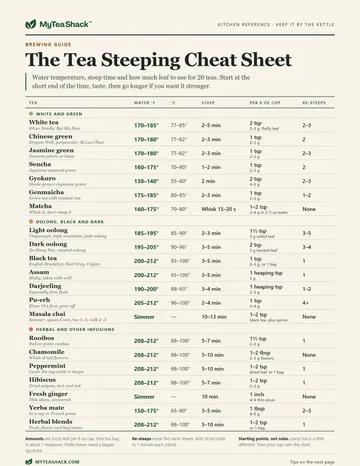
Free printable
The Tea Steeping Cheat Sheet
Water temperature, steep time and how much leaf to use for 20 teas, from sencha to rooibos, on one printable page. Plus five fixes for a bitter cup.