Bamboo Tea Benefits, Side Effects and How to Make It
What bamboo tea is, its potential benefits for hair, skin and digestion, who should avoid it, and how to brew it at home.
In this guide · 6 sections
Bamboo tea is a pale, caffeine-free herbal infusion made from the leaves of the bamboo plant (Bambusa vulgaris). It's popular in traditional Asian medicine and has picked up a following for its high natural silica content. Here's what it actually offers and how to brew it.
What Is Bamboo Tea?
Bamboo is one of the fastest-growing plants in the world, and its leaves are dried and steeped to make a light, pale green-yellow tea. Because it's naturally caffeine-free, it's a common choice for an evening cup.
Bamboo tea is used in both Indian and Chinese herbal medicine traditions, generally associated with digestion, hydration, and general wellness rather than any single specific condition.
Potential Benefits of Bamboo Tea
- Rich in silica. Bamboo leaves have a notably high silica content, a mineral associated with skin, hair, nail, and bone health. This is the tea's best-documented selling point.
- Antioxidants. Bamboo leaves contain compounds with antioxidant activity, which is associated with lower oxidative stress in the body.
- May support digestion. Traditional use associates bamboo tea with easing mild stomach discomfort and cramping.
- Caffeine-free. Makes it a reasonable substitute for people cutting back on caffeine, including in the evening.
You may see bamboo tea marketed for managing diabetes or reducing heart disease risk with specific percentages attached. Those figures don't come from verifiable published research, so treat them skeptically rather than as medical fact — bamboo tea is not a treatment for diabetes or heart disease. Most of what's published on bamboo leaf extract comes from lab and animal research rather than large human trials, so treat specific health claims with caution.
How to Make Bamboo Tea
- Use about 1.5 g of dried bamboo leaves (or one tea bag) per cup.
- Bring water to a boil, then let it cool to roughly 80–90°C (175–195°F).
- Pour the water over the leaves.
- Steep for 5–12 minutes, depending on how strong you like it.
- Strain and drink; bamboo leaves can typically be re-steeped two to three times in a day.
Try it plain first — bamboo tea has a naturally mild, slightly sweet flavor.
Side Effects and Precautions
- Pregnancy. A study on Bambusa vulgaris leaf extract found abortifacient effects in pregnant rabbits, supporting the traditional caution around uterine stimulation. Pregnant women should avoid bamboo tea.
- Allergic reactions. If you try a bamboo-leaf face mask or topical use, patch-test first and stop if you notice irritation.
- Limited research. Much of what's known about bamboo tea comes from traditional use rather than large clinical trials, so treat specific health claims with caution.
FAQ
Does bamboo tea have caffeine?
No, bamboo tea is naturally caffeine-free, so it's fine to drink in the evening.
What does bamboo tea taste like?
Mild and slightly sweet, with a light, grassy note.
Can bamboo tea help with hair growth?
The silica in bamboo tea is associated with hair strength and shine, but there's limited direct research on drinking the tea specifically for hair growth.
Is bamboo tea safe during pregnancy?
It's best to avoid it during pregnancy, or check with your doctor first, since safety data is limited.
The Bottom Line
Bamboo tea is a mild, caffeine-free herbal option with a genuinely interesting silica content and some traditional use behind its digestive and skin benefits. Be wary of specific-sounding claims about diabetes or heart disease you might see elsewhere, since those aren't well supported by real research, and skip it during pregnancy.
Pair it with our guides to moringa tea benefits, teas for gut health, and herbal teas for blood pressure to round out your herbal tea shelf.
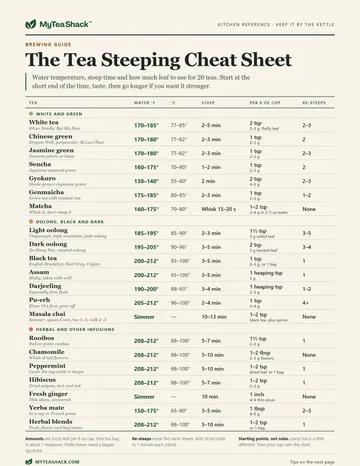
Free printable
The Tea Steeping Cheat Sheet
Water temperature, steep time and how much leaf to use for 20 teas, from sencha to rooibos, on one printable page. Plus five fixes for a bitter cup.