10 Holy Basil Tea Benefits (Tulsi Tea)
Holy basil (tulsi) tea may support digestion, stress and immune health. Learn the evidence, how to brew it, and who should be careful.
In this guide · 6 sections
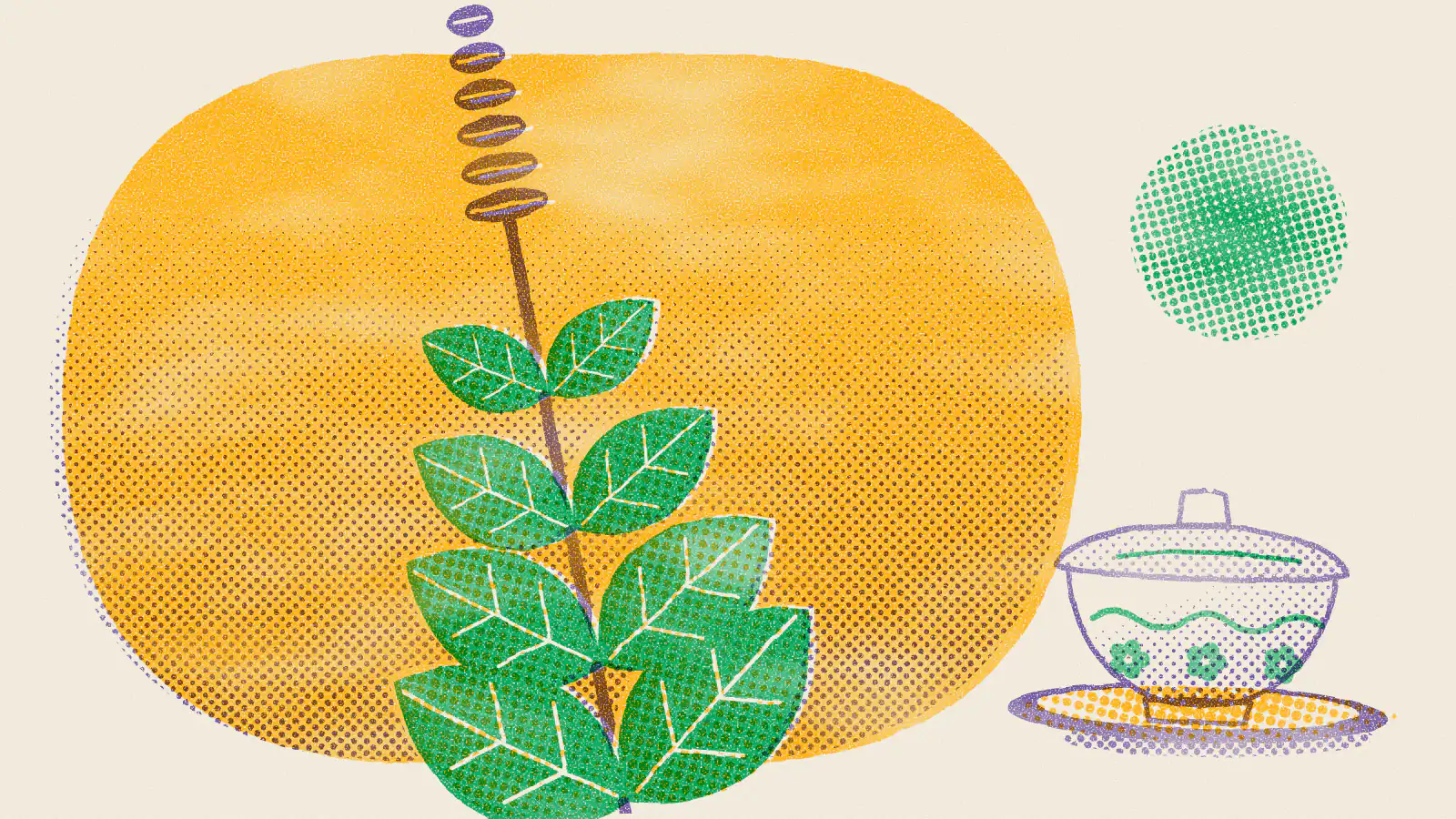
Holy basil tea, also called tulsi tea, is a caffeine-free herbal infusion made from the leaves of Ocimum sanctum. It's native to South and Southeast Asia, where it has been used in traditional medicine for centuries, and today it's best known as a calming, digestion-friendly tea with promising (though still early) research behind it.
What Is Holy Basil?
Holy basil, or tulsi, is a variety of basil that's distinct from the culinary basil used in cooking. It's a staple of Ayurvedic medicine and is traditionally taken as a tea, tincture or in cooking. The leaves are aromatic, with a peppery, slightly clove-like flavor.
Potential Benefits of Holy Basil Tea
May Support Digestion
Tulsi is traditionally used as a digestive aid. Its carminative properties may help reduce bloating and general stomach discomfort, which is one of the main reasons people reach for this tea.
May Help the Body Manage Stress
Holy basil is classified as an adaptogen in Ayurvedic tradition, and some small studies suggest it may help moderate cortisol, the body's main stress hormone. Drinking a warm cup can also simply be a relaxing ritual in itself.
May Have Antibacterial and Antiviral Properties
Laboratory research has found that compounds in holy basil show activity against certain bacteria and viruses. This doesn't mean the tea can replace medication for an infection, but it may be a supportive addition to a healthy routine.
May Support Respiratory Comfort
Tulsi has traditionally been used to help clear the airways and ease the discomfort of colds. Some early research points to anti-inflammatory properties that could help with mild congestion, though it's not a substitute for medical treatment of respiratory illness.
May Help Ease Headaches
The anti-inflammatory compounds in holy basil may help support healthy circulation, which some people find takes the edge off tension headaches. Evidence here is limited and mostly anecdotal.
May Support Oral Health
Tulsi has natural antimicrobial properties, and some research suggests regular use (alongside normal brushing and flossing) may help support a healthy mouth environment.
How to Make Holy Basil Tea
- Bring water to a boil, then let it cool slightly for about 30 seconds.
- Add 1 teaspoon of dried holy basil leaves (or a tea bag) per cup.
- Steep for 5–7 minutes, covered.
- Strain and enjoy plain, or with a little honey.
Always use the dried or fresh leaves for tea — never the essential oil, which is concentrated and not meant for drinking.
Side Effects and Precautions
Holy basil is generally well tolerated in normal tea amounts, but keep the following in mind:
- Blood thinners and blood sugar medication: holy basil may affect blood clotting and blood sugar, so talk to your doctor if you take these medications.
- Pregnancy: holy basil isn't well studied in pregnancy, and some traditional sources advise against it, so check with your doctor before drinking it while pregnant or breastfeeding.
- Surgery: stop use at least two weeks before any scheduled surgery, since it may affect bleeding and blood sugar.
- Allergies: discontinue if you notice any allergic reaction.
FAQ
Is holy basil the same as regular basil?
No. Holy basil (tulsi) is a different variety from the sweet basil used in cooking, with a spicier, more peppery flavor and a different nutrient profile.
Does holy basil tea have caffeine?
No, holy basil tea is naturally caffeine-free, making it a good evening option.
Can I drink holy basil tea every day?
Most people can drink one to two cups a day without issue, but check with your doctor first if you're on medication, pregnant, or managing a chronic condition.
The Bottom Line
Holy basil tea is a soothing, caffeine-free herbal infusion with early but promising research around digestion, stress and immune support. It's not a cure for any condition, so treat it as a pleasant addition to a healthy lifestyle rather than a replacement for medical care, and check with your doctor if you're pregnant or on medication.
For more herbal options, see our guides to the healthiest herbal teas and medicinal herbal tea, or learn how to brew herbal tea for the best flavor and benefits.
Free printable
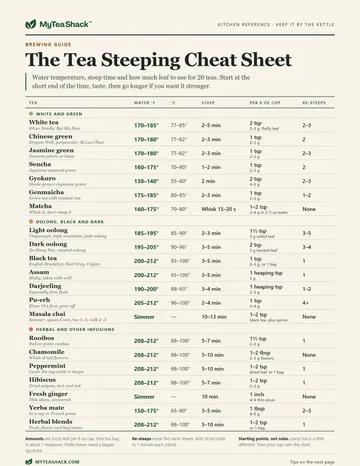
The Tea Steeping Cheat Sheet
Water temperature, steep time and how much leaf to use for 20 teas, from sencha to rooibos, on one printable page. Plus five fixes for a bitter cup.