Clove Tea Benefits and How to Make It at Home
Learn the possible benefits of clove tea, from digestion to oral health, plus a simple recipe and who should avoid it.
In this guide · 5 sections
Clove tea is an aromatic infusion made from a spice best known for flavoring sweet and savory dishes. It's less common than black or green tea, but it's easy to make and offers a distinct, warming flavor along with several possible benefits.
Clove Tea Benefits
May Ease Menstrual Discomfort
Some early research has looked at clove essential oil (used topically, for abdominal massage) for menstrual cramps — a different form than clove tea. There's no direct evidence that drinking clove tea relieves menstrual pain, so treat this as a traditional use rather than a supported benefit, and don't skip medical advice for severe cramps.
May Support Skin Health
Clove's antibacterial properties may help reduce the bacteria associated with acne, making it a popular ingredient in some natural skincare routines.
Antioxidant Properties
Cloves contain antioxidant compounds that help neutralize free radicals, which may support overall skin health over time.
May Help With Inflammation
Eugenol, an active compound in cloves, has anti-inflammatory properties and has been studied for its potential to help ease general inflammation and joint discomfort.
May Support Digestion
Clove is traditionally used to support digestion, and it may help with occasional indigestion, bloating and nausea. It's also thought to have a mild metabolism-supporting effect.
Oral Health
Clove is a common ingredient in toothpaste and other oral care products because of its antiseptic properties. Chewing on or rinsing with clove tea may help with bad breath and general oral hygiene, though it isn't a substitute for dental care.
May Support Circulation
Clove oil has been studied in lab settings for effects on circulation, but there's no good evidence this translates to drinking clove tea — treat this as an unproven traditional claim rather than a supported benefit.
How to Make Clove Tea
Clove tea isn't common, but it's worth trying at least once — the smell and flavor are distinctive.
Ingredients
- 5 whole cloves
- 500ml (about 2 cups) water
- 1 tablespoon honey (optional)
- A pinch of cinnamon (optional)
Instructions
- Bring the water to a boil in a small saucepan.
- Add the cloves once the water is boiling and let them steep for about 3 minutes — no longer, or the tea can turn bitter.
- Remove the cloves and pour the tea into a cup or glass.
- Stir in honey and a pinch of cinnamon if you'd like it sweeter and warmer.
Side Effects and Precautions
Clove tea is generally safe in normal culinary amounts, but a few groups should be cautious:
- Pregnant or breastfeeding women should avoid concentrated clove tea or essential oil.
- It isn't recommended for children under six.
- People with gastrointestinal conditions or neurological disorders should check with a doctor before drinking it regularly.
- If you're on blood-thinning medication, talk to your doctor first, since clove may affect blood clotting.
FAQ
Does clove tea help with a toothache?
Clove's natural anesthetic and antiseptic properties are why it's used in some dental products, and a warm cup may offer mild, temporary relief — but see a dentist for an ongoing toothache.
How much clove tea can I drink per day?
One to two cups is a reasonable amount for most healthy adults; more than that increases the chance of stomach upset.
Does clove tea taste like clove spice?
Yes — it has a strong, warm, slightly peppery flavor. Adding honey and a touch of cinnamon can mellow it out for first-time drinkers.
The Bottom Line
Clove tea is a simple, aromatic infusion that may offer modest support for digestion, inflammation and oral health, though most of the research behind it is still preliminary. It's easy to make with just cloves and water, and it pairs well with honey if you want it milder. If joint discomfort is your main concern, see our guide to teas for arthritis pain, and for cramps specifically, check out the best teas for menstrual cramps.
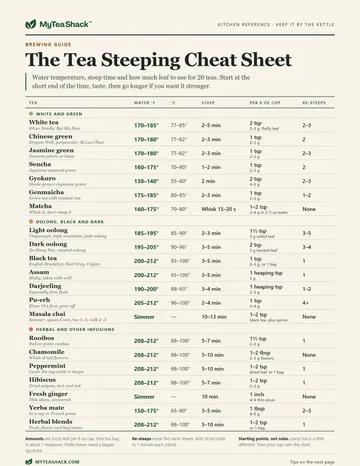
Free printable
The Tea Steeping Cheat Sheet
Water temperature, steep time and how much leaf to use for 20 teas, from sencha to rooibos, on one printable page. Plus five fixes for a bitter cup.