What Tea Is Good for Breakfast? Best Options to Try
The best teas for breakfast, from green tea to chai, plus how tea compares to coffee for energy, digestion and how to pair it with milk.

In this guide · 6 sections
Tea is a great breakfast drink because it's both calming and gently stimulating, giving you a steady lift to start the day without the intensity of coffee. Here's how to choose the best one for your morning routine.
Why Choose Tea Over Coffee at Breakfast?
Coffee has roughly double the caffeine of tea, which can contribute to jitteriness, anxiety or a headache for sensitive drinkers, and unfiltered coffee may also raise cholesterol. Tea delivers a gentler, longer caffeine release along with L-theanine, an amino acid associated with calm focus — a big part of why many people feel more evenly energized after tea than after coffee.
Best Teas for Breakfast
Green Tea
Calming for the digestive system while still providing a metabolism boost, green tea is a light, easy way to start the day.
Black Tea (English Breakfast)
A classic breakfast choice, black tea is more full-bodied and pairs well with milk. It provides a solid dose of energy along with antioxidants that may support healthy cholesterol.
Matcha
Matcha's combination of caffeine and L-theanine provides a steady energy release that many people find lasts longer than a cup of coffee, without the sharp crash.
Ginseng Tea
Ginseng root is a traditional energizer, rich in compounds associated with reduced fatigue — a good option if you want something other than caffeine for your morning boost.
Rosemary Tea
Rosemary is associated with improved blood flow and alertness, which may help with concentration first thing in the morning.
Chai Tea
A blend of black or green tea with warming spices like cinnamon, cardamom and ginger, chai is often described as easy to digest and a comforting way to start the day.
Which Teas Pair Well With Milk?
Black tea, red (pu-erh) tea and matcha all pair especially well with milk, softening their bolder flavors. Lighter teas like green or white are usually best enjoyed without milk so you don't lose their delicate taste.
Tea and Fasting
If you're intermittent fasting, plain tea (with no milk, sugar or cream) generally won't break your fast, and green or black tea can be a good stand-in for coffee to help you get through the fasting window. If you have blood pressure concerns, check with your doctor before relying on caffeinated tea on an empty stomach.
FAQ
What's the best tea for breakfast if I want energy without jitters?
Matcha and black tea both provide a steady, longer-lasting lift thanks to their combination of caffeine and L-theanine, compared to the sharper spike from coffee.
Can I drink tea for breakfast every day?
Yes, for most healthy adults 1–3 cups of tea in the morning is a fine daily habit. If you're sensitive to caffeine, stick to the lower end or choose a naturally caffeine-free herbal tea.
Is tea good for digestion in the morning?
Many people find tea gentler on the stomach than coffee, and warm tea in particular can help ease the digestive system into the day — pair it with our tips on milk tea if you like a creamier morning cup.
The Bottom Line
Tea is a solid breakfast choice, offering steady energy, antioxidants and a gentler alternative to coffee. Match the tea to your taste — matcha or black tea for a bigger lift, green tea for something lighter, or chai for a spiced, comforting start to the day.
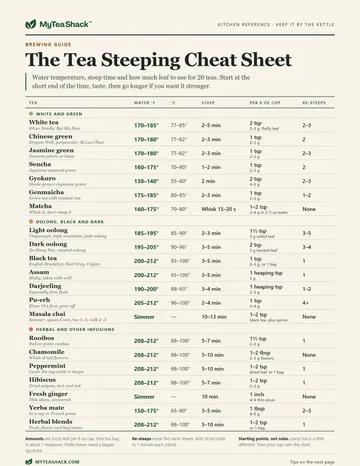
Free printable
The Tea Steeping Cheat Sheet
Water temperature, steep time and how much leaf to use for 20 teas, from sencha to rooibos, on one printable page. Plus five fixes for a bitter cup.