Moringa Tea Health Benefits, Side Effects and How to Make It
What moringa tea is, the nutrients and potential benefits it offers, side effects to watch for, and how to brew a cup at home.

In this guide · 6 sections
Moringa tea is made from the dried leaves of the moringa tree (Moringa oleifera), native to parts of Africa and Asia and often called a "superfood" for its nutrient density. Here's what the research actually supports, and how to make it.
What Is Moringa Tea?
Moringa leaves are dried at low temperatures to preserve their nutrients, then either ground into a powder or steeped whole as tea. The plant has been used in traditional medicine across South Asia and Africa for generations, and its leaves are also eaten as a vegetable in many regions where it grows.
Moringa tea is a good source of antioxidants, including vitamin C, beta-carotene, and quercetin.
Potential Benefits of Moringa Tea
- Anti-inflammatory compounds. Moringa leaves contain flavonoids and other compounds studied for anti-inflammatory activity, which is associated with easing everyday aches rather than treating a specific condition.
- Cardiovascular support. A 2012 review of moringa research found animal studies linking moringa leaf extract to lower LDL cholesterol, though most of this evidence comes from animal models rather than human trials, and moringa isn't a substitute for cholesterol medication.
- Rich in nutrients. A cup made from fresh leaves provides meaningful amounts of vitamin B6, vitamin C, iron, and magnesium relative to daily needs.
- Antioxidant support. Extracts from moringa leaves show antioxidant activity in lab studies, associated with helping the body manage oxidative stress.
- Blood sugar. Animal studies on moringa extract have linked it to improved metabolic markers, and it's traditionally used in some cultures to support healthy blood sugar. Human evidence is still limited, it is not a treatment for diabetes, and anyone managing diabetes should talk to their doctor before using moringa alongside their treatment plan.
- Digestive support. Moringa leaves are traditionally used to ease mild digestive discomfort, and some of its plant compounds have shown antibacterial activity in lab studies, though there's limited direct research on moringa tea for gut health specifically.
How to Make Moringa Tea
- Add about 1 teaspoon (roughly 3 g) of dried moringa leaves to a cup of hot water — avoid boiling water, since high heat can degrade some nutrients.
- Let the leaves steep for about 5 minutes.
- Strain, sweeten with honey if you like, and drink.
Moringa tea is naturally caffeine-free, so it can be enjoyed at any time of day.
Side Effects and Precautions
- Diabetes or blood sugar medication. Because moringa may affect blood sugar, talk to your doctor before adding it if you're on medication for diabetes, to avoid your levels dropping too low.
- Digestive upset. Moringa's mild laxative effect can cause loose stools when you first start drinking it; this usually settles down.
- Pregnancy. Some parts of the moringa plant (particularly the root and bark) are traditionally avoided in pregnancy; talk to your doctor before drinking moringa tea if you're pregnant or breastfeeding.
- Medication interactions. If you take medication for blood pressure, cholesterol, or blood sugar, check with your doctor, since moringa may amplify these effects.
FAQ
Does moringa tea have caffeine?
No, moringa tea is naturally caffeine-free.
Can moringa tea help with weight loss?
Some people include it as part of a broader healthy diet, but there's no strong evidence that moringa tea causes weight loss on its own.
Is moringa tea safe to drink every day?
Most healthy adults can drink one to two cups a day. If you're on medication for diabetes, blood pressure, or cholesterol, check with your doctor first.
What does moringa tea taste like?
Earthy and slightly grassy, similar to matcha but milder. Honey pairs well with it.
The Bottom Line
Moringa tea is a nutrient-dense, caffeine-free herbal option with genuine research behind its antioxidant and anti-inflammatory potential, and some early evidence for cardiovascular and blood-sugar support. It's not a treatment for diabetes or heart disease, so check with your doctor if you're managing either condition or taking related medication.
For more herbal picks, see our guides to bamboo tea benefits, papaya leaf tea benefits, and teas for gut health.
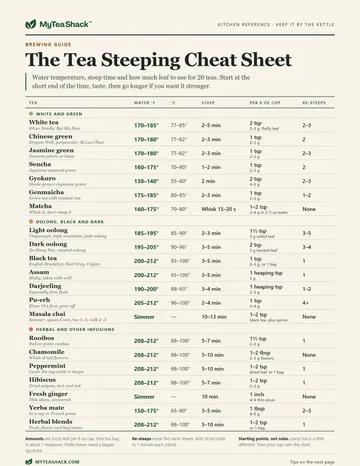
Free printable
The Tea Steeping Cheat Sheet
Water temperature, steep time and how much leaf to use for 20 teas, from sencha to rooibos, on one printable page. Plus five fixes for a bitter cup.