Best Teas for Athletes: Before and After a Workout
Discover the best teas for athletes and runners, including options before a workout for energy and after exercise for muscle recovery.

In this guide · 7 sections
During exercise, your body uses far more oxygen than it does at rest, which generates free radicals that can stress cells over time. Tea is rich in polyphenols and antioxidants that may help counter that stress, which is why many athletes and runners build it into their routine, both before a workout for energy and after one for recovery.
Why Tea Works for Athletes
Green tea's polyphenols are mainly catechins, while black tea contains oxidized forms of the same compounds; both are antioxidants that may help neutralize free radicals from intense exercise. Tea's natural caffeine is also absorbed more gradually than in other drinks, which may help you avoid the sharp energy dip that comes with some stimulant drinks.
Tea is also a pleasant way to stay hydrated. With so many flavor options, from light and fruity to bold and malty, it's easy to drink enough fluids throughout the day without getting bored of plain water.
Best Teas to Drink Before a Workout
Drinking tea before training can help set you up with steady energy for the session ahead.
Green Tea
Green tea contains a modest amount of caffeine along with catechins; research reviewed by NCCIH links green tea catechins and caffeine to a modest effect on fat oxidation, which may make it easier to sustain effort during a workout.
Ginseng Tea
Ginseng is a popular pre-workout infusion traditionally used to support stamina and reduce fatigue, and some clinical studies support a modest effect (NCCIH). If you're looking for a natural lift before training, it's worth trying, though results vary by person, and long-term safety is less well studied.
Guarana Tea
Guarana seeds naturally contain a high concentration of caffeine, making it a strong option for an extra energy boost when brewed as tea. Its main studied benefit is that stimulant effect; evidence for reducing muscle lactic acid specifically is limited, so treat that as an unproven, secondary claim.
Best Teas to Drink After a Workout
Post-workout tea is more about relaxing the muscles and rehydrating.
Ginger Tea
Ginger tea contains gingerol, a compound with anti-inflammatory activity (NCCIH), and some small studies suggest ginger may modestly ease exercise-induced muscle soreness, though evidence is limited.
Rosemary Tea
Rosemary has antioxidant properties and may support digestion and circulation, which some athletes find soothing for sore muscles and joints after exercise.
Fenugreek Tea
Less well known than the others, fenugreek is sometimes used by athletes focused on strength training and muscle-building goals, though evidence here is limited.
How to Prepare Tea for Exercise
Boil your water, then steep the tea for 2 to 4 minutes at just under a full boil. Steeping longer releases more tannins and catechins but produces a more bitter cup, so adjust to taste. Brewing at a higher temperature also draws out more caffeine, so if you're sensitive to it, use slightly cooler water or a shorter steep, similar to the approach used for low-caffeine teas.
Side Effects and Precautions
Guarana and strong black or green tea can contain meaningful amounts of caffeine, so athletes sensitive to stimulants should stick to smaller servings or choose a naturally decaffeinated option. If you have a heart condition, are pregnant, or take medication, check with your doctor before adding a new herbal tea to your routine, especially concentrated extracts like ginseng or guarana.
FAQ
Is it OK to drink tea before running?
Yes, for most people. Tea helps with hydration and, depending on the type, can provide a gentle, steady source of caffeine. Just remember your body needs adequate fluids around exercise regardless of what you drink.
Does tea increase stamina?
Some research on green tea suggests its antioxidants and modest caffeine content may support endurance during longer efforts like distance running, though it isn't a substitute for training and proper fueling.
What's the best tea for muscle recovery?
Ginger and rosemary tea are commonly used after exercise for their anti-inflammatory properties, alongside good hydration and rest.
The Bottom Line
Tea can be a useful addition to an athlete's routine: lighter, more energizing options like green tea, ginseng, or guarana before a workout, and soothing choices like ginger or rosemary tea afterward. None of these replace proper training, hydration, or medical advice, but they're a natural way to round out a workout routine.
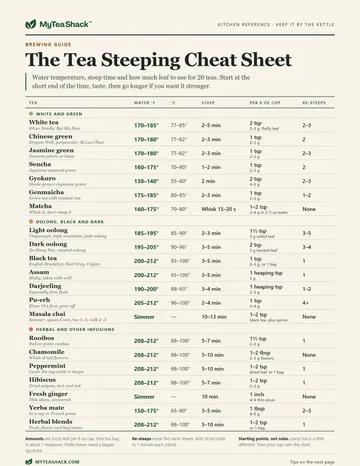
Free printable
The Tea Steeping Cheat Sheet
Water temperature, steep time and how much leaf to use for 20 teas, from sencha to rooibos, on one printable page. Plus five fixes for a bitter cup.