Jasmine Green Tea Benefits, Caffeine and Precautions
What jasmine green tea is, its possible health benefits, caffeine content, and who should be cautious about drinking it.
We may earn a commission when you buy through links in this guide, at no extra cost to you. How we make money.
In this guide · 5 sections
Jasmine green tea is a fragrant blend of real tea leaves scented with jasmine flowers, most often made with a green tea base. It's less common than plain green or black tea, but its calming aroma and light, sweet flavor have made it a favorite in Chinese tea culture for centuries.
What Is Jasmine Green Tea?
Despite the name, the jasmine flowers themselves don't add caffeine — the caffeine content depends entirely on the base tea. Most jasmine tea uses green tea as its base, though you'll also find jasmine oolong, jasmine silver needle (a white tea), and jasmine black tea. Higher grades with more buds and tips tend to have more caffeine.
How Much Caffeine Is in Jasmine Tea?
- Jasmine green tea: roughly 25–40mg of caffeine per cup, depending on grade
- Jasmine white tea (silver needle): can be surprisingly high in caffeine, sometimes 50mg or more per cup when brewed strong
- Jasmine oolong: generally lower in caffeine than jasmine green tea, due to roasting and more mature leaves
- Jasmine black tea: less common, but typically in the 40–60mg range, similar to other black teas
Exact caffeine content varies by brand, grade and brew strength, so treat these as general ranges rather than fixed numbers.
Jasmine Green Tea Benefits
Research on jasmine tea specifically is limited, but a few possible benefits stand out:
- The scent of jasmine has been shown in some studies to help lower heart rate and produce a calming effect.
- Its antibacterial properties may offer some support against common seasonal illnesses like colds.
- It may support digestion by encouraging a healthy balance of gut bacteria.
- Some people find it helpful for mild headaches or general tension, likely tied to its calming aroma.
There isn't good direct evidence that jasmine tea helps regulate blood sugar, so treat any such claim with caution — it shouldn't factor into managing diabetes.
Side Effects and Precautions
Jasmine tea is generally safe for most healthy adults, but a few groups should take extra care:
- Pregnancy: NCCIH advises that caffeine intake should not exceed moderate levels during pregnancy and recommends talking to your health care provider about a safe amount.
- Iron deficiency: The catechins in jasmine green tea can reduce iron absorption from food. If you're at risk of iron deficiency, drink it between meals rather than with them, or wait at least an hour after eating.
- Caffeine sensitivity: Too much caffeine can cause anxiety, restlessness or stomach upset. Start with one cup and see how you feel.
- Diabetes or blood sugar management: Don't rely on jasmine tea for blood sugar support — talk to your doctor about proven treatment options if you're managing diabetes.
Jasmine pearls are close cousins of flowering teas, which unfold in the cup. Another rolled green tea worth trying is gunpowder green tea.
FAQ
Does jasmine green tea have caffeine?
Yes, since it's typically brewed with a green tea base. The jasmine flowers themselves are caffeine-free.
Is jasmine tea good for weight loss?
Some research links green tea catechins to modest fat metabolism support, but jasmine tea isn't a weight loss solution on its own — it works best alongside a balanced diet.
Can I drink jasmine tea while pregnant?
Talk to your doctor first. If approved, keep an eye on total daily caffeine intake from all sources.
The Bottom Line
Jasmine green tea combines the calming scent of jasmine flowers with the antioxidants of its green tea base, making it a pleasant, moderate-caffeine option for most healthy adults. If you're pregnant, prone to iron deficiency, or managing diabetes, talk to your doctor before making it a daily habit. For more on the tea it's based on, see our guides to jasmine oolong tea and green tea side effects, or our overview of tea during pregnancy.
Free printable
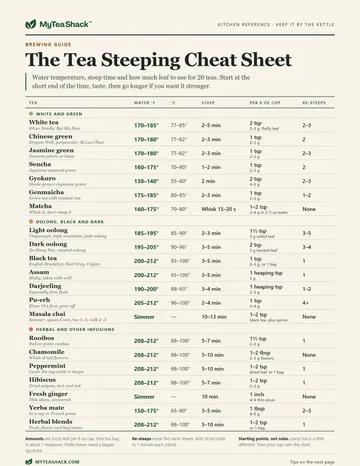
The Tea Steeping Cheat Sheet
Water temperature, steep time and how much leaf to use for 20 teas, from sencha to rooibos, on one printable page. Plus five fixes for a bitter cup.