Does Oolong Tea Really Help Your Waistline?
Oolong tea may modestly boost fat burning thanks to its caffeine and polyphenols, but it's no substitute for diet and exercise. Here's what research shows.
In this guide · 6 sections
There's no magic bullet for weight loss. Oolong tea contains caffeine and polyphenols, compounds that have been studied for a possible modest effect on metabolism, but the evidence for weight loss specifically is limited and mixed. It won't replace a good diet and regular exercise, but it may be a reasonable addition to both.
What Is Oolong Tea?
Oolong is a partially oxidized tea, sitting between green tea and black tea in processing. This gives it a flavor profile that blends the freshness of green tea with some of the depth of black tea, along with a similar mix of antioxidant compounds and caffeine.
Can Oolong Tea Help With Weight Loss?
Some early research suggests oolong tea's combination of caffeine and polymerized polyphenols may modestly support fat oxidation, similar to the effect seen with caffeine alone. However, Harvard's Nutrition Source notes that research on tea and fat reduction overall "has shown little promise of weight loss benefits," and the studies behind the fat-oxidation claim are small, short-term, and haven't been confirmed by larger clinical trials. Treat any specific numbers you see cited elsewhere (percentage changes in fat oxidation, pounds lost in a particular study) with caution unless you can check them against the original published study — oolong tea works best as a minor complement to a balanced diet and regular exercise, not as a stand-alone weight-loss method.
Side Effects and Who Should Avoid It
Oolong tea contains caffeine and tannins, and in excess it may cause:
- Stomach discomfort — avoid or limit intake if you have a stomach ulcer.
- Low potassium or thiamine (vitamin B1) with very heavy, long-term use.
- Trouble sleeping if consumed late in the day.
- Reduced iron absorption if drunk right after meals.
Talk to your doctor before regular use if you:
- Are pregnant — limit or avoid oolong tea due to its caffeine content.
- Have kidney disease — check with your doctor about safe tea intake.
- Have a caffeine or tannin sensitivity.
How to Brew Oolong Tea
- Heat water to about 195°F (90°C).
- Use 2–5 grams of leaves per 200 ml of water.
- Steep for 2–3 minutes.
- Quality oolong leaves can typically be re-steeped several times, with the flavor evolving each round.
For best results with weight management, many people drink it about an hour before or after meals rather than with them, since tannins can interfere with iron absorption when taken alongside food.
For the broader picture, see blue tea benefits and side effects.
FAQ
How much oolong tea should I drink for weight loss?
Most of the small studies exploring a possible effect used around 2–3 cups a day. More isn't necessarily better, and excess caffeine intake carries its own risks.
Does oolong tea burn fat faster than green tea?
There isn't strong evidence that oolong outperforms green tea for fat loss. Some research suggests green tea may have a slight edge, though results vary by study.
Can oolong tea keep weight off long-term?
Oolong tea may support metabolism, but keeping weight off long-term still comes down to sustainable eating habits and regular activity — the tea is a helpful extra, not the mechanism.
Is oolong tea good for anything besides weight loss?
Yes. See our guide to oolong tea benefits and our favorite oolong varieties for more.
The Bottom Line
Oolong tea's caffeine and polyphenol content may give a modest boost to fat oxidation, based on small early studies, but the evidence for real-world weight loss is limited. It works best as a complement to a healthy diet and exercise, not a replacement for them. If you have a health condition or take medication, check with your doctor before making it a daily habit.
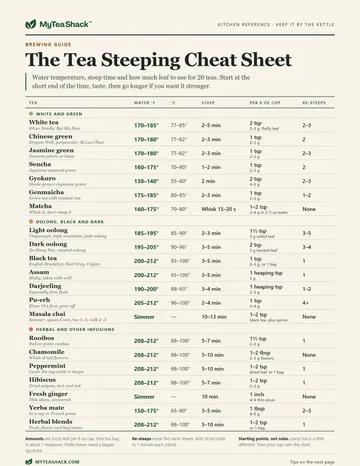
Free printable
The Tea Steeping Cheat Sheet
Water temperature, steep time and how much leaf to use for 20 teas, from sencha to rooibos, on one printable page. Plus five fixes for a bitter cup.