Senna Tea: When to Take It, Benefits and Side Effects
What senna tea is used for, when to drink it, possible side effects, and who should avoid this laxative herbal tea.
In this guide · 6 sections
Senna is an herb native to tropical Africa and India, best known for its strong laxative effect. Senna tea is typically used short-term for occasional constipation, not as a long-term weight-loss or "detox" drink. Here's when it's used, its side effects, and how to prepare it safely.
What Is Senna Tea Used For?
Senna leaves contain compounds called sennosides, which stimulate the intestines and soften stool, making them a well-established short-term remedy for occasional constipation. Some research also supports its use to help clear the bowel before a colonoscopy, under a doctor's guidance.
Senna is sometimes marketed as a weight-loss or "detox" tea because of its laxative effect, but that effect is water and stool loss, not fat loss, and using it for this purpose isn't recommended.
When to Take Senna Tea
Senna typically takes 6–12 hours to produce a bowel movement, so it's usually taken in the evening to work by the next morning. It's meant for occasional, short-term use — generally no more than about a week — rather than daily, ongoing use.
Side Effects and Precautions
Using senna for longer than about a week, or in large amounts, can cause:
- Intestinal cramping, bloating and gas
- Diarrhea
- Electrolyte imbalances (low potassium or calcium) with prolonged use
- Dependence, where the bowel has trouble working without it
Who should avoid senna tea or check with a doctor first:
- Pregnant women — human safety data is limited, so senna isn't recommended during pregnancy unless a doctor advises otherwise.
- Breastfeeding women — usual doses are generally considered compatible with breastfeeding, with sennosides largely undetectable in breast milk in available studies, but check with a doctor before regular use, and stick to dietary measures first.
- Anyone with digestive conditions — including ulcers, inflammatory bowel disease, or a history of bowel obstruction.
- Anyone on medication — senna can interact with certain drugs, including some heart medications and diuretics, so check with a doctor or pharmacist first.
- Anyone with a known allergy to senna or related plants — start with a small amount to check for a reaction.
Long-term, frequent use of stimulant laxatives like senna has also been associated with bowel and colon changes in some research, which is another reason to treat it as an occasional remedy rather than a daily habit.
How to Make Senna Tea
Ingredients:
- 1–2 grams dried senna leaves
- 1 cup (250 ml) boiling water
Steps:
- Place the senna leaves in a cup or teapot.
- Pour the boiling water over them and let steep for about 5 minutes.
- Strain and drink once it's cooled to a comfortable temperature. Avoid adding sugar.
Stick to one cup in the evening rather than repeated doses through the day, and don't use it beyond short-term, occasional constipation without talking to a doctor.
FAQ
How long does senna tea take to work?
Most people see a bowel movement within 6–12 hours, which is why it's usually taken at night.
Can I drink senna tea every day?
It's not recommended for daily, ongoing use. Senna is meant for occasional constipation; frequent use can lead to cramping, electrolyte imbalances and dependence.
Is senna tea good for weight loss?
No. Any weight change from senna comes from fluid and stool loss, not fat loss, and it isn't a safe or effective weight-loss method.
The Bottom Line
Senna tea can be a useful short-term remedy for occasional constipation, but it's not meant for daily use, weight loss, or detoxing. If constipation is frequent or doesn't improve, talk to a doctor rather than relying on senna long-term.
For gentler, everyday digestive support, see our guides on the best herbal tea for constipation, teas for bloating and indigestion, and tea for gut health.
Free printable
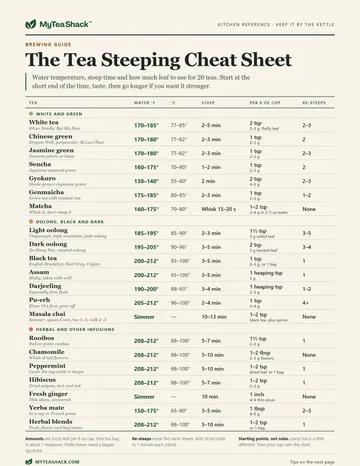
The Tea Steeping Cheat Sheet
Water temperature, steep time and how much leaf to use for 20 teas, from sencha to rooibos, on one printable page. Plus five fixes for a bitter cup.