Best Herbal Teas for Concentration and Focus
Caffeine-free herbal teas that may support focus and mental clarity, plus simple habits that help you concentrate better.
In this guide · 5 sections
Looking for a caffeine-free way to support focus? Several herbal teas are traditionally used for mental clarity and alertness, and pairing them with good sleep and regular breaks makes the biggest difference.
Herbal Teas That May Support Focus
Green Tea With Rosemary and Lemon
Green tea contains both caffeine and L-theanine, a combination associated with calm, sustained alertness rather than the jittery spike of coffee. Adding rosemary and a slice of lemon gives it a bright, aromatic lift. Matcha has the same caffeine plus L-theanine combination in a more concentrated form, since you whisk the whole leaf into the water instead of steeping and removing it.
| Tea | Caffeine (8 oz) | L-theanine |
|---|---|---|
| Matcha | ~60–80 mg | High |
| Green tea | ~20–25 mg | Moderate |
| Ginkgo biloba tea | 0 mg | None |
| Gotu kola tea | 0 mg | None |
| Ginseng tea | 0 mg (mild stimulant compounds) | None |
| Chamomile tea | 0 mg | None |
Ginkgo Biloba Tea
Ginkgo biloba is one of the most studied herbs for cognitive support. Some research suggests it may support blood flow and antioxidant activity in the brain, which is why it's popular in tea and supplement form. It is not a treatment for dementia or Alzheimer's disease, and anyone with a cognitive health concern should talk to a doctor rather than rely on tea.
Lemon Balm (Melissa) Tea
Lemon balm is traditionally used to ease mild stress and support calm focus, since anxiety and restlessness can make it harder to concentrate.
Gotu Kola Tea
Gotu kola is an herb used in traditional Ayurvedic medicine. Some research suggests it may support mental performance and a calm, focused state, though more high-quality studies are needed.
Ginseng Tea
Ginseng is best known for supporting energy, and steadier energy can translate into better sustained attention. It has a mild stimulant effect, so it's better suited to daytime use.
Chamomile Tea
Chamomile is typically associated with relaxation, but some research suggests its antioxidant content may also support healthy brain activity, making it a gentler, evening-friendly option.
Habits That Support Concentration
Tea can help, but the basics matter more:
- Take breaks. Sustained attention tends to drop off after about 25 minutes of focused work, so short breaks help reset it.
- Protect your sleep. Sleep is when the brain consolidates what you've learned during the day, and poor sleep is one of the biggest drivers of poor focus.
- Limit multitasking. Productivity is about what you finish, not how long you sit at your desk.
Side Effects and Precautions
- Ginkgo biloba: Can interact with blood thinners; talk to your doctor before regular use if you take medication for blood clotting.
- Ginseng: May cause jitteriness or affect blood sugar; use cautiously if you have diabetes or take stimulant medications.
- Caffeine-containing teas: Avoid late in the day if you're sensitive to caffeine or have trouble sleeping.
Yerba mate is another caffeinated option people use for focus; here's more on the yerba mate plant and how it's grown.
FAQ
What tea is best for focus?
Green tea (thanks to its caffeine plus L-theanine combination) and ginkgo biloba tea are two of the most commonly used options for focus and mental clarity.
Can herbal tea replace coffee for concentration?
For some people, yes, especially green tea, which offers a gentler, more sustained lift than coffee. Others may still prefer coffee's stronger effect.
Is ginkgo biloba tea safe to drink daily?
Many people drink it regularly without issue, but check with your doctor first if you take blood thinners or have a bleeding disorder.
Is green tea better than coffee for concentration?
For sustained focus, many people find it is, since the L-theanine in green tea tends to smooth out caffeine's effect instead of producing a sharp spike and crash. Coffee still delivers more caffeine per cup if you need a stronger jolt.
The Bottom Line
Herbal teas like green tea, ginkgo biloba and gotu kola may offer a gentle boost to focus, especially when paired with good sleep and regular breaks. None of them are a treatment for a diagnosed cognitive condition. For more on staying sharp, see our guides to teas for energy and focus and how to make tea to boost your immune system.
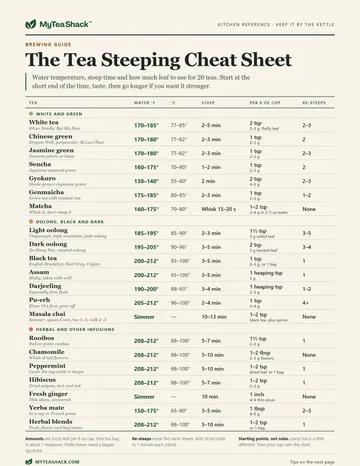
Free printable
The Tea Steeping Cheat Sheet
Water temperature, steep time and how much leaf to use for 20 teas, from sencha to rooibos, on one printable page. Plus five fixes for a bitter cup.