What Is Rosemary Tea Good For? Benefits and Side Effects
What rosemary tea may help with, from digestion to hair health, plus side effects, who should avoid it, and how to brew a cup at home.

In this guide · 6 sections
Rosemary tea is an herbal infusion made from the leaves of the rosemary shrub, best known as a culinary herb but also used traditionally to support digestion, and it's linked to some early research on inflammation and circulation.
Potential Benefits of Rosemary Tea
May Support Digestion
Rosemary tea has traditionally been used after meals to ease bloating, gas and mild indigestion. Its carminative properties are thought to help relax the digestive tract.
May Support Scalp Circulation and Hair
Rosemary is popularly used as a hair rinse or diluted oil because it may help stimulate blood flow to the scalp, which some small studies associate with improved hair growth. Results from rosemary tea itself (versus rosemary oil) haven't been separately studied, so treat this as a traditional use rather than a proven effect.
Contains Antioxidant Compounds
Rosemary is rich in polyphenols, including rosmarinic acid and carnosol, which have antioxidant and anti-inflammatory properties in lab studies. This is part of why rosemary is associated with general wellness use, though drinking tea delivers much smaller amounts than concentrated extracts used in research.
May Have Mild Diuretic Properties
Rosemary tea is sometimes used as a mild diuretic, which can reduce temporary water retention. This isn't the same as fat loss, and it shouldn't be relied on as a weight-management strategy.
May Ease Minor Muscle Discomfort
Topical rosemary preparations (oils, creams) are sometimes used for minor muscle or joint discomfort thanks to their anti-inflammatory compounds. This applies to topical use, not drinking the tea.
What the Evidence Doesn't Support
Older folk claims about rosemary as a treatment for infections, liver disease, or serious illness aren't backed by solid human evidence, and rosemary tea should never replace medical treatment for an infection, liver condition, or any other diagnosed disease.
How to Make Rosemary Tea
Ingredients
- 2 cups (½ liter) water
- 2 tablespoons dried rosemary leaves
Steps
- Bring the water to a boil in a saucepan.
- Remove from heat and add the rosemary.
- Cover and let steep for about 10 minutes — covering the pot helps keep the aromatic oils from escaping.
- Strain out the rosemary and let the tea cool slightly.
- Sweeten with honey, or add a little lemon or cinnamon if you like.
Side Effects and Who Should Avoid Rosemary Tea
- Pregnancy: Avoid rosemary tea in medicinal amounts during pregnancy, especially in the first trimester, unless your doctor says otherwise.
- Breastfeeding and young children: Avoid use without medical guidance.
- Gallstones: Rosemary may stimulate bile flow, which could be a problem if you have gallstones.
- Blood pressure, diuretic or lithium medication: Rosemary is traditionally described as having a mild diuretic effect, and diuretics in general can affect blood pressure and lithium levels. If you take blood pressure medication, a diuretic, or lithium, check with your doctor or pharmacist before drinking rosemary tea regularly, since the specific interaction risk from rosemary tea itself hasn't been well studied.
- Excessive use can cause nausea, vomiting or stomach cramps.
As always, if you're on prescription medication or managing a chronic condition, talk to your doctor before adding rosemary tea to your routine.
Related guides: rosemary tea for hair, green tea for hair and, if you tend to run low, tea for low blood pressure.
FAQ
Can rosemary tea help you lose weight?
Rosemary's mild diuretic effect can cause temporary water-weight loss, but it isn't a fat-loss remedy. Sustainable weight loss comes from diet and activity, not herbal tea.
Is rosemary tea safe every day?
Occasional use is generally considered safe for most healthy adults, but daily long-term use hasn't been well studied, so it's wise to have breaks and avoid excessive amounts.
Can rosemary tea help with hair growth?
Rosemary is popularly used for scalp and hair health, mostly as a topical oil or rinse rather than a drink, and results are based on small studies and traditional use rather than strong clinical evidence.
The Bottom Line
Rosemary tea is a fragrant herbal infusion that may offer mild digestive and antioxidant benefits, but it's not a proven treatment for infections, liver problems or serious illness. Pregnant women and anyone on blood pressure medication, diuretics or lithium should check with a doctor before drinking it regularly.
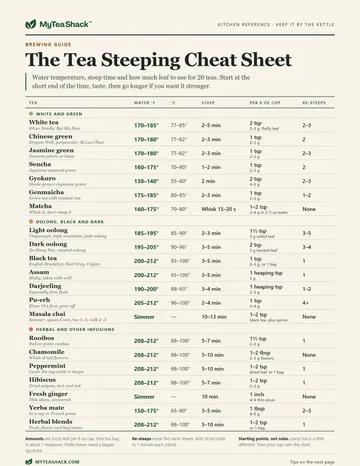
Free printable
The Tea Steeping Cheat Sheet
Water temperature, steep time and how much leaf to use for 20 teas, from sencha to rooibos, on one printable page. Plus five fixes for a bitter cup.